ON THE CASTAWAY CONTINENT, 1727

From the Log of Adriaan van de Graaf …
Secunda Etas Mundi (Second Age of the World) Nuremberg Chronicle,1493, by Hartmann Schedel


On Monday, April 26, 1728 the Council of the Netherlands Indies in Batavia received a desperate letter:
 
My High Excellency, together with the Council of the Netherlandish India, I pray of you most urgently to send me help and assistance against these robbers of the money and the goods of the wreck Zeewyk, who have divided the money and goods among themselves. I am stark naked; they have taken everything from me. 0, my God! They have behaved like wild beasts to me, and everyone is master. Worse than beasts do they live; it is impossible that on board a pirate ship things can be worse than here, because everyone thinks that he is rich, from the highest to the lowest of my subordinates. They say among themselves, “Let us drink a glass to your health, ye old ducats!” I am ill and prostrate from scurvey.
 
Jan Steyns, the skipper, and Jan Nebbens (Nobbens, Nibbens) the under-merchant had been wrecked with their crew when the near-280 ton Zeewijk went aground on the treacherous reefs off Western Australia now known as the Houtman Abrolhos. On her maiden voyage from Flushing in Zeeland, Zeewijk’s passage to Capetown was marked by sickness, twenty-six deaths and a close shave with pirates. Reprovisioned and with her crew strengthened to over two hundred, she left Capetown for Batavia on 21 April. Another eleven men died on this leg of the voyage. In defiance of his VOC orders and over the protest of his steersman, Steyns set a course straight towards the western coast of the southland, or the Land of Eendracht as the Dutch were generally calling it at this time. The ship’s master also entered a false note in the ship’s log to the effect that the decision of the ship’s council to sail ENE was ‘decided unanimously.’ It was not, and this act would eventually ruin Steyns.
 
 
Half Moon Reef
 
It was during the first watch of the evening of June 9. The lookout on the ship’s foreyard noticed white flecks on the sea before the ship. He watched them for half an hour or so and decided that they were reflections of the moon. But around 7.30pm the Zeewijk struck and foundered in heavy surf around a reef shaped like a half-moon. The under steersman, Adriaan van de Graaf described the disaster:
 
At dusk, therefore, we were running under small sail, i.e. foresail and both topsails double- reefed, but at about 7.30 in the evening Jan Steyns, the master, together with the under-merchant Jan Nebbens came up on to the quarterdeck from the master’s cabin and asked the third mate Joris Forkson who had the watch at the time ‘What was that which could be seen ahead?’ answering himself at the same time ‘My God, it is surf, lay your helm to starboard!’ and called the first and second mates who were in the former’s cabin setting out the course on the charts. The under merchant came to warn us, coming to meet us from the awning. We had heard the shout in the cabin and jumped into the waist to the sheets and braces, but before the foresails had been braced to the wind, the ship crashed with a great shock into the cliff on her starboard side and turning her head in the wind round the SW knocked her rudder out of the helm port.
 
Hearing and heeding the master’s orders
 
I, Adriaen v.d. Graeff, second mate, made my way to the steerage and found there to be 8 feet of water in the ship, whereupon our main mast fell overboard. We then decided to cut away our fore and mizzenmasts and found our ship to be lying in 10 to 11 feet of water, so that we prayed the Almighty for a propitious outcome. While terrible waves washed over us constantly we attempted to cut away the top hamper. A seaman named Yuriaen Roelofsen was washed overboard together with the fore mast and bowsprit, so that we looked at one another sorrowfully and prayed for surcease from the terrible punishment which the Almighty was sending us. We asked the lookout who had been sitting on the foreyard whose name was Pieter de Klerck van Apel, whether he had not seen the surf; he confessed at once that he had seen it for at least half an hour, but had imagined that it was caused by the sky or the moon.
 
The men of the Zeewijk were trapped aboard. ‘We could see nothing but surf, which washed over the ship in an awful way’, recollected van der Graeff. Attempts to get off were dashed by the sea and they soon found their craft was beginning to come apart. They began making life rafts and, on a Black Friday, only just saved the life of a crewman who volunteered to swim ashore with a rope. Next day some of the men began breaking into the stores and rampaging drunkenly through the wreck. The officers, soldiers and many of the crew swore an ‘oath to God to be loyal to one another and to be faithful to the authorities and to punish together, be it even with death, all evildoers and malignant.’
 
They managed to get a line from the grinding wreck to the reef through the bravery of some of the crew who at first swam through the deadly surf and then managed to get ashore on a small catamaran they had roped together. There were now four men on the reef with the rest still stranded on the shifting wreck, unable to help them further. One seaman died aboard the wreck in the afternoon and at sunset they managed to drift some supplies to those on the reef. But that night the seas rose again and shifted the rapidly disintegrating ship from one side to the other, ‘so that now the surf assaulted the larboard side so much more that we thought we would be overturned with each sea. We therefore fell at the feet of the Almighty and prayed together for His help and succor.’ Their prayers were answered and the wind dropped. Next day various attempts were made to launch small boats with men and supplies. Eight men drowned and they lost more supplies but they managed to establish twenty-two survivors on the reef. Ominously, during these tragic events, those on the reef ‘found a filled hand-grenade, also old rope and ship’s skin, these belonging to a ship or ships which the same fate had struck here.’
 
The following day, the weather improved. Fresh water was found on an island near the reef and more men and provisions ferried over. By Wednesday, only three officers and sixty-nine crew remained on the wreck. The senior officer was van der Graeff. As he sat in the master’s ruined cabin that night, dutifully writing up the ship’s journal, a crewmember was discovered stealing knives and sharpening them for unknown purposes. The man, presumably addled from shock, was put in irons. But it was another gloomy hint of what was to come.
 
On Thursday, Van der Graeff planned to float the remaining survivors off the Zeewijk onto the reef. But many of the crew mutinied, refusing to leave the wreck and ‘we could not move the hardened hearts of many of the crew, since about half of those malignants would not help us, saying that they wanted to remain on the wreck, so that we found ourselves compelled to help one another of those who had decided to leave the wreck. Therefore we threw overboard the victuals which we had barrelled, lowered away our rafts and so floated to the reef at God’s mercy, which we reached with the help of God Almighty without any of us being lost.’
 
By Saturday the 21st, ninety-six survivors shivered together on the island, including the master, officers and a good number of petty officers, most of whom were tradesmen with useful skills. They also had meat, bread, butter, wine and brandy. These they began rationing and van der Graeff noted that there were plenty of seals on the island, together with enough scrub to build cooking fires.
 
On Monday they were able to revisit the reef, secure one of their boats, find some more supplies and pick up a few stragglers. One, a boy, refused to go back to the island in the longboat. On Wednesday, survivors began dying. On Thursday the carpenter began to improvise a mast for the longboat’s voyage to Batavia. ‘I am hoping for the rescue of us all’, van de Graeff wrote. On Saturday one of the soldiers died at dawn. Next day a seaman died in the morning. The survivors on the island could see two others walking round on the reef but ‘we could not help them.’
 
It was Monday again and another week of misery and death had passed. They took the longboat to the reef ‘with great difficulty.’ There they found the reluctant boy still alive. The men left aboard the wreck had floated some supplies to him. They waved and signaled to the wreck for more supplies, including sailcloth. Some wine, brandy and butter were delivered, together with a sail they could fit to the newly built mast of the longboat.
 
Next morning at 7 the tent in which the officers were sheltering on the island was invaded by ‘all petty officers and the common hands, most of whom were drunk.’
 
The men walked into our tent with a great deal of clamour and confusion of argument and counter-argument, all shouting at the same time, telling the master that they wanted the long boat to sail to Batavia and that they wish to appoint as her chief the 1st officer Pieter Langeweg and no one else, and 10 of the best seamen with him whom we are to select. They would hear of no further counsel, saying that they will carry on their affairs and that they have collected some good seamen whom they deem to be capable of handling a long boat and have made them draw lots and have appointed 10 of them according to the lots drawn to sail in the boat…
 
No more is heard about this incident and its aftermath but van der Graeff’s journal goes on to describe negotiations with those still on the wreck. They now wanted to be taken off with the longboat. But the conditions were so bad that this was impossible. However, they had lost most of the remaining supplies needed by those on the island. A deal was done and some more alcohol, butter and kegs of salted fish were floated across on Thursday the 3rd of July. That day, the sail maker also began to make the sails for the longboat.
 
The seal population was now disappearing. By Monday the 7th they were down to a pitifully small list of victuals
 
 8 barrels of bread
4 aums of wine
3 ½ aums of brandy
4 aums of sweet oil
1 aum of wine
7 kegs of butter
6 kegs of anchovy
9 cheeses
4 sides of bacon
3 hams
 
That day another man died on the island. By Wednesday they were stocking the longboat for its arduous trip and at sunset the next day, it set sail with ‘12 souls in all.’ Peter Langweig was in command, as the men had demanded earlier. There was a probably unofficial distribution of wine and their remaining boat, the scow, came back from a hunting trip to the other islands around the reef with 24 seals ‘at which we rejoiced greatly.’
 
There were now eighty-six men on the island and an unknown but probably significant number still on the wreck or otherwise unaccounted for. They were within sight of the mainland though had no desire or need to attempt to reach it. Instead, the survivors began fighting among themselves. Under the stress of the situation, excess alcohol and fear, men began to draw knives against each other and some began to act irrationally, throwing scarce victuals into fires and threatening their fellows. The council had four manacled and marooned on another island ‘as we fear that, staying here, they will persist in their recalcitrant behaviour, which they had affirmed incessantly to me and to several other people during the past night while they were in irons…’
 
On Sunday 13th the scow went to the reef and came back with another frightened boy and a small amount of ham and wet bread. Over the following days, the wine ration was finished up but edible vegetation began to sprout on the island, making a welcome addition to the sparse diet. The survivors established a routine of taking the scow to the reef to bargain for supplies with those still in the wreck. They also used the little boat for seal hunting and transport between the islands. On Wednesday 23rd, the four men marooned on one of these were flogged ‘and at the intercession and request of the common hands they were permitted to remain here in the island, upon their promise to lead henceforth a Christian life.’
 
The following day saw the second mate and eight men float off the wreck on a small scow they had fashioned. Now there were eighty-five souls on the island. It was August and becoming colder. On Monday 4th they discovered that their freshwater supply had dried up. They prayed for rain, cleaning out the small wellspring to find seven live crabs in it, a certain sign that any water that might bubble from it would be undrinkable. Next day five men took one of the scows without permission and rowed to another island about two miles away. On the 7th, while most of the officers were away fishing, the ‘hands’ and petty officers took away to their own tents the water previously held by the officers on behalf of all. The authority of the officers was now under serious challenge from the crew. From now on, the ‘hands’ and petty officers doled out the water to the master and other officials rather than the other way around. The men also insisted on maintaining the daily ration of half a loaf of bread a day, rather than accept the master’s recommendation that they cut it to a quarter loaf. Fortunately, it rained the next day and further supplies were obtained from the wreck, together with some seals from the surrounding islands.
 
The days dragged by with much the same routine, punctuated by occasional acts of disobedience and hoarding of supplies. The occasional additional man also arrived on the island having forsaken the wreck. On the 22nd another man died. There were now ninety-five on the island.
 
The situation was severe enough for the survivors to send out an expedition to the mainland in search of possible future supplies. Six men left for the southland on the 24th of August, returning at sunrise three days later. What they had taken to be the mainland was in fact an oblong island about 4 miles long by half-a-mile at its widest point. They had found another one of the Zeewijk’s boats that had become separated during the grounding. They had also come across ‘a piece of a ship or wreck, finding the figurehead lying under a cliff, of which they could discern that it had been the figure of a woman.’
 
Two more men died on 29th. There were now ninety-three survivors on the island. There was a dwindling but significant number aboard the wreck controlling the supply of food and drink, other than that available naturally, mainly the declining seals and flocks of dark birds the size of a small duck.
 
There was alarm among the men when the master proposed taking both scows to explore the other nearby islands. He placated them by promising he would return as quickly as possible and bring more seals. He and eighteen others were allowed to leave. They returned as promised four days later, together with the gig that had escaped the wreck, a valuable addition to their chances of survival. Steyns, apparently in confidence, also told van der Graeff that they had found another wreck, along with other items washed there from the stricken Zeewijk.
 
On the 10 September, Steyns and a small crew of ten managed to get out to the wreck and establish a line to the reef, enabling the transfer of provisions. A week later they were able to bring off the five remaining chests of VOC money, the rest having apparently been salvaged earlier. By the 21stall ten of the money chests were together on the island. But supplies of food and water were again dwindling ‘so that we beseech the Almighty for rain from the sky.’ Three days later another sailor died, bringing the island group to ninety-two.
 
The next Saturday the regular expedition to the reef for further supplies from the ship results only in a letter thrown overboard in a container. It is from Jan Steyns the master and states that there will be no further supplies coming from the ship until someone rows across and gets them and, presumably, Steyns and the other men who had earlier accompanied him to the Zeewijk. The letter is taken to the under-Merchant who has command of the sailors on the island in the absence of the master. He pens a testy reply:
 
I under-merchant Jan Nebbens, after the boatswain and the boatswain’s mate have again returned without victuals, having read the letter brought from you and understanding there from that you wish to have us come aboard in spite of weather and violent surf on the reef, which was impossible as the men tell me, wish that you on board were here on the island to make the easy trip to the wreck, this we, the undersigned, declare together, and master Steyne and your men ought to know that we officers in the island were requested by the hands to issue the wine and the brandy as long as there was any left, the reason for which being, as you know, that so far it has not pleased the Good Lord to grant any rain, for it is as dry on the island as it has not been before, for the little water which is left in the well is not potable, it being as salty as seawater, and this is the cause that there is no longer any water in the tents, and we declare together that this is the truth, which we are ready to affirm on oath at all times…
 
The letter was co-signed by Van Der Graeff and over fifty others. The next day another sailor on the island died. He was probably not much lamented as his death meant there was one less mouth to feed from the dwindling supplies. Van Der Graeff went to the reef to ask those on the ship for victuals on the Monday 29thbut was refused. Instead, he was given a signal that Steyns wanted to leave the wreck. Fresh water had now become an urgent issue ‘for we are at our wits’ end with thirst.’ Fortunately, drinkable water was found on another island ‘so that now, God be thanked, we need not ration one another any longer.’ But it was too late for one of the boys and another sailor who died over the following few days. ‘We now number 89’ Van Der Grief recorded in his stoically non-committal way.
 
Even with reduced numbers, supplies were consumed quickly. There was further pressure from the men for larger rations and by the 6th they were down to a little bread, some groats, oil, butter, cheese and some tobacco. They were subsisting mostly on the small birds. That day the master and men returned from the wreck, having built a scow on board and floated across. Next day Steyns and van der Graeff took the new scow and gig to the reef. As usual, they hauled the craft over the corals hoping to launch into the sea beyond in order to reach the Zeewijk. They were unable to do this but some provisions were thrown into the sea for them by those still on board.
 
On Friday 10th, van der Graeff and the third mate managed to get across to the broken ship in the gig and to organise some substantial transshipments of food, tools and sailcloth. The good weather went on for days, during which a great deal of provisions were either rowed or floated to the reef. A few of those who had never left the Zeewijkwere also brought ashore. On the 21st one of the soldiers aboard the wreck died but the work continued unabated. Still the weather held. They now began to cannibalise the ship itself for all usable materials, even including the ship’s bell. Another sailor died on the 26th. Van der Graeff was relieved three days later and proudly recounted how much he had been able to send ashore. He also apologised for the alleged loss overboard of that part of his journal relating to his weeks back aboard the Zeewijk.
 
The survivors were now in the best situation since the wrecking. They had sufficient food, a supply of fresh water and enough timber and materials to build a new boat, a large scow. By the 30th of October, by now accepting that the boat that had left months earlier had not made it to Batavia, they resolved to build a new one and to rescue themselves. They laid the keel on November 7 and the stem the following day. In their journal Steins and Nebbens noted: ‘We called it the Sloepie, that is, the little sloop, made up from the wreck of the Zeewyck.’
 
 
You can read the rest of the story in The Savage Shore  

MYTHS THAT MAKE HISTORY

Ancient though their origins may be, the world’s many myths and legends have played an important role in history. Frightening fables of unknown southern lands, tales of lost cities, and endless rumors of hidden hordes of gold have motivated many of the world’s greatest explorations.
Five centuries before the common era, the Greeks knew the world was not flat. It was a globe and so, they reasoned, there must be a large landmass in the extreme south to balance the lands they knew in the northern hemisphere. The Romans embroidered the legend of a lost southern land by imagining it was peopled by strange beings who survived in great heat and, out of necessity, walked upside down.  By the second century AD, it was widely accepted that there was a southern land, probably inhabited, and laying at the bottom of the world – somewhere. It was featured on beautifully crafted European maps and charts complete with sea monsters and winged serpents. The Muslim world also produced maps that seem to represent some of Australia’s northern coastline in the ninth century AD.
From early times, Mariners began searching for the southland. It was frequently discovered, the news triumphantly announced, only to be disproved by later explorers. Many voyages undertaken by the Spanish, Portuguese, Dutch, French and British were inspired by the desire to solve the riddle of the mysterious continent. It would be centuries before anyone did, but these many efforts provided the world with knowledge of distant places, unknown seas, new flora and fauna and contact with indigenous peoples previously unknown to Europeans.
Other beliefs also fueled world exploration. Stories about the ‘River of Gold’, now thought to be the Senegal River, reached southern Europe through contact with the Muslim world as early as the Thirteenth century. But from ancient times, there had been great interest in the rumoured river. Pliny the Elder and Claudius Ptolemy wrote about it and the Carthaginians sailed there more than four centuries BCE. A number of Arab expeditions were reported to have sought the river during the Twelfth century. Despite the unknown terrors of sea voyages in that era, people heard these yarns and went looking for the treasure. Most never returned. Or, if they did, we know nothing about it.
Despite—or perhaps because of—these uncertainties, the legend of the River of Gold grew on the tongues of traders, sailors and adventurers. An expansion of this tale based on ninth century Arab writings claimed that there was not only a river, but also an island called the ‘Lands of Gold’ in the chief city of which gold ‘grew in the sand like carrots’ to be harvested at sunrise. Three centuries later, writers were describing the magnificent gold clad horses and gold and silver-collared dogs of the king of this place (probably modern-day Ghana). His sons boasted gold-plaited hair and lowly pages who hefted swords mounted in gold.
Wild though these legends were, they spurred expansion into new lands, gradually filling the map of the world with facts rather than fiction. We will never know how many adventurers and treasure seekers set out to find the objects of their desire, although we can be sure that most of them died in their quests. But, in one case, we do know the explorer’s fate.
The Spanish began their occupation of South America when Cortez conquered the Aztecs in 1519.  The astonishing amount of gold and other valuables the Spaniards found as they cut their way through the indigenous peoples rapidly established South America as a hot spot of fabled wealth. One of the most potent tales concerned an indigenous community whose kingship ritual involved covering the anointed man with gold dust – El Dorado, ‘the golden one’. Other items in the ceremony were also either made of gold or covered in the precious metal. Together with other valuables, the gold was thrown into Lake Guativita. The king went in as well, washing the gold dust from his body and adding to the riches carpeting the lake floor.
By the time the Elizabethan adventurer Sir Walter Raleigh first heard about El Dorado from a captured Spanish sailor, it was no longer an individual, but rather a place: a city of gold along an Amazonian river in the wilds of Guiana (Guyana). Slowly but steadily, the lure of the golden city took hold of one of the greatest scholars and adventurers of the Elizabethan era. Raleigh had long been collecting relevant documents and maps and was well versed in the lore of the great treasure when he finally sailed to Trinidad and then to the mouth of the Orinoco River on his own quest for El Dorado in 1595. Previous unsuccessful attempts had been made from the east coast, and Raleigh was not about to repeat the mistakes of others. Nor could he afford to fail.
It was a horrific voyage. Raleigh’s passage through the “thick and troubled water” of the Orinoco and its endless tributaries was long, hot, and arduous. Raleigh ended his account with a strong promise of untold riches. But, the leaden truth was that “I gave among them [the Indians GS] many more pieces of gold than I received.” Raleigh’s quest had been a colossal failure – and he knew it. Although he did not find el dorado, his The Discovery of Guiana (1596), provided valuable anthropological, ecological and geographic knowledge of the region. Through it he also wrote himself out of immediate trouble with his Queen, Elizabeth I.
Still a believer, Raleigh tried again in 1617. His attempt was yet another failure and sealed his fate with a new monarch, James I. Soon after his empty-handed return to England, the great Elizabethan and earnest seeker of El Dorado was beheaded at the Palace of Westminster on 29 October 1618. In his dying speech he admitted to being “a man full of all vanity, and having lived a sinful life, in all sinful callings, having been a soldier, a captain, a sea captain, and a courtier, which are all places of wickedness and vice …”.
Misty and murky though they were, these and the many other legends of unknown lands and golden treasures had very real consequences for individuals, and for the greater sweep of world exploration and discovery.

HUNTING FOR TREASURE

Map to Captain Kidd’s treasure

Late in 2015, a lost Nazi gold train was discovered in Poland. At least, that’s what a couple of treasure hunters told the world. Like all lost treasures, the search for this one had been going on for many years, usually without success. But many still believe in these far-fetched yarns and some even search for them. Every now and then a lost treasure is really found, providing just enough stimulus to keep all the other legends living on.

Armed with the latest techno gadgets and a map, the raiders of the lost Nazi treasure claimed to have found their prize. They were prepared to reveal its location in return for a modest percentage of the booty. Local officials apparently fell in with this nonsense and the Deputy Polish Culture Minister was widely quoted saying that they were 99 per cent sure the train was there.
Enter the spoilsport scientists from the Kracow Mining Academy. Their  techno gadgets confirmed that not only was there no hidden Nazi train of gold but there were not even any real railway tracks in this region of the Lower Silesia. Just empty tunnels.
Still, even if that one was dispelled by science, people love a lost treasure story.
Colonel PercyFawcett went to Brazil’s Matto Grosso searching for the lost city of “Z” in 1925. He has not been seen since. A Hollywood film about the Lost City of Z – co-produced by Brad Pitt and starring Robert Pattinson and Sienna Miller – is currently in production and will appear in our cinemas 91 years after Fawcett disappeared.
Lost treasure tales have a number of common elements that provide them with apparent credibility.
Firstly, they are in remote or otherwise difficult to access locations. Lasseter’s Reef is said to lie somewhere in some of Australia’s most desolate emptiness. South American jungles have harboured any number of fabulous Aztec, Incan or Mayan troves. Islands are excellent, especially for pirate treasure chests
Then there will be a map. Or sometimes another document, like a letter, giving the hazy location of the loot. Harold (originally Hubert) Lasseter left a diary and a map of his fabled reef as he lay dying in 1931. Many have since used these documents in futile attempts to find the gold.
The map or document will have a murky provenance. It may come from a previous seeker of a particular rumoured treasure. It might be serendipitously “found”, preferably in an atmospheric location. Tombs are good.
Usually the person who provides the document to the treasure seeker will be conveniently dead, as in the Beale ciphers. The Beale ciphers are three papers written in code, one of which will reveal the location of treasure buried in Bedford County, Virginia. No one has yet cracked the code, although claims of success have been made.
Then there will be guardians of the lost treasure. Often these are benighted savages who will stop at nothing to prevent intrepid (white) treasure hunters getting to their fabled horde. One explanation for the disappearance of Colonel Percy Fawcett in the Amazon is that he was killed by indigenous people. Indiana Jones is often said to be based on the British explorer’s exploits though a version of the trope appears in other lost treasure tales.
Often the guardians are long departed, as in the lost Nazi gold train legend of Poland’s Lower Silesia region. This is a relatively recent variation on the ancient theme of missing millions. It springs from the same deluded human hopes for untold riches that produced the El Dorado myth and its many variations around the world.
It was believed locally that possibly three such trains stuffed with stolen gold, jewels and art were buried in a complex of tunnels under construction by the Third Reich for still-unknown purposes. The train, or trains, were then sealed in, awaiting only intrepid treasure seekers to unearth their riches. People have been looking for years but no one has succeeded in the quest.
But wait! A map was found!! Even better, the map was obtained from a man on his deathbed!!! Must be real. Let’s go. And so they did.
Even after their claims were disproved by scientists, the Polish believers
clung to their story  “because the methodological approach of the scientists was [not the same as our.”
The final feature of lost treasure yarns is the unsuccessful but tantalisingly promising attempts of earlier searchers to reach the horde.
The notion that something must be there because so many have tried before is a mainspring of the mythology that supports these persistent folk beliefs. Fawcett’s quest for the city of “Z’ feeds an ongoing interest in the mystery derived from the 2009 book on which the movie is based.
Believers still risk their lives in search of Lasseter’s Reef. The lost gold of Sacambaya still attracts optimists more than 150 years after a charlatan injected it into Bolivian fantasy. Others are still burrowing for Templar, or maybe pirate, treasures on Oak Island off Nova Scotia and any number of sunken galleons and other wrecks are still the object of fervent searches in all of the seven seas.
Every now and then one of these expeditions actually strikes gold, as in the recent rediscovery of the Spanish treasure ship off Columbia. The rarity of these finds and the sensations they produce are sufficient to stoke the fires of hope that glitter in the hearts of all treasure hunters.

It might just be that the legend is true…

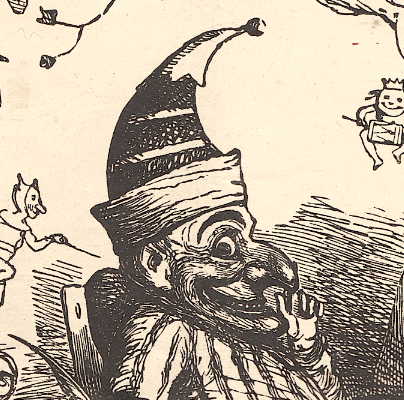
BONA PARLARE – MR PUNCH SPEAKS


Punch is a hopera–a huproar, we calls it
Punchman, London 1840s
 
The puppets now known around the English-speaking world as ‘Punch and Judy’ arrived in England by way of Italy and France in the seventeenth century. Based on the Italian commedia del arte character of Pulcinella, or Punchinello, the play rapidly developed a distinctive English variation that included the introduction of the female figure eventually to be known as ‘Judy’. The Punchinello character was known to the slangery of the day as ‘Punch in hell’, a description that reportedly irritated the more respectable members of Mr Punch’s audience.
 
Samuel Pepys saw a Punch and Judy performance in London’s Covent Garden in 1662, though according to tradition, the first to publicly display the show in England was an Italian named Porsini who made a great deal of money, but eventually died destitute in a workhouse. According to a Punchman interviewed by the indefatigable Henry Mayhew in the 1840s ‘Every one in London knowed him: lords, dukes, squires, princes, and wagabones, all used to stop and laugh at his pleasing and merry interesting performance…’.
 
Mayhew described the Punchman as  “a short, dark, pleasant-looking man, dressed in a very greasy and very shiny green shooting jacket … Protruding from his bosom, a corner of the pandean pipes was just visible, and as he told me the story of his adventures, he kept playing with the band of his very limp and very rusty old beaver hat.” The ‘pandean pipes’ were accompanied by the swazzle, a device that the Punchman inserts at the back of his mouth to produce the raucous voice of Mr Punch, one of the trade secrets of the business.
 
The Punchman told Mayhew that Porsini passed on his skills and secrets to an apprentice and the show gradually grew and developed, though there were never large numbers of Punch and Judy acts in Britain as the skills involved, including puppetry, mimicry, music, speech and working the audience were not commonplace and also closely guarded once attained. Punch and Judy practitioners considered themselves to be well above the level of street hawkers, patterers and other busking entertainers. Inns were their preferred accommodation, rather than the cheaper lodging houses and padding kensfavoured by vagabonds and beggars.
 
There were sixteen frames, as they called the show and its portable structure, operating in England at this time, each worked by two men, eight in London and the other eight in various country locations. The Punchmen had a well organised and self-regulated network that mostly ensured no two frames were operating in the same region at the same time – ‘We all know one another, and can tell in what part of the country the others are. We have intelligence by letters from all parts.’, said Mayhew’s Punchman. However, ‘If two of us happens to meet at one town, we jine, and shift pardners, and share the money. One goes one way, and one another, and we meet at night, and reckon up over a sociable pint or a glass. We shift pardners so as each may know how much the other has taken…’.
 
The Punch and Judy show has long been associated with the seaside. Mayhew’s Punchman provides the original monetary rationale for this in a statement in which he substitutes ‘v’ for ‘w’ in some words, a common feature among low English speakers at the time, as immortalised by Dickens’ Fagin: ‘We in generally goes into the country in the summer time for two or three months. Watering places is werry good in July and August. Punch mostly goes down to the sea-side with the quality.’
 
The language of the Punchmen was a mixture of Italian, English, French and Cant, a patter known by them as Bona parlare, related to, though distinct from the Parlary of other travelling entertainers in fairs and circuses. Mayhew reproduces a likely conversation between two Punchmen, as given to him by his unnamed informant, who also provides translations of most of the words and phrases:
‘How are you getting on?’ I might say to another Punchman. ‘Ultra cateva,’ he‘d say. If I was doing a little, I‘d say, ‘Bonar.’ Let us have a ‘shant a bivare’–pot o’ beer. If we has a good pitch we never tell one another, for business is business. If they know we‘ve a ‘bonar’ pitch, they‘ll oppose, which makes it bad.

Co. and Co.’ is our term for partner, or ‘questa questa,’ as well. ‘Ultray cativa,’–no bona. ‘Slumareys’–figures, frame, scenes, properties. ‘Slum’–call, or unknown tongue. ‘Ultray cativa slum’–not a good call. ‘Tambora’–drum; that‘s Italian. ‘Pipares’— pipes. ‘Questra homa a vardring the slum, scapar it, Orderly’–there‘s someone a looking at the slum. Be off quickly. ‘Fielia’ is a child; ‘Homa’is a man; ‘Dona,’ a female; ‘Charfering-homa’–talking-man, policeman.

 
After describing the various uses of his clasp knife, the Punchman spoke of his other tools of trade, also allowing us to hear something of his distinctive patter, full of malapropisms, and breezy philosophy of life:
 

This here is the needle that completes our tools (takes out a needle from inside his waistcoat collar,) and is used to sew up our cativa stumps, that is, Punch‘s breeches and Judy‘s petticoats, and his master‘s old clothes when they‘re in holes. I likes to have everything tidy and respectable, not knowing where I‘m going to perform to, for every day is a new day that we never see afore and never shall see again; we do not know the produce of this world, being luxurant (that‘s moral), being humane, kind, and generous to all our society of life. We mends our cativa and slums when they gets teearey (if you was to show that to some of our line they‘d be horrified; they can‘t talk so affluent, you know, in all kinds of black slums). Under the hedgeares, and were no care varder us questa–‘questa’ is a shirt–pronunciation for questra homa

 
And in another passage we hear the probable evolution of the Shelta Johnny Scarpare into the modern English slang term, scarper. The Punchman is describing how the artist George Cruikshank sketched him, presumably as part of a book the artist worked on in the 1820s:
 
Once, too, when I was scarpering with my cullingin the monkey, I went to mendare the cativa slums in a churchyard, and sat down under the tombs to stitch ‘em up a bit, thinking no one would varderus there. But Mr. Crookshank took us off there as we was a sitting. I know I‘m the same party, ‘cos Joe seen the print you know and draw‘d quite nat‘ral, as now in print, with the slumares a laying about on all the tombstones round us.
 
The Punchman also described the nature of the Punch and Judy show performances:
 

Punch has two kind of performances– short shows and long ones, according to denare. Short shows are for cativa denare, and long pitches for the bona denare. At the short shows we gets the ha‘pence and steps it — scafare, as we say; and at the long pitches ve keeps it up for half an hour, or an hour, maybe–not particular, if the browns tumble in well–for we never leave off while there‘s a major solde (that‘s a halfpenny), or even a quartereen (that‘s a farden), to be made. The long pitches we fixes at the principal street-corners of London. We never turn away nothink.
‘Boys, look up your fardens,’ says the outside man; ‘it ain‘t half over yet, and we‘ll show it all through. The loquacious Punchman continued his lofty philosophical discourse for the benefit of Mayhew’s notebook, obviously enjoying the opportunity to word up such a gentleman:Punch is like the income-tax gatherer, takes all we can get, and never turns away nothink–that is our moral. Punch is like the rest of the world, he has got bad morals, but very few of them. The showman inside the frame says, while he‘s a working the figures, ‘Culley, how are you a getting on?’ ‘Very inferior indeed, I‘m sorry to say, master. The company, though very respectable, seems to have no pence among ‘em.’ ‘What quanta denarehave you chafered?’ I say. ‘Soldi major quartereen;’ that means, three halfpence three fardens; ‘that is all I have accumulated amongst this most respectable and numerous company.’ ‘Never mind, master, the showman will go on; try the generosity of the public once again.’ ‘Well, I think it‘s of very little utility to collect round again, for I‘ve met with that poor encouragement.’ ‘Never mind, master, show away. I‘ll go round again and chance my luck; the ladies and gentlemen have not seen sufficient, I think. Well, master, I‘ve got tres major’–that is, three halfpence–‘more, and now it‘s all over this time. Boys, go home and say your prayers,’ we says, and steps it.

 
The Punchman rounded off his verbatim account of a Punch and Judy show with a characteristic observation on the nature of the Punchmen’s lives:
 

Such scenes of life we see! No person would hardly credit what we go through. We travel often yeute munjare (no food), and oftentimes we‘re in fluence, according as luck runs.

 
When they were not in the country or at the seaside, the Punchmen would work in the city and suburbs. If they could find a pitch, that is a place to set up their frame and so attract a crowd of passers-by, they were sure of at least some income. Failing this, they resorted to wandering the streets of the better-off areas, calling out for business – dwelling on orders, as it was known:
 

We now principally dwells on orders at noblemen‘s houses. The sebubs of London pays us far better than the busy town of London. When we are dwelling on orders, we goes along the streets chirripping ‘Rootooerovey ooey-ooey-ooerovey;’ that means, Any more wanted? that‘s the pronounciation of the call in the old Italian style. Tooroveyto- roo-to-roo-toroo-torooey; that we does when we are dwelling for orders mostly at noblemen‘s houses. It brings the juvenials to the window, and causes the greatest of attractions to the children of noblemen‘s families, both rich and poor: lords, dukes, earls, and squires, and gentlefolks.

 
The Punchman was careful to emphasise the difference between walking the street and calling for work, or call-hunting, and the lower takings, but certainty of a crowd at a pitch, or relatively fixed street location for the performance: ‘Call-hunting,’–that‘s another term for dwelling on orders– pays better than pitching; but orders is wery casual, and pitching is a certainty’.
 
By 1742 at least, Punch had migrated to America where he continued to entertain all comers, eventually forming part of the various acts in travelling shows. Here, and in other English-speaking countries he is still a popular form of children’s entertainment, with a small but dedicated number of Punch and Judy professors keeping up the tradition.


CONSENTING TO DIE IN THE GREAT WAR

Why did men consent to fight the First World War? This is one of the most difficult of all questions about a conflict that remains an enigma despite the millions of words written about it.
 
Patriotism is one answer. Glory another, though soldiers soon discovered there was little, if any, of that in the trenches. Social pressure from the White feather fanatics was a factor for some.
 
But a more surprising answer lies in the mechanism that frontline soldiers created to negotiate their consent to fight and quite possibly die. This mechanism took the form of sometimes rough and ready magazines and newsheets written, illustrated and edited by soldiers themselves.
 
The Dead Horse Corner Gazette, the Bran Mash and The Whizzbang were just some of the many hundreds of titles in the trench press. In the sometimes scribbled sometimes printed pages appeared verse, short stories, songs, pays and a host of parodic and satirical items written by soldiers. These squibs were often illustrated with cartoons and sketches that made the sharp toothed humour even more pointed.


Nursery rhymes were recast for gallows humour effect:
 
Little Jack Wrench
Sat down in a trench,
With a ‘pork and beans’ and some bread,
When an Allemande shell
On the parapet fell,
So he got ‘iron rations’ instead.
 
Trench songs expressed the universal desire to be ‘out of it’, as in this version from the Canadian The Sling:
 
I want to go home, I want to go home,
The bullets they whistle, the cannons they roar,
I don’t want to go up the line any more.
Take me over the sea, where the enemy can’t get at me.
Oh! my, I don’t want to die, I want to go home.
 
Officers might be called to account, if to little effect, as recorded in The Swell, ‘The Regimental Rag of the 13th Battalion the King’s Liverpool Regiment’ in January, 1916:
 
On Monday we had bread and bully,
On Tuesday we’d bully and bread,
On Wednesday and Thursday we’d bully and toast,
Well that’s only bully and bread;
So on Friday we called out the major,
And asked him for a change, so he said
Alright, so on Saturday we got for a change
Some bully without any bread.
 
The humble classified advertisement provided endless opportunities to spoof the war a specialty, though not a monopoly of the British Wipers Times:
 
“TRY OUR NEW CIRCULAR TOUR, EMBRACING ALL THE HEALTH RESORTS OF LOVELY BELGIUM. Books of Coupons Obtainable From R. E. Cruting & Co., London. Agents Everywhere.”
 
WANTED – to rent for the winter season, DRY WARM DUG OUT. Must be commodious and in healthy locality untroubled by hawkers and Huns. Good price offered for suitable residence. Apply – Reggie, c/o this paper.
 
Although these publications were primarily for soldiers they had a less obvious but even more important readership. The trench press was a back channel of communication between the trenches and the generals, politicians and home front press. Many trench newspapers went home to wives, mothers, brothers, sisters and friends. Some were even featured in the mainstream press. This gave trench soldiers a way to let those for whom they were fighting the conditions on which they would consent to do so.
 
They would do it on their own terms. Not for the pap of patriotism spouted by the blimps in politics. Not for the bloodlust of the generals. Not for the risible rubbish in the popular press. They would do it for their families, for their homes and for their conception of a way of life that they desperately wanted to return to as quickly as possible. They would therefore take the piss out of the military, the war and the press at every opportunity. They would crack their grim jokes about death, maiming, gas, tanks and anything else they could possibly laugh about in a war of numbing horror. And those who were the targets of their jests would take it. By and large they did, as discussed in my The Soldiers’ Press: Trench Journals in the First World War.
 
This was not revolution or insubordination but a reactionary defence mechanism. Trench soldiers rarely rose up against the war. Instead they sent it up, if within certain well defined and mutually understood limits. Criticism and complaint were tolerated as long as it was masked in rumour and humour. This displacing and distancing technique was used to perfection by the trench journalists in the ‘Things we want to know’ or equivalent column carried by virtually every soldiers’ newspaper. And if the message was not clear there, the spoof advertisements, dark parodies and sharp satire that crammed the remaining pages did the job.
 

The end result was a negotiation of the terms on which trench soldiers would fight the war so strongly prosecuted by their superiors.  They fought not for them but for those intangibles that made life worth living. Only for that were the soldiers of the trench willing to die.

***