Tall tales and colourful characters, from ancient times to today; these are the stories that reveal what makes us distinctively Australian.
Some of the world’s oldest stories are told beneath Australian skies. Master storyteller Graham Seal takes us on a journey through time, from ancient narratives recounted across generations to the symbols and myths that resonate with Australians today.
He uncovers tales of ancient floods and volcanic eruptions, and shows us Australia’s own silk road. He locates the real Crocodile Dundee and explores the truth behind the legend of the Pilliga Princess. He retells old favourites such as the great flood at Gundagai, the boundary rider’s wife and the Australian who invented the first military tank, and presents little known figures like mailman Jimmy, who carried the post barefoot across the Nullarbor Plain, architect Edith Emery and Paddy the Poet, as well as the unusual sporting techniques of the Gumboot Tortoise.
These yarns of ratbags, rebels, heroes and villains, unsettling legends and clever creations reveal that it’s the small, human stories that, together, make up the greater story of Australia and its people.
Everyone laughs at something, or someone, though not necessarily the same things or ones. Humour is notoriously culture-specific and often does not translate across ethnic, religious, linguistic and other borders, even those of taste.
On the other hand, global storying is full of tricksters and funsters who carry out a remarkably similar set of pranks, japes and general mischief.
Often, these are designed to puncture the pretensions of the high and mighty, to ridicule the rich and to take the pompous down a peg or two.
Others revolve around the most basic common denominator of bodily functions. A Korean story of a character called ‘General Pumpkin’ belongs to a group of stories concerned with titanic farts, a theme that also appears in German tradition and in the 1001 Nights.
General Pumpkin
The son of a rich man eats nothing but pumpkins. Fields of them. So greedy for pumpkins was the boy that he eventually bankrupted his family. He was not popular in his home village because his gluttonous pumpkin consumption made him fart loudly, frequently and with overpowering odour. When they could no longer stand the stink, they turned the boy out of their village.
The boy wandered from village to village, working frequently because he was so big and string from eating pumpkins and because he only wanted to be paid in pumpkins. But after a few days he always lost these jobs because his titanic farting was too much for everyone to bear.
One day he arrived at a famous and wealthy temple, high up in the mountains. The Abbot saw the large boy and thought that he would be able to help the monks deal with the robbers who were harassing the temple. The robber leader would disguise himself as a traveller and stay at the temple so that he could let his band of brigands in during the night. This had been going on for some time and the monks were sick of losing their property.
So, the Abbott quickly invited the boy inside and asked him what he liked to eat. The monks happily cooked the enormous amount of pumpkins the gluttonous boy demanded, then asked for his help. That night, the robber chief again entered the temple with his usual intention of letting his men inside. He was curious about the many pumpkins he saw and was told that a ‘General Pumpkin’ was staying at the monastery. The robber asked how many men the General had and was told that he was alone and would eat all the pumpkins himself. The robber decided to hold off letting his men into the buildings while he waited to witness this startling sight.
Meanwhile, General Pumpkin told the monks to take their drums to every corner of the monastery and hide until midnight. As the robber chief waited, inside the monastery and his men massed outside the walls, a sudden rumble thundered through the premises filling the air with a dreadful stench. General Pumpkin had farted. The monks pounded on their drums and at the same time, a great wind sprang up and blew down the monastery walls, killing the robber chief and all his men.
The Abbott and the monks were grateful, despite the stink, and allowed General Pumpkin to live at the monastery and supplied him with as many pumpkins as he wanted. He lived there for many years and in old age was asked to help three rich young brothers rid their family of a white tiger that has killed their father. In the process of helping, General Pumpkin accidentally let go one of his great farts, killing the tiger. Unfortunately, so explosive was the fart that it killed him as well. The three brothers found his remains in a pool of shit. They gave him a fitting burial and mourned him as they did their father.[i]
General Pumpkin’s humorous gluttony is put to good purpose, though eventually ends his life. The incongruous nature of the story is found in many other forms of folk humour.
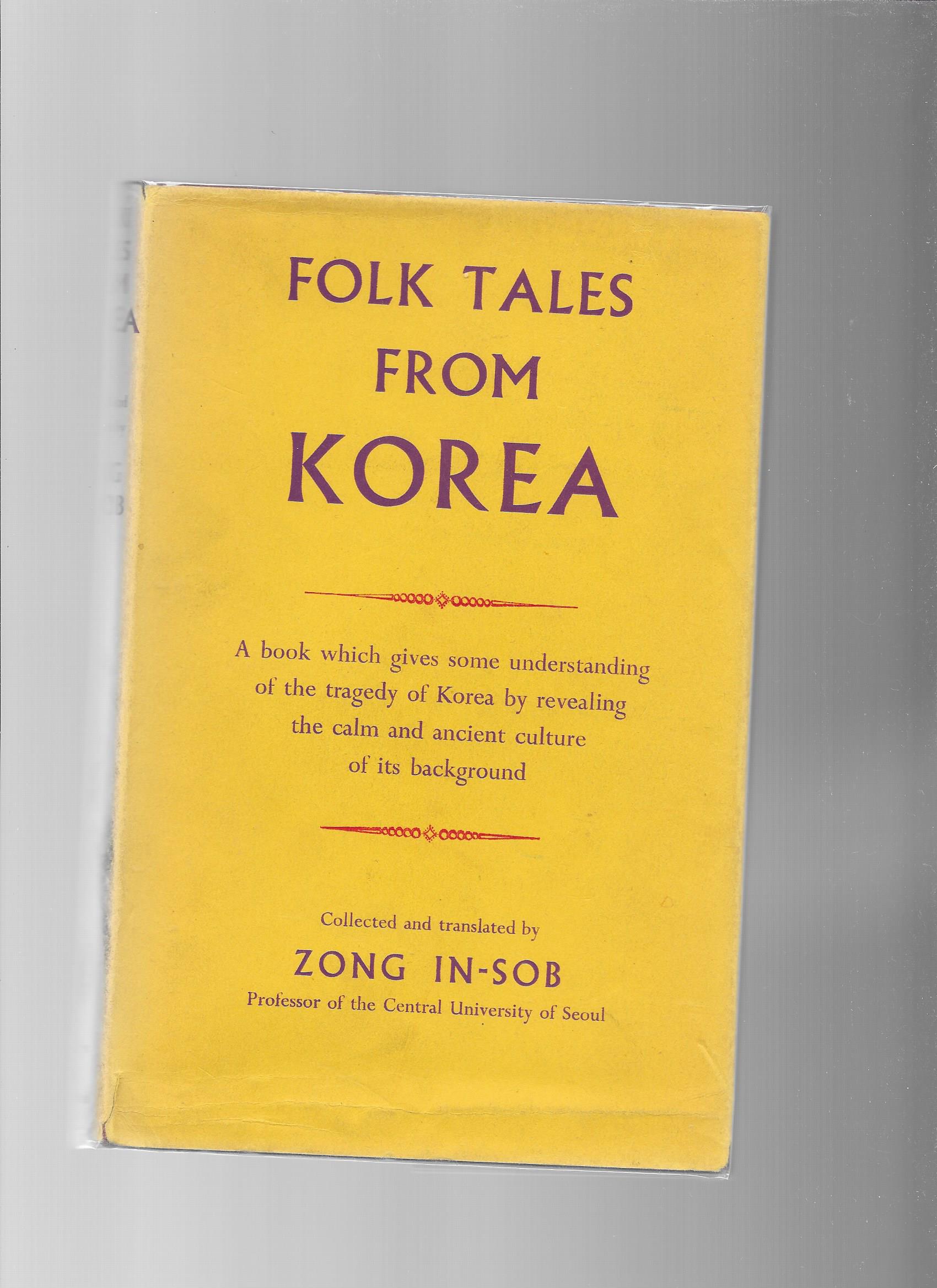
[i] Retold from Zong In-Sob, Folk Tales from Korea (London: Routledge & Kegan Paul Ltd., 1952), no. 36, pp. 66-68, who apparently had the story from an earlier collection published in Seoul in 1925. Several other versions on the internet.
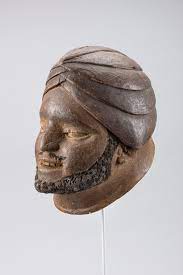
A mask by an unidentified Makonde artist of the mid-20th century QCC Art Gallery of the City University of New York, Smithsonian Magazine.
Once, they were thought to be. Then they were not. Now, it seems possible that many might be.
Recent genetic research into the origins of the Swahili people of East Africa strongly suggests that the ancient account of their kings, known as the Kilwa Chronicle, is substantially correct. In that narrative, the Swahili people of Africa are said to have originated in Persia (Iran) and began mixing with Africans one thousand or more years ago.[1]
Other research over the last decade or so has also provided support for the likelihood that traditional narratives, previously dismissed as fables, probably do record events that happened in deep time.
The frenzy of story collecting that accompanied the mercantile and colonial expansion of Europe from the seventeenth century to the nineteenth century led to the first attempts to understand the world’s massive body of folk and traditional narrative. Excited scholars proposed many theories of the origins and diffusion of these tales. Was it simply coincidence that the same stories, in one or another variation, appeared time and time again among cultures not known to have ever had any direct connection? How old were they? Could they be true?
The answer to the first question may be ‘as old as time’, at least human time.
Using the Gaia space telescope, astronomers studying the constellations and how they appear in various mythologies across the world have recently added further evidence for the antiquity of story. The star pattern known as the Pleiades was the object of mythmaking in many ancient cultures, many of which refer to seven stars that make it up. Today, we can only see six stars, but 100 000 years ago, seven stars would have been visible, strongly suggesting that the Australian Aboriginal Seven Sisters songline, the Greek story of the seven daughters of Atlas and similar storylines in African, Native American and Asian traditions had their origins in the way things were one hundred millennia ago.[2]
The answer to the second question is equally momentous.
Stories of a great flood appear so often in so many of the world’s narrative traditions that many have concluded there must have been some such event or events in antiquity. Noah and his Ark may be the most familiar to many, but there are an immense number of variations on the theme. Until recently, the trend has been to dismiss oral traditions of historical or pre-historic events as fantasy. But research linking scientific evidence with indigenous stories has brought about a more nuanced interpretation.[3] One topic which can now be linked to provable pre-historic events is the inundation of land. Twenty or more Australian Aboriginal stories of such events are thought to be around 10 000 years old.[4]
One of those traditions is that of the Narrinyeri (Ngarrindjeri and other spellings) people of Lake Alexandrina and the Lower Murray region of what is now South Australia. They recounted a tradition of their great ancestor, Nurundere (also Martummere) to German Lutheran missionary, Heinrich Meyer, in the 1840s. This version of the story, part of a longer sequence, tells how Nurundere came to create a passage between Kangaroo Island and the mainland by causing the sea to ‘flow’ and so punishing his two fleeing wives.[5] Kangaroo Island was separated from what is now the mainland of South Australia around seven thousand years ago.
In 2020, archaeologists working in north-western Australia discovered Aboriginal settlements beneath the sea near the Burrup Peninsula at Cape Brugieres. The drowning of these sites is thought to have occurred between 7000 to 8500 years ago.[6]
Using weather patterns and other evidence, researchers have discovered that Polynesian oral traditions of sunken lands can be correlated with geological events.[7] Subsequent research in Australia found evidence that Aboriginal stories of a great flood on the east coast of the continent reflect a verified rising of sea levels around 7000 years in the past.[8]
Related research suggests that indigenous traditions in both Australia and Brazil might carry memories of the megafauna who were extinct by 40 000 years ago.[9] Adrienne Mayor has looked closely at the connections between fossil remains and First American myths and legends and at the archaeological evidence for warrior women.[10] Other researchers have used DNA evidence to trace the migration of narrative motifs from South Siberia to North America around twelve thousand years ago.[11]
In 2020, a team of geologists suggested that the Gunditjmara story explaining the origins of the volcano they call Budj Bim might relate to an event that occurred in southeastern Australia around 37 000 years ago. They suggest that ‘If aspects of oral traditions pertaining to Budj Bim or its surrounding lava landforms reflect volcanic activity, this could be interpreted as evidence for these being some of the oldest oral traditions in existence’.[12]
The extensive amount of archaeological and palaeontological research currently underway in all parts of the world is revealing new evidence of human occupation, journeying and interacting.[13] In recent years some of these discoveries and interpretations of them have rewritten the history of humankind. Some important parts of that history are held in age old tales.
[1] Brielle, E.S., Fleisher, J., Wynne-Jones, S. et al. ‘Entwined African and Asian genetic roots of medieval peoples of the Swahili coast’. Nature 615, 866–873 (2023). https://doi.org/10.1038/s41586-023-05754-w.
[2] Efrosyni Boutsikas, Stephen C. McCluskey and John Steele (eds), Advancing Cultural Astronomy: Studies in Honour of Clive Ruggles, Springer International Publishing, 2021.
[3] Timothy Burberry, Geomythology: How Common Stories Reflect Earth Events, Routledge, 2021.
[4] Patrick Nunn, The Edge of Memory: Ancient Stories, Oral Tradition and the Post-Glacial World, Bloomsbury, London, 2018.
[5] Collected by Meyer and quoted in Rev George Taplin, The Native Tribes of South Australia, E S Wigg & Son, Adelaide, 1879, pp. 60-61.
[6] Benjamin J, O’Leary M, McDonald J, Wiseman C, McCarthy J, Beckett E, et al. (2020) ‘Aboriginal artefacts on the continental shelf reveal ancient drowned cultural landscapes in northwest Australia’. PLoS ONE 15(7): e0233912.
[7] Patrick D Nunn, Vanished Islands and Hidden Continents of the Pacific, University of Hawaii Press, Honolulu, 2009.
[8] Patrick D. Nunn & Nicholas J. Reid (2016) ‘Aboriginal Memories of Inundation of the Australian Coast Dating from More than 7000 Years Ago’, Australian Geographer, 47:1, 11-47, DOI: 10.1080/00049182.2015.1077539.See also Patrick Nunn, The Edge of Memory.
[10] Adrienne Mayor, Fossil Legends of the First Americans. Princeton University Press, 2005 and The Amazons: Lives and Legends of Warrior Women across the Ancient World. Princeton University Press, 2014.
[11] Korotayev, Andrey. ‘Genes and Myths: Which Genes and Myths Did the Different Waves of the Peopling of Americas Bring to the New World.’ History & Mathematics (2017): n. pag. Print.
[12] Erin L. Matchan, David Phillips, Fred Jourdan, and Korien Oostingh, ‘Early human occupation of southeastern Australia: New insights from 40Ar/39Ar dating of young volcanoes’, Geology, Volume 48, Number 4, 1 April 2020 at
After surviving, this must have been one of the first questions our earliest ancestors asked themselves. It might have been asked around the same time that they wondered where they had come from and how their part of the world originated. It seems likely that the stories they evolved to explain what we generally think of as ‘creation’ also included guidelines for living together and for coexisting with the animals, plants and natural phenomena of the planet.
This consciousness may have evolved around the same time as language and the ability to shape it into narratives that could be told by one to another – and another and another, in a multi-generational chain of tellings. When writing evolved, those stories, perhaps thousands of years old by then, could be written down. They were. The earliest written works we have are tales of unknowable forces, titanic beings and tectonic configurations of earth, sky, land and sea. They are also tales of interaction between gods, monsters, demigods, heroes and, eventually, everyday mortals.[1]
Creation stories were told probably by all peoples wherever they came together into communities to get on with the business of living and dying. As well as engaging with the unknowable cosmic conundrums plumbed by all origin myths and, later, by organised religions, people needed to develop ways of getting on and getting by. This meant figuring out what worked, what did not and agreeing on the rules for living together.
How should procreation be managed? The universal human problem of ensuring a degree of separation in the gene pool was worked out and encoded in stories.
What should be done with the aged? Despatched when they could no longer contribute to the tribe, clan, or supportive group in which they had lived out their lives? Or did they have something unique to provide to the group? Wisdom, perhaps?
What is fair, equitable? What is not? Who should decide, and how?
Evil? What did that consist of and how could it be avoided or otherwise managed?
The unknowable. In deep time, pretty well everything in the natural world and beyond – including death. And then what?
These, and other fundamentals, were dealt with through narratives – myths, legends, fables, ‘fairy’ tales, as we now term them. Not only were stories like these evolved, told, written and ultimately printed around the world, they tended to be remarkably similar to each other. Mystical beings made the world. Gods – or a god – ran the afterlife. Heroes brought fire, descended to the underworld, or slew monsters, mostly to the ultimate benefit of their people. A great flood drowned the earth. Evil spirits abounded. Devils and demons had to be outwitted. Animals, places and everything else had to be named and their characteristics accounted for. People did stupid things. People did wicked things. Sometimes they were held to account and received their just desserts. Often, whether saints or sinners, the protagonists of stories were transformed. Or not. Life not only had to be lived, it had to be storied.
These processes, at once banal and profound, have been going on in storytelling since as long as we know.[2] As well as their speech, people hold onto the tales carried within their language. Many of these are carried on the tongue rather than the page. But even where oral communication has been largely replaced by print and visual media, the same old tales continue to be told in books, films, digital games.[3]
How old are these stories? The answer to that question may be ‘as old as time’, at least human time.
Using the Gaia space telescope, astronomers studying the constellations and how they appear in various mythologies across the world have recently added further evidence for the antiquity of story. The star pattern known as the Pleiades was the object of mythmaking in many ancient cultures, many of which refer to seven stars that make it up. Today, we can only see six stars, but 100 000 years ago, seven stars would have been visible, strongly suggesting that the Australian Aboriginal Seven Sisters songline, the Greek story of the seven daughters of Atlas and similar storylines in African, Native American and Asian traditions had their origins one hundred millennia ago.[4]
Could these stories possibly be true? Do they somehow record historical, or even pre-historical, events?
The truth that western scholars sought, and mostly still do, is an objective reality based on verifiable evidence. That version is generally given in a linear sequence, originally through chronicles, later in histories, that present a more or less coherent narrative of events through time. But this is a very European notion. Elsewhere in the world, time is not streaming from past to present and into the future.
The Australian Aboriginal ‘Dreamtime’ (a western attempt to describe it), like many other indigenous mythologies and spiritualities, exists in an ‘always-ever’ form in which these neat chronological divisions do not exist. The past is here now and the future is held in the past, all of which could well be happening right now. And is. I have been told by Aboriginal people of evil night beings who lurk at a particular location. The traditional owners of what is now known as ‘Nyungar country’ in Western Australia, will not go near that place after dark.
Nor are stories of the past necessarily told through one voice or perspective. The people who migrated south through the tenth to thirteenth centuries into what is now Mexico evolved a culturally diplomatic form of storytelling that made space for the interpretations of different, previously warring groups who were now allied through intermarriage and common interest. When the stories of these people, who we know as ‘Aztecs’, were told, different speakers could stand up and tell their version of particular, usually traumatic, events.
In these tellings, chronology had little purchase as stories flowed between different periods, often in what western scholars perceived as confusing repetition and so, as evidence of degraded or incoherent and fragmentary forms of oral transmission. Modern scholarship has revealed that repetition was a necessary feature of Aztec historical storytelling. Their historical truth was a communal, consensual one, a composite of the various and often conflictual meanings of what had happened to them.[5]
Humankind’s body of story remains in obscure publications and vast archives around the world, many of which are not even catalogued, let alone fathomed.[6] These narrative treasures, known and still unknown, are the fundamental cultural heritage of humanity. To allow them to languish is to abandon the roots of our being and the lessons they contain for living and dying on planet earth. Confronting though it may be, this is the human condition.
Scientists also speculate that the very act of telling stories, of whatever kind, is itself essential to being human and surviving. Our brains process stories, whether ‘true’ or ‘fictional’, in ways that we find compelling as we try and understand the world and our place in it. Through telling and retelling ‘the metanarrative of human culture spins a half-real, half-fictional reality’.[7] Through this reality we achieve empathy, the state that allows us to share and comprehend the emotions of others as presented in stories that rehearse the primalities of existence. Fundamentally, these are benefits of cooperating with each other and understanding the consequences of not doing so.[8]
It seems that we instinctively respond to the deep meanings within these narratives. Anthropologist and author David Bowles recounts how his study of the Nahuatl indigenous Mexican myth brought him to a sense of self through an understanding that the Aztec, and all humanity, inhabit ‘a liminal space between creation and destruction, order and chaos’, understanding this fundamental equilibrium is ‘A gift bequeathed by the ancients to all of us, their biological and spiritual children alike.’[9] We can’t all learn to speak Nahuatl, but we can read the stories in translation and gain something of Bowles’s insight into self and the cosmos.
In keeping with the reworking of the past to present different views, traditional stories are frequently reinterpreted by fiction writers, especially from a feminist perspective. Psychologists and others involved in various forms of therapy are drawing on ancient traditions to help patients with a range of psychological, emotional and other problems.[10]
The meanings and purposes of the tales may differ between cultures, often in ways that outsiders cannot comprehend. But the global reverberation of the same narratives told across time and space resonates of common concerns beyond specific periods, places and storytellers. Story and storying confirm the essential oneness of human beings, now scientifically proven by genetics, with any two individuals differing by a negligible measure of DNA.[11]
* Referencing Deborah Bird Rose, Dingo Makes Us Human: Life and Land in an Australian Aboriginal Culture (1992)
[1] McCarthy, J., Sebo, E., & Firth, M. (2023). ‘Parallels for cetacean trap feeding and tread-water feeding in the historical record across two millennia’. Marine Mammal Science, 1– 12. https://doi.org/10.1111/mms.13009.
[2] Smith, D., Schlaepfer, P., Major, K. et al. ‘Cooperation and the evolution of hunter-gatherer storytelling’. Nat Commun 8, 1853 (2017). https://doi.org/10.1038/s41467-017-02036-8.
[3] Claudia Schwabe (ed), The Fairy Tale and Its Uses in Contemporary New Media and Popular Culture, Special Issue of Humanities 2016, 5, 81; doi:10.3390/h5040081, http://www.mdpi.com/journal/humanities, accessed June 2017.
[4] Efrosyni Boutsikas, Stephen C. McCluskey and John Steele (eds), Advancing Cultural Astronomy: Studies in Honour of Clive Ruggles, Springer International Publishing, 2021.
[6] A case in point is the discovery of a field collection of tales made in Germany at the time the Grimms were busy elsewhere, see Franz Xaver von Schonwerth (Author), Erika Eichenseer (Editor), Engelbert Suss (Illustrator), Maria Tatar (Translator), The Turnip Princess and Other Newly Discovered Fairy Tales, Penguin, 2015. Many of the stories are like those collected and/or anthologised by the Grimms, yet they are given without editing and are often darkly or perplexingly different to those that have become canonical through the unbalancing influence of the heavily edited tales of Jacob and Wilhelm Grimm.
[7] Le Hunte, Bem & Golembiewski, ‘Stories have the power to save us: A neurological framework for the imperative to tell stories’, Arts and Social Sciences Journal, 5(2), January 2014.
[10] The works of Carl Jung on ‘archetypes’ and of Joseph Campbell on the hero’s journey are the most influential. For other theories of heroic narrative and its significance see Robert A Segal (ed), In Quest of the Hero, Princeton University Press, 1990 for a survey of the main theories up to the 1990s.
Little Red Riding Hood by Jessie Willcox Smith, 1911. From the book A Child’s Book of Stories. (Public domain via Wikipedia Commons)
Achille Millien (1838-1927) was a French poet with a strong interest in folklore. Around 1885 he collected ‘The Grandmother’s Story’ from the brothers Briffflaut in the central French department of Nievre. The tale they told was a rustic version of Red Riding Hood, without the hood but with the sexual and cannibalistic undertones of a folk tale rather than a fairy tale:
There was a woman who had made some bread. She said to her daughter: “Go carry this hot loaf and bottle of milk to your granny.”
So the little girl departed. At the crossway she met bzou, the werewolf, who said to her: “Where are you going?”
“I’m taking this hot loaf and bottle of milk to my granny.”
“What path are you taking.” said the werewolf, “the path of needles or the path of pins?”
“The path of needles,” the little girl said.
“All right, then I’ll take the path of pins.”
The little girl entertained herself by gathering needles.
Meanwhile the werewolf arrived at the grandmother’s house, killed her, and put some of her meat in the cupboard and a bottle of her blood on the shelf. The little girl arrived and knocked at the door.
“Push the door,” said the werewolf, “It’s barred by a piece of wet straw.”
“Good day, granny. I’ve brought you a hot loaf of bread and a bottle of milk.”
“Put it in the cupboard, my child. Take some of the meat which is inside and the bottle of wine on the shelf.”
After she had eaten, there was a little cat which said: “Phooey!… A slut is she who eats the flesh and drinks the blood of her granny.”
“Undress yourself, my child,” the werewolf said, “And come lie down beside me.”
“Where should I put my apron?”
“Throw it into the fire, my child, you won’t be needing it any more.”
And each time she asked where she should put all her other clothes, the bodice, the dress, the petticoat, the long stockings, the wolf responded:
“Throw them into the fire, my child, you won’t be needing them anymore.”
When she laid herself down in the bed, the little girl said:
“Oh granny, how hairy you are!”
“The better to keep myself warm, my child!”
“Oh granny, what big nails you have!”
“The better to scratch me with, my child!”
“Oh granny, what big shoulders you have!”
“The better to carry the firewood, my child!”
“Oh granny, what big ears you have!”
“The better to hear you with, my child!”
“Oh granny, what big nostrils you have!”
“The better to snuff my tobacco with, my child!”
“Oh granny, what a big mouth you have!”
“The better to eat you with, my child!”
“Oh granny, I have to go badly. Let me go outside.”
“Do it in the bed, my child!”
“Oh no, granny, I want to go outside.”
“All right, but make it quick.”
The werewolf attached a woolen rope to her foot and let her go outside.
When the little girl was outside, she tied the end of the rope to a plum tree in the courtyard. The werewolf became impatient and said: “Are you making a load out there? Are you making a load?”
When he realized that nobody was answering him, he jumped out of bed and saw that the little girl had escaped. He followed her but arrived at her house just at the moment she entered.[i]
The Briffault brothers were master storytellers, as the cliff-hanging ending of this version shows.
[i] Known as ‘The Story of Grandmother’, this was published in Paul Delarue, “Les Contes marveilleux de Perrault et la tradition populaire”, Bulletin Folklorique de l’Ile-de-France 1951, 221-2. See also an Asian/African version, ‘The Wolf and the Seven Kids’, in Maria Tatar, The Classic Fairy Tales: Texts, Criticism, 2nd edn. W W Norton, New York, 2017.

 GRISTLY HISTORY