GREAT CONVICT STORIES

 Here’s the cover and Prologue from my just-released new book, Great Convict Stories:


LASHLAND
I saw a man walk across the yard with the blood that had run from his lacerated flesh squashing out of his shoes at every step he took. A dog was licking the blood off the triangles, and the ants were carrying away great pieces of human flesh that the lash had scattered about the ground. The scourger’s foot had worn a deep hole in the ground by the violence with which he whirled himself round on it to strike the quivering and wealed back, out of which stuck the sinews, white, ragged, and swollen.
The infliction was 100 lashes, at about half-minute time, so as to extend the punishment through nearly an hour. The day was hot enough to overcome a man merely standing that length of time in the sun, and this was going on in the full blaze of it. However, they had a pair of scourgers who gave each other spell and spell about, and they were bespattered with blood like a couple of butchers.’ 


LINES OF LIGHT – How Jewish children’s art survived the darkness of the Prague ghetto and Nazi death camps.


It was one tragedy among many millions. But the story of Friedl Dicker-Brandeis and the children of Prague’s Terezin (Theresienstadt) ghetto shows how creative expression can defy the everyday horrors of totalitarian regimes.
When Nazi Germany occupied Czechoslovakia from 1939, Prague’s Jewish population was quickly interned in what was called a ‘model ghetto’ in the city’s Terezin quarter. Many Jews, young and old, were brutalised, starved and then deported from the ghetto to extermination camps. But through one woman’s selfless dedication, drawings made by children in the ghetto survived the war and Adolph Hitler’s Third Reich.
Friedl Dicker-Brandeis (born 1898) was a Viennese artist who came to Prague to escape Nazi persecution in her home city. Unfortunately, it followed her. She and her Czech-born husband, Pavel Brandeis, were eventually ordered to the Terezin ghetto in December 1942. Here Friedl devoted much of her time, energy and considerable creative skills to teaching art – and more – to the ghetto children. With no children of her own she became a mother of sorts to her students, encouraging them to express themselves through creative work as a form of escapist therapy for their traumatic experiences.
Friedl lived at the girls’ boarding home L410, where children forcibly separated from their parents stayed. She organised exhibitions of the children’s work as well as theatre performances for which she designed the sets and costumes. Much of the teaching had to be conducted in secret and was based on Friedl’s theory that art should ‘unlock and preserve for all the creative spirit as a source of energy to stimulate fantasy and imagination and strengthen children’s ability to judge, appreciate, observe, [and] endure.’
It all came to an end in October 1944. Pavel was deported in September and Friedl volunteered to be taken away. She was deported to the Auschwitz-Birkenau camp on transport EO-167, apparently with some of the children she taught. Perhaps they were able to take some comfort in being together as they met whatever end the Nazis inflicted. Before she left, Friedl gathered up into two suitcases over four thousand of the works the children had created and entrusted them to L410 tutor Raja Engländerova for safekeeping, in the hope that they might somehow escape the Holocaust.
The war finished in 1945. Pavel Brandeis was a lucky survivor but only around 100 of more than 600 Terezin child artists escaped the ghetto and the camps. There are various accounts of how the preserved drawings were rediscovered, but in any event they were eventually passed to the Jewish Museum in Prague where they can be seen today, together with some others in the Pinkas Synagogue in Terezin. The pictures testify to the resilience of children in the most extreme circumstances and are a memorial to the courage and dedication of a remarkable woman. Their plain lines of crayon and paint stand for light and love against the darkness of evil.
Those of Friedl’s students who lived on after the war remembered her as an inspiring teacher and human being. Eva Dorian wrote: ‘I believe that what she wanted from us was not directly linked to drawing, but rather to the expression of different feelings, to the liberation from our fears…these were not normal lessons, but lessons in emancipated meditation’.
Another former student, Erna Furman, would later write: ‘Friedl’s teaching, the times spent drawing with her, are among the fondest memories of my life. Terezin made it more poignant but it would have been the same anywhere in the world… Friedl was the only one who taught without ever asking for anything in return. She just gave of herself.’
The children’s work, together with what survives of Friedl’s own art, have been exhibited around the world from time to time. Daisaku Ikeda, founder of the Fuji Art Museum, took the 1999 exhibition to Japan, noting that:
‘The various artworks left behind by this great woman and the children of Terezin are their legacy to the present, to all of us today. They demand that we continue in our quest for a society that truly treasures human life, transcending all differences of race, religion, politics and ideology. It remains my heartfelt hope that this exhibit may provide a moment of introspection for its viewers, a moment for us to reaffirm the importance of our rights as human beings and the value of life itself.’

A couple of follow-ups to ‘The Bullshit Detection Bureau’:

 
The triage of truth: do not take expert opinion lying down | Aeon Ideas
How Fiction Becomes Fact on Social Media – The New York Times

THE BULLSHIT DETECTION BUREAU


Finding Truth in the Age of Obfuscation


The unwelcome ability of the WWW to amplify error, delusion and straight-out lying has made us all potential victims of falsehood and flimflam. This includes, but is not limited to, disinformation, misinformation, propaganda, fake news, urbanmyths, rumour, moralpanics advertorials, and more!


Thereare a fewthings you can doto protect yourself from thenonsense.


SOURCES


Wheredoes the informationcome from? Howcan you knowit is it a reliable source andnot someone or somethinghoping to hoodwink you?


Someproviders of information are morereliable than others, usually because they havesome form ofbuiltin checkingprocess, such as peerreview in the caseof academic research or factchecking carried out by reputablemedia sources.


Itfollows that the bestsources of independently researched (not unsupported and uninformedopinion or biased market surveys) and objectively evaluated information are universitiesand quality print and/or digital media. Theseare increasingly being broughttogether in quality platforms such asThe Conversation, Aeon and other operationsthat publish quality research with alevel of editorialoversight.


Openslather platforms like Facebook, Instagram, Twitter and thelike are finefor chatting but docarry not reliableinformation. They are easilymanipulated by governments wishing to spreadpropaganda or rig elections,by vested commercialinterests and ideological zealots, as recent events have demonstrated.


INTENT


Whenyou access anitem of information,try to workout the intentionof the author/s. Does thewriting try to putyou, the reader,into a particularposition or mindset? Ask yourselfwhy. Are theytrying to convince you ofa point ofview, sell youa product or anidea? Alarm youeven?


Aclassic giveaway in digital messages attempting to frightenyou into doingsomething, like chain letters,drug or otherscares LINK, are these– ! ! ! ! !. Themore of themthat follow a statement, themore you shouldignore it.


Andnever pass themon, as theyalways insist you should. Theirintent is to spreadfear, uncertainty and panic. Why certain individals have aneed for thissort of behavioris a mysterybest left topsychologists. They have alwaysbeen with usbut, again, theWeb has greatlyincreased their ability to spreadthe nonsense they getoff on.


TONE


Thelanguage and style ofthe message are relatedto its intent. If the languageis overheated, intemperate or otherwiseover the topyou can besure the individualwho composed and distributedit is likewise. These messages are designedto play uponour perfectly reasonable fears andare presented as actualexperiences, as in thisemail example from Australiain 2007 (Slightly edited for coherence on thepage):


I was approached yesterday afternoon around 3.30 PM in the Coles parking lot at Noranda by two males, asking what kind of perfume I was wearing. Then they asked if Id like to sample some fabulous Scent they were willing to Sell me at a very reasonable rate. I probably would have agreed had I not received an email some weeks ago, warning of this scam.
 The men continued to stand between parked cars, I guess to wait for someone else to hit on. I stopped a lady going towards them, I pointed at them and told her about how I was sent an email at Work about someone walking up to you at the malls, in parking lots, and Asking you to sniff perfume that they are selling at a cheap price.
 THIS IS NOT PERFUMEIT IS ETHER! When you sniff it, youll pass out and theyll take Your wallet, your valuables, and heaven knows what else. If it were not for this email, I probably would have sniffed the perfume, but thanks to The generosity of an emailing friend, I was spared whatever might Have happened to me, and wanted to do the same for you. These guys hit Sydney and Melbourne 2 weeks ago and now they are doing it in Perth and Queensland.
 IF YOU ARE A MAN AND RECEIVE THIS PASS IT ON TO ALL THE WOMEN YOU KNOW!!!
 I called the police when I got back to my desk. Like the email says, LET EVERYONE KNOW ABOUT THIS, YOUR FRIENDS, FAMILY, COWORKERS,whoever!!!!!
 Have the best day of your life!!!!!


Notice how this one begins calmly and with a matter-of-fact, reporting tone. This draws the reader in. But the gradually increasing tone of exclamation mark-assisted hysteria in this message is a reliable indicator of bullshit.


‘FACTS’AND STATS


Accuratenames, numbers, dates and other‘factual’ data have alwaysbeen hard tocome by, whichis why theencyclopedia was invented. Tomes likeEncyclopedia Brittanica and the likehave largely done theway of thedinosaurs. Despite its virtues and crowdediting model, Wikipediais no substitutefor ancient but usuallyaccurate authorities and is susceptibleto special interests, ideologies and goodoldfashioned errors offact.


Infact, Wikipedia represents the best andthe worst ofthe Web. Itsstrengths are also itsweaknesses. Use it withdiscretion. Always check at leasttwo other sourcesof information before committingto information on Wikipedia, especially anything faintly statistical. Preferably find anoldstyle printsource, useful for facts upto around 2000. Thesewere written by expertsand exhaustively factcheckedbefore the internet made allinformation slippery.


AUTHORITY


Acommon way of validatinginformation is to haveheard it froma ‘friend’, a friendof a friend’or other apparentlytrustworthy source. We invest highcredibility in those weknow, often unwisely,as they areas susceptible to receivingand transmitting bullshit as anyoneelse.


Urbanmyths (or contemporarylegends) are spread byword of mouth,through the media (printand digital) and throughemail and socialmedia in general. Their validation is oftenthat the storyis true becauseI heard itfrom a friendof a friend’, or something similar. There are innumerableyarns of thistype in circulationand many havebeen for avery long time,providing them with theveneer of authenticity and ‘truth’. How often haveyou heard that antiVietnam War protesters spat onreturning veterans? Not only isthere no evidence of this ‘fact’,what information does existsuggests that nothing of thesort ever happenedor, even ifit did, wason a minisculescale.


Legendsof this typeoften provide apparent validation of theirclaims by referring to ahospital, police department, local government authority, etc. (Seethe kidney legendabove, which mentions the police). If you takethe trouble to check and youshould if you are concerned you’ll discoverthat these authoritieswill have no record of the allegedevent.


TRUSTNOTHING


Noteven this article. The best defenceagainst obfuscation is a criticalview of everything. Don’t take anyone’s word for anythingwithout validating it for yourself. Even experts make mistakesand suffer fromunconscious biases. Always look for a range of sources and views.


In the end, we are all our own best bullshit detectors.

WRAITH OF THE COPENHAGEN

Copenhagen, 1921


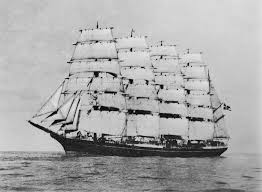
She was the largest sailing ship in the world. When the Copenhagen (Kobenhavn) was launched in 1921 she was immediately dubbed ‘The Great Dane’, her 131 metre hull supporting five masts towering nearly twenty stories into the winds that would bear the barque twice round the world before her still inexplicable disappearance en route for Melbourne, Australia.
The Copenhagen carried some cargo but was primarily a training vessel for young sailors between fifteen and twenty years of age seeking an officer’s ticket. Her voyages provided an opportunity for seasoned mariners to teach young men the many skills they would need to make a career in sail, still a serious option in Scandinavian countries at that time. 
On her tenth voyage, the Copenhagen sailed from Northern Jutland bound for Buenos Aires with a cargo of cement and chalk. Aboard was the experienced Captain Hans Anderson together with 26 crew and 45 cadets from many of Denmark’s leading families. Unloading at Buenos Aires, the ship was unable to find another cargo for Australia and so Anderson decided to set sail without one. Now with a crew of only fifteen, they set a course to Adelaide (then Melbourne) eleven days before Christmas, a trip expected to take just under seven weeks. On December 22 the Copenhagensignalled ‘all is well’ to a passing Norwegian steamer around 1500 kilometers from the island of Tristan da Cunha. 
Captain Anderson was known not to make much use of radio and often went for long periods without signalling. In those days, marine radios had a very limited range. The Danish East Asiatic Company who owned the ship were not unduly concerned when they had no word. But as the weeks slipped by and there was no sound from their magnificent vessel, nor any sight of her, they became increasingly alarmed. The Australian press echoed Danish fears for sons, brothers, fathers and uncles. ‘Where is the Kobenhaven’, asked the Adelaide Advertiser in mid-March, initiating a lengthy chronicle of newspaper articles in the Australian press and around the world.
A search vessel was sent to Tristan da Cunha. A large sailing ship with a broken foremast had been sighted in late January. With her sails only partly set and low in the water, the drifting vessel showed no signs of life. Locals were unable to reach her because of bad weather but had found no wreckage and thought she must have passed by the island. With the assistance of a small Australian intestate steamer, the Junee,  the search continued for some months, but without result. At one point it was surmised that wreckage might drift to the Western Australian coast. A plane was chartered to fly from Fremantle to Northwest Cape, but again nothing was found. The Danish government declared theCopenhagen, her captain, crew and cadets lost. Another mighty ship joined the untold others foundered in the world’s ocean deeps.
But then the sightings began. Over the next few years Chilean fishermen reported a five-masted ship in their waters. Sailors aboard an Argentinian freighter saw a what they called a ‘phantom ship’ fitting the Copenhagen’s description as they fought a gale. Other sightings came from Easter Island and the coast of Peru. It was also reported that a ship’s stern section with the name København had washed up on a West Australian beach.
And then they found the bottle. In 1934, the son of Argentina’s President visited the United States telling a strange story. Men from a whaler working off Bouvet Island in the South Atlantic had found a sealed bottle containing a ‘log’ or diary of a surviving cadet of the Copenhagen. The log told a grim story. The Copenhagen struck an iceberg. There was no option for those aboard but to take to the lifeboats. In the distance they saw their fine ship crushed between two icebergs. The diary ended with ‘It is snowing and a gale blows. I realize our fate. This sea has taken us beyond the limits of this world.’
Whatever the authenticity of this now-missing document, the story fitted the predominant theory about the disappearance of the Copenhagen, like the Titanic, victim to a drifting iceberg. The following year another grim find appeared to provide further support for this explanation. It was reported that the remains of a ship’s boat with seven skeletons had been found on the southwest coast of Africa, over 600 kilometers north of the city of Swakopmund in Namibia. Nautical experts ridiculed the suggestion that this might be a boat from the Copenhagen. “It is a far- fetched theory, absolutely without justification, said Captain Davis, Victorian Director of Navigation.
Other speculations abounded. The Copenhagen might have encountered a tidal wave. As her holds were empty and she sailed only in ballast she might have capsized in bad weather. Rumours, theories and searches for the lost barque have continued ever since. In 2012 divers found a wreck on Tristan da Cunha that some believe might be the missing ship. The Danish government and the Danish East Asiatic Company were reportedly taking the suggestion seriously enough to establish the truth of this possibility. But nothing has since been reported and today, the fate of the Copenhagen and her crew is regarded as one of the world’s greatest unsolved maritime mysteries.


OLD WISDOM

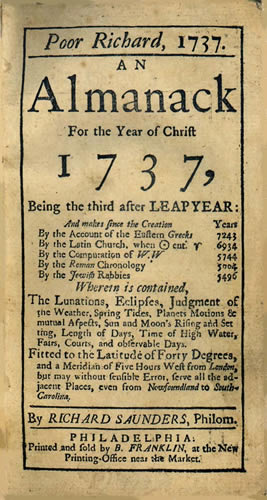
One of Ben Franklin’s famous almanacs


The humble proverb is a form of traditional wisdom and practical advice that has been around for centuries. Often described as ‘the wisdom of many’, proverbs are shared solutions to problems that beset most people most of the time which probably explains why cultures thousands of miles and thousands of years apart have developed remarkably similar proverbial wisdom about many of the same matters.
 ‘The root of all evil’ has not surprisingly, attracted many aphorisms and adages. Many of these counsel caution in financial dealings. The familiar ‘A fool and his money are soon parted’ is complemented by the Italian ‘Better give a penny than lend twenty’. Other money proverbs expound the wisdom that ‘Money is not everything’.
In fact, money is far from everything in many traditional philosophies, including the Persian, where it is said that ‘The larger a man’s roof the more snow it collects’. An old Greek proverb goes ‘A miser is ever in want’. The Japanese have a saying that indicates the virtues of poverty – ‘The poor sleep soundly’.
The need for caution and shrewdness in everyday life is the subject of much proverbial wisdom around the world. ‘Look before you leap’ is a venerable old saying known to many. Yet the same warning is echoed in the Nigerian saying ‘When the mouse laughs at the cat there is a hole nearby’. Many other societies have similar advice. ‘Do not rejoice at one who goes before you see the one who comes’, say the Japanese, while the Russians point out that ‘If you put your nose into the water you will also wet your cheeks’ (Russian).
‘Too many cooks spoil the broth’, goes the well-worn advice of the English proverb. The difficulty of getting agreement with more than one person and the likely consequences of this are also treated in the Turkish proverb ‘Two captains will sink the ship’. In Japan, the saying is even more concise – ‘Ten men, ten minds’.
Perhaps the largest number of international proverbs deal with the universal desire for contentment. The Spanish say ‘If you have a good harvest do not begrudge a few thistles’. The Chinese saying ‘A bird can perch on only one branch, a mouse can drink only its fill from the river’ has equivalents in many languages. In English there is the familiar ‘A bird in the hand is worth two in the bush’ and the lesser-known ‘a feather in the hand is better than a bird in the air’. The Greeks say ‘Nothing will content him who is not content with a little’.
The meaning of these proverbs of contentment is that it is better to have less of something that is certain than to have only the promise of something more. This is a powerful reminder that we should be satisfied with what we have now.
That ‘thief of time’, procrastination, is also a popular subject for proverbial pronouncement in many countries. ‘Don’t put off until tomorrow what you can do today’ is the message of the Yiddish ‘Tomorrow your horse may be lame’, of the Arabic ‘Today it may be fire, tomorrow it may be ashes’ and of the dryly perceptive French saying, ‘Life is made up of tomorrows’.
The ‘better part of valour’, discretion, is not exclusive to English-language proverbs like ‘Let sleeping dogs lie’. Indians say ‘Be first at the feast and last at the fight’ while the Japanese wisely advise us ‘not to rejoice at one who goes before you see the one who comes’. The Greeks have many proverbs on discretion and caution, including ‘Add not fire to fire’ and ‘A word out of season may mar a whole lifetime.’
Most universal and profound of all emotions – and so the source of innumerable problems – is love. ‘Never love with all your heart, it will only end by breaking’ runs one true saying. The course of love never runs smooth in anyone’s language, but there are proverbs in many to ease the pain a little. ‘Try to reason about love and you will lose your reason’, say the French. In Spain ‘love is like war – begin when you like and finish when you can’.
Other cultures have even more down-to-earth advice for the lovelorn. In Sweden they suggest you ‘Choose your bedfellow while it is daylight’ , while ‘Love is sweet but tastes best with bread’, according to the Yiddish proverb. Given their reputation for ‘amour’, we should let the French have the last word on this subject: Love’s pleasure lasts a moment, love’s pain lasts a lifetime.’
There are not too many aspects of human life and frailty that have not been treated in proverbs somewhere, sometime. There is much to be gained from the traditional wisdom of different lands. ‘Anger without power is folly’, say the Germans. ‘Never cut what can be untied’ warn the Portuguese. ‘An indispensable thing never has much value’, according to Russian tradition. ‘Vows made in storms are forgotten in calms’ say the French of good intentions.
Are they simply a form of folk consolation for the inequities of all political and social systems and the impact of bad luck? Probably. But the message of proverbs is an affirming one for those without the power to change things:
·      the secrets of a happy life are simple
·      keep business and personal affairs in proportion
·      be moderate in fulfilling needs and desires
·      treat others as you would wish to be treated yourself
·      Above all, be content with what you have if that is enough for your essential needs.
As the great American philosopher and purveyor of the proverb, Benjamin Franklin (1706-90), put it: ‘If you desire many things, many things will seem but a few’.

HISTORY’S FIRST GRUMPY OLD MAN


Traditional representation of Hesiod as a blind bard
He was history’s first grumpy old man. He complains, boasts, offers gratuitous advice and is a complete misogynist. His name was Hesiod and he lived over two and half thousand years ago in Ancient Greece.


Probably. No one really knows if he existed. Like Homer, a close contemporary, Hesiod might not be a real human being at all, just a convenient pen name for a poet, mythologist, farmer and irritating smart arse.
Whether there was a real Hesiod or not, his words speak directly to us from the deep past in surprisingly modern modes. He tells us very clearly what he likes (not a lot) and what he doesn’t like (a lot more). Women are a big problem for him:

Do not let a flaunting woman coax and cozen and deceive you: she is after your barn. The man who trusts womankind trust deceivers.

He gives us a few selected slices of his life and lineage to make points about others and much better ones about himself.

Then I crossed over to Chalcis, to the games of wise Amphidamas where the sons of the great-hearted hero proclaimed and appointed prizes. And there I boast that I gained the victory with a song and carried off an handled tripod which I dedicated to the Muses of Helicon, in the place where they first set me in the way of clear song . . .  for the Muses have taught me to sing in marvellous song.

In some senses, Hesiod’s Works and Days is the first self-help book. He is certainly keen to point out to his brother Perses the many errors of his ways and to provide other advice to all and sundry about how to live their lives. Here he is on the wayward Perses who, among other sins, Hesiod accuses of stealing a part of their father’s inheritance:

Perses, lay up these things in your heart, and do not let that Strife who delights in mischief hold your heart back from work, while you peep and peer and listen to the wrangles of the court-house. Little concern has he with quarrels and courts who has not a year’s victuals laid up betimes, even that which the earth bears, Demeter’s grain. When you have got plenty of that, you can raise disputes and strive to get another’s goods. But you shall have no second chance to deal so again: nay, let us settle our dispute here with true judgement which is of Zeus and is perfect. For we had already divided our inheritance, but you seized the greater share and carried it off, greatly swelling the glory of our bribe-swallowing lords who love to judge such a cause as this. Fools! They know not how much more the half is than the whole, nor what great advantage there is in mallow and asphodel.

While the feckless Perses is the focus of much of Hesiod’s ire, he is not shy of telling everyone else what to do, or not. He hands out surely unneeded advice about where to go to the toilet:

Never make water in the mouths of rivers which flow to the sea, nor yet in springs; but be careful to avoid this. And do not ease yourself in them: it is not well to do this.

Hesiod also had his own take on the gods and heroes of Greek mythology. So did everyone else, of course. Mythology is full of variants of variants of the same stories. What distinguishes Hesiod though is that he links his myths with a theory of historical evolution. It’s a pretty bleak philosophy, but that’s in character for the gloomy poet.
According to Hesiod there have been five ages or generations of human history. The first is the age of ‘a golden race of mortal men’ crated by the gods of Olympus.

… they lived like gods without sorrow of heart, remote and free from toil and grief: miserable age rested not on them; but with legs and arms never failing they made merry with feasting beyond the reach of all evils. When they died, it was as though they were overcome with sleep, and they had all good things; for the fruitful earth unforced bare them fruit abundantly and without stint. They dwelt in ease and peace upon their lands with many good things, rich in flocks and loved by the blessed gods.

But the next generation was of silver and much less noble:’

It was like the golden race neither in body nor in spirit. A child was brought up at his good mother’s side an hundred years, an utter simpleton, playing childishly in his own home. But when they were full grown and were come to the full measure of their prime, they lived only a little time in sorrow because of their foolishness, for they could not keep from sinning and from wronging one another, nor would they serve the immortals, nor sacrifice on the holy altars of the blessed ones as it is right for men to do wherever they dwell. Then Zeus the son of Cronos was angry and put them away, because they would not give honour to the blessed gods who live on Olympus.

The third generation were:

… a brazen race, sprung from ash-trees and it was in no way equal to the silver age, but was terrible and strong. They loved the lamentable works of Ares and deeds of violence; they ate no bread, but were hard of heart like adamant, fearful men. Great was their strength and unconquerable the arms which grew from their shoulders on their strong limbs. Their armour was of bronze, and their houses of bronze, and of bronze were their implements: there was no black iron. These were destroyed by their own hands and passed to the dank house of chill Hades, and left no name: terrible though they were, black Death seized them, and they left the bright light of the sun.

After the passing of this generation Cronos, son of Zeus, made another

… which was nobler and more righteous, a god-like race of hero-men who are called demi-gods, the race before our own, throughout the boundless earth. Grim war and dread battle destroyed a part of them, some in the land of Cadmus at seven- gated Thebe when they fought for the flocks of Oedipus, and some, when it had brought them in ships over the great sea gulf to Troy for rich-haired Helen’s sake: there death’s end enshrouded a part of them. But to the others father Zeus the son of Cronos gave a living and an abode apart from men, and made them dwell at the ends of earth. And they live untouched by sorrow in the islands of the blessed along the shore of deep swirling Ocean, happy heroes for whom the grain-giving earth bears honey-sweet fruit flourishing thrice a year, far from the deathless gods, and Cronos rules over them; for the father of men and gods released him from his bonds. And these last equally have honour and glory.

After the passing of the fourth generation, Zeus made a fifth, ‘of men who are upon the bounteous earth.’ Hesiod is not happy to be among this generation and waxes apocalyptic:

… would that I were not among the men of the fifth generation, but either had died before or been born afterwards. For now truly is a race of iron, and men never rest from labour and sorrow by day, and from perishing by night; and the gods shall lay sore trouble upon them. But, notwithstanding, even these shall have some good mingled with their evils. And Zeus will destroy this race of mortal men also when they come to have grey hair on the temples at their birth. The father will not agree with his children, nor the children with their father, nor guest with his host, nor comrade with comrade; nor will brother be dear to brother as aforetime. Men will dishonour their parents as they grow quickly old, and will carp at them, chiding them with bitter words, hard-hearted they, not knowing the fear of the gods. They will not repay their aged parents the cost their nurture, for might shall be their right: and one man will sack another’s city. There will be no favour for the man who keeps his oath or for the just or for the good; but rather men will praise the evil-doer and his violent dealing. Strength will be right and reverence will cease to be; and the wicked will hurt the worthy man, speaking false words against him, and will swear an oath upon them. Envy, foul-mouthed, delighting in evil, with scowling face, will go along with wretched men one and all. And then Aidos and Nemesis, with their sweet forms wrapped in white robes, will go from the wide-pathed earth and forsake mankind to join the company of the deathless gods: and bitter sorrows will be left for mortal men, and there will be no help against evil.

Hesiod doesn’t say if he thinks there are any more ages to come. But going by his progression from gold, silver, bronze, the heroes of Troy and down to his own era of iron and misery, if there are they won’t be a whole lot of fun.
Despite his dismal view of almost everything, Hesiod seems to know how to enjoy himself. When the seasons turn warm again and the grasshopper sings:

… then goats are plumpest and wine sweetest; women are most wanton, but men are feeblest, because Sirius parches head and knees and the skin is dry through heat. But at that time let me have a shady rock and wine of Biblis, a clot of curds and milk of drained goats with the flesh of an heifer fed in the woods, that has never calved, and of firstling kids; then also let me drink bright wine, sitting in the shade, when my heart is satisfied with food, and so, turning my head to face the fresh Zephyr, from the everflowing spring which pours down unfouled thrice pour an offering of water, but make a fourth libation of wine.

In the end, the most important thing about Hesiod is his humanity. We clearly see his foibles and flaws, his prejudices, his blind spots and his intelligence. He is just like all of us – past, present and, hopefully, future.
The Muses
Translations by Hugh G. Evelyn-White (1914) at  Sacred Texts

FRUMMAGEMMED, NOOZED AND SCRAGGED – THE LANGUAGE OF EXECUTION


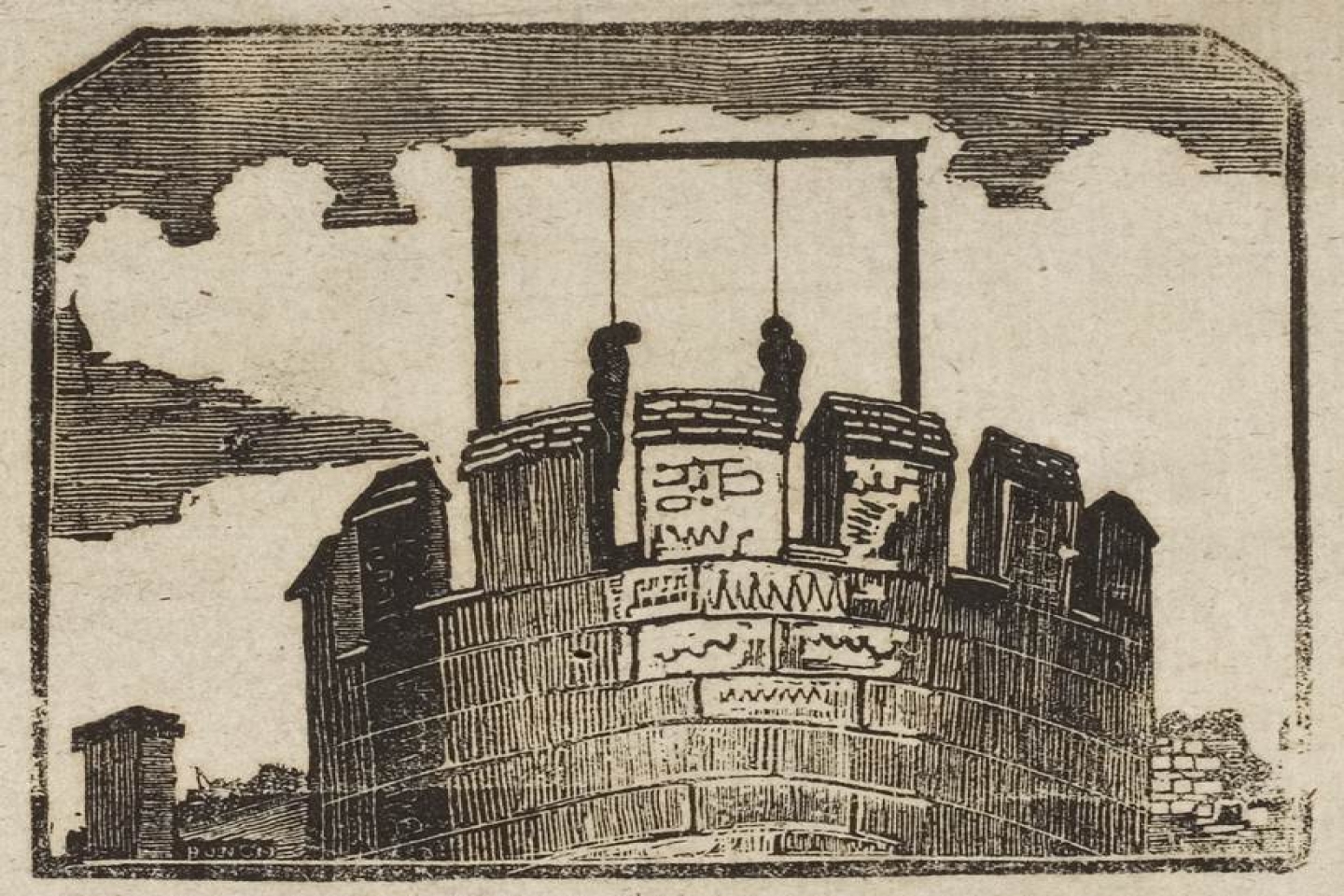
The Tyburn Tree – the permanent gallows at Tyburn, which stood where Marble Arch now stands, about 1680


These evocative words all described execution by hanging, the frequent fate of the Elizabethan and Jacobean criminal. There were many other terms describing the same mode of exit, including to be tucked up, stretched and crapped, an indication that a criminal career in these times was likely to be short. But at least the victim went out in a blaze of glory, celebrated in excited gossip and street ballads like this canting song published in 1676:

But when we come to TyburnFor going upon the budge,There stands Jack Catch, that son of a whore,That owes us all a grudge.And when that he hath noosed us,And our friends tip him no cole,Oh then he throws us in the cartAnd tumbles us in to the hole.

The budge was stealing, or more generally any kind of criminal activity. Jack Catchis a variation of Jack Ketch, the generic name for the hangman and tipping him no cole refers to the friends of the condemned failing to bribe the hangman. The hole was the drop into eternity.
Public executions were a major form of entertainment in the seventeenth and eighteenth centuries. Known as Tyburn Fair or The Hanging Match, the day was often a ribald and intoxicated spectacle of death in which the sufferer was expected to play his, or sometimes her role, along with the topsman and the screeching mobcome to see the show. The executed would take the condemned procession to Tyburn or another tree by way of taverns for the traditional parting cup. Not surprisingly this final quaff often became another, then another, and many reportedly went to meet their maker in a state of inebriation.
Regardless of their sobriety they were expected to die game like a fighting cock and preferably to give a flowery and defiant final speech before being turned offto dance the Tyburn jig. The famous highwayman Dick Turpin played his role well, according to a contemporary report of 1739, behaving:

…in an undaunted Manner; as he mounted the ladder, feeling his right Leg tremble, he stamp’d it down, and looking round about him with an unconcerned Air, he spoke a few Words to the Topsman, then threw himself off, and expir’d in five Minutes.

Turpin was unrepentant and bold, an important factor in his status as a proper man, the term of approbation given by the crowd to those who died well. But many other malefactors chose to give dying speeches of repentance and cautioned others not to do as they had done. Early in the sixteenth century, if not before, the phrase to preach at Tyburnwas a widespread euphemism for being hanged. The opposite of dying well was dying dunghill, a term also derived from the language of the brutal custom of the cockfight in which a dunghill cock was one that would not fight.
But whether defiant or repentant, many others turned in notable final performances. And if, through alcohol or fear, they failed their final act, then the street literature and broadside publishers of the day had their final words already printed and ready for sale in the form of their last confessions and feisty ballads about their real and mostly imagined doings.
This ritual had its own elaborate street language. In a cart, the condemned was brought up to the gallows, known by many names such as the trining cheats or derrick. The hangman placed the rope halter or Tyburn tippet around the malefactor’s neck and the cart was driven out from beneath, leaving the condemned to swing at the end of the rope to dance the Paddington frisk or the hempen jig. Death was effectively by strangulation and often had to be assisted by relatives and friends either pulling down on the feet of the condemned or throwing heavy rocks at his chest to hasten the end. When the sufferer was done, the hangman cut down the body, often selling it to the surgeons keen to practice their anatomical skills. Occasionally the execution was so ineptly managed that the condemned, if removed quickly enough from the noose, might be brought back to life by friends administering whacks and alcohol in a local pub.
Another of the terms that evolved within this spectacle of death included nub, meaning to be hung. It had a number of variations, including nubbing cheat, as in one who escapes the gallows. This was in use from at least 1676 and was still spoken by convicts transported to Australia up to the middle of the nineteenth century. Other uses of the term were a nubbing ken, meaning the courthouse where the sentence of death was pronounced and the nubbing cove who was, naturally enough, the hangman.
Jack Ketch (also Catch) was still being publicly employed in the Victorian era until legislation of 1868 put an end to public executions. Before then a hanging match might attract tens of thousands of spectators who, even if a little better behaved than their earlier counterparts, still revelled in an air of festivity and anticipation. Food, drink and the still popular last lamentationsof the condemned were hawked through the crowds. These ballads and verses seem to have been even more profitable in the later era than previously. According to one ballad seller interviewed by Henry Mayhew in the mid-nineteenth century, the earlier practice of ‘sentence o’ Friday and scragging o’ Monday’ had not left the hacks and the printers enough time to supply the ready market. In the more enlightened practice of allowing a week or more between sentence and suffering, there was plenty of opportunity to churn out the required souvenirs for the enthusiastic crowds.
Among the keenest attendees of executions were criminals themselves. Public hangings were events where pickpockets filled their pockets from those of the gawpers. Large numbers of harlots, cadgers, thieves and youthful miscreants jostled their way to the front of the crowd in order to be as close to the gallows as possible. The attraction of public execution for those on the slippery slope of serious crime led many to conclude that these festivals of death had little or no deterrent effect. In response to this perception and the increasing distaste for the savagery of public executions, the gallows were eventually moved inside prison walls. Crime, of course, continued nevertheless.