SPLENDID HELLS AND SKINNING HOUSES – The Lingo of American Gamblers

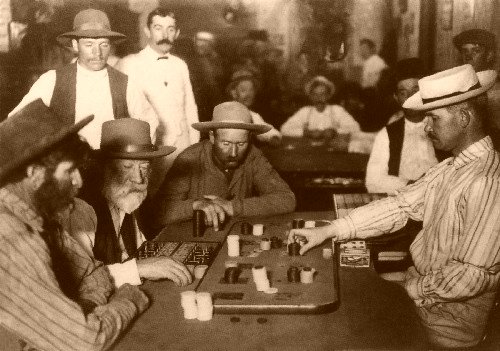
Playing Faro, Arizona 1895 (Wikipedia)

A nineteenth gambler named Mike Macdonald is credited with the phrase ‘There is a sucker born every minute’ and gambling of all kinds was big business in the expansion of America. The first major surge was from around 1800 to the mid-1830s. Games such as faro, craps, monte and, later, klondike became established with the sharpers, or professional gamblers, preying on the suckers with all manner of rigged games, stacked decks and a host of other tricks and traps. So prevalent and frequently ruinous was the urge to gamble that a strong moral and social backlash saw gaming shut down in many places, sending the sharpers and their tricks out across the roads of a rapidly expanding nation.

The Californian gold rushes provided another opportunity for gamblers to ply their trades. It seems that the card and dice game of banco was introduced from Europe at this time (although the founder of the Pinkerton Detective Agency did not come across it until 1869 in New Orleans). It grew rapidly in popularity, developed many variations, mostly crooked and become widely known as bunco, often played in bunco parlours or bunco skins.  The game used accomplices similar to those used in the shell game and later confidence tricks to bring the mark to the fleecing. This person was known as a bunco steerer. Bunco became a byword for swindling of all kinds and the term bunco artist or bunco man became synonymous with fraud and deception of all kinds. Many police departments even referred to their fraud and gaming officers as bunco squads from the period of Prohibition when the game made a return to the criminal pursuits of gangsters, particularly in Chicago, though the numbers rackets, refinements of yet earlier refinements of ancient swindles, seem to have become the main forms of graft by this time. The once popular and powerful expostulation buncombe! is also related to bunco, though which word came first has been the subject of controversy among linguists.

A second major wave of gambling began after the Civil War and lasted to the early twentieth century. During these periods, between them, and after them, gambling ebbed and flowed depending on local politics and economics. Sometimes betting of all kinds, whether square or crooked, was banned, sometimes it was wide open, sometimes it was legal but regulated. Through all these ups and downs though, the card sharps and their victims played on, using an always evolving and extensive language of luck, cheating and skill.

The places in which these games were played and usually lost, ranged from anywhere flat space where dice could be thrown or cards laid, all the way through to elaborate resorts and casinos. The best of these palaces of pleasure and financial pain were known as splendid hells, hell being an old description for gambling dens. Those cheap premises where players set up their own games were known as wolf traps, skinning houses or deadfalls. They were also known as ten percent halls from the size of the cut that the individual gambling entrepreneur gave to the house for the privilege of playing there. If a player got a square deal – the origin of the current phrase – at any of these places it was an oversight.

One of the means devised to make sure that suckers did not prosper was the mechanical dealing box. The first of these seems to have surfaced in the early 1820s. It was a brass box, slightly larger than a standard deck of cards and with thumbhole on the top through which the dealer slid each card out of a slit in the side. A spring pushed the remaining cards to the top as each one was dealt. The potential for chicanery – already developed to a high art in hand dealing – now increased exponentially. Dealing boxes were rigged with a bewildering variety of fiendishly cunning devices for cheating with names like the tongue-tell and the sand-tell, the needle squeeze or the end-squeeze. One was called the gaff, a new variation on an old and widely used word having a long association with the arts of deception. These devices were all legal and could be purchased from specialised suppliers, along with marked and otherwise rigged decks of cards, dice, roulette wheels and hold-outs for secreting cards on the body or beneath the poker table. When all these devices and techniques failed or were unavailable, the gambler could always fall back on the folk wisdom in the traditional rhyme:

Cut ‘em thin, sure to win,

Cut ‘em deep, sure to weep.

The jargon of the many forms of gambling that have evolved in modern times is large and long. Sucker has extended to a sucker bet and there are a variety of words for unskilled or unwary players, including degenerate, meaning a compulsive gambler, a mush (possibly from Romany) is a player who always has bad luck, while a pigeon is a naive gambler. A whale bets extremely large amounts each round, and a square is an inexperienced gambler. Sharp, sharper or shark is still used to denote a professional gambler. One could be skinned, rooked, taken down, fleeced, bilked, milked, bled dry or gypped, among many other expensive consequences. Even the eminent writer and wit, Oscar Wilde, was not safe from the wiles of the notorious bunco man, ‘Hungry’ Joe Louis. He took Wilde for the enormous sum of $5000 during the celebrity’s tour of the United States in 1882. Fortunately, Oscar rapidly stopped payment on the cheque he had wisely given Hungry Joe rather than the cash that these accomplished con men preferred. If the great man responded to this experience with one of his famously well-turned quips, it is not recorded.

In his account of the New York underworld, Low Life (1991), Luc Sante notes how many terms from the card game faro have passed into popular parlance. Faro was a development of an ancient game that had many variations in Europe and Britain, arriving in America at the end of the eighteenth century, spreading across the country during the nineteenth century. It was a complex game in which many betting possibilities could be wagered by the player against the house, represented by a dealer and an assistant. Faro involved twenty-five draws or turns, with the final turn being the one on which most could be won – or lost. The assistant’s job was to replicate a smaller version of the game in a special box, or case-keeper, allowing the dealer to predict how the last turn would go. Although faro was so blatantly rigged it was apparently considered to be a fairer form of gambling than any other, one reason for its great and enduring popularity. This had faded by the turn of the twentieth century, but words and terms such as parlay, keeping tabs on someone or something, piking, to break even, to string along, to be a pigeon and to be in hock are all identified by Sante as having their origins in the hazardous diversion of faro.

Inevitably, gambling lingo has more than its fair share of terms for losing money. These brokisms include being down to the felt, tapped out and dropping money. A player on a losing streak may be cold and scared money is cash that you cannot afford to lose. A bad beat in poker occurs when a player expects to win the pot but loses, while drawing dead is to have an inevitably losing hand, as revealed by subsequent events in the game. According to poker legend, the ultimate losing combination of a dead man’s hand stems from the fact that Wild Bill Hickock was shot dead in 1877 while holding a hand of a pair of aces and a pair of eights, usually said to have been in black coloured suites.

Now, as then, the great and the obscure still flock to lose their earnings and sometimes more in a variety of bedazzling new as well as tried and true old ways. Bunco even made a return to the gambling precincts of New York in the 1980s and online gambling through the World Wide Web is a massive industry. The language of gambling reflects this ongoing tradition. Some of the older gambling terms, or new terms with similar meanings, are in current use. A carpet joint is a luxurious casino, while a sawdust joint is a very basic gambling club. Shills are employed in similar roles to those working for the fleecer in the shell game. They will play at tables on behalf of the house to fill up empty seats until real players arrive. A mechanic is still a dealer who cheats players, as he or she has been for well over a century and grease means a bribe. The commission taken by a casino is known as juice, vigorish or vig. A term associated with circus and carnival speech is also used in modern gambling lingo. The nut can refer either to the overheads incurred in running a gambling house or to the amount a gambler plans to win. It is also used in circus and carny speech. To crack the nut is to win enough to pay for all costs together with a profit margin, also termed white meat.
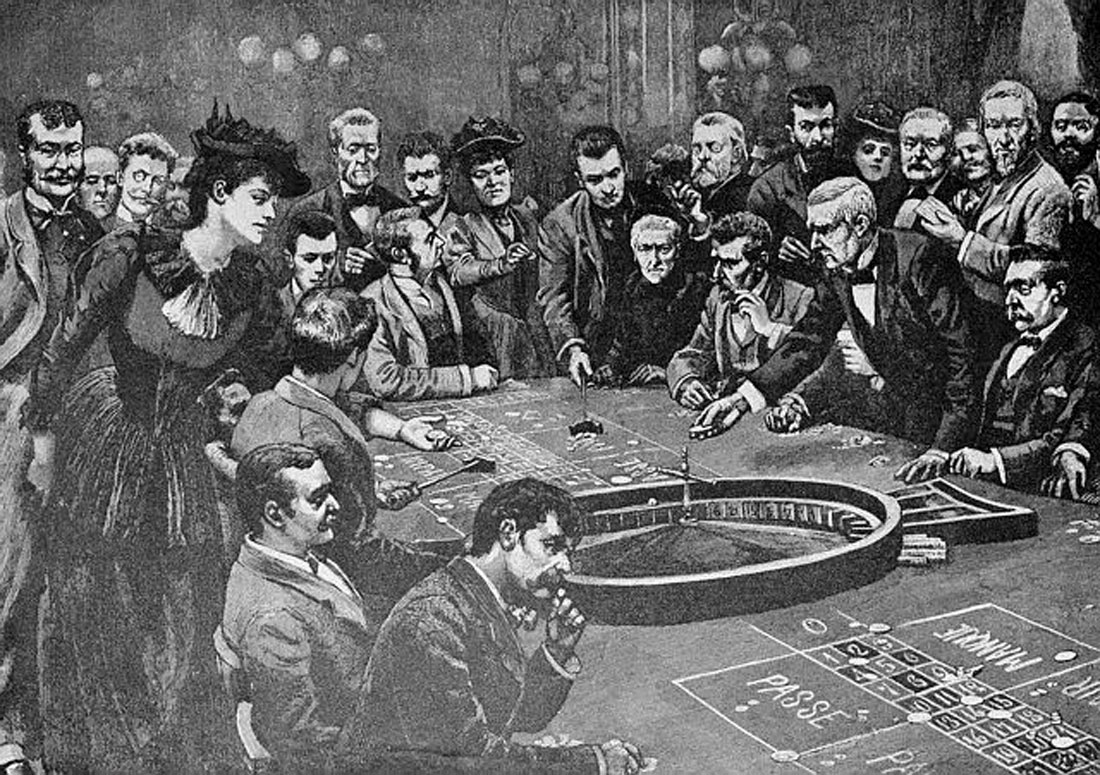
19th century casino, At the House of the Bronze Door, New York

*

CACKLING FARTS, TALLYWAGS AND OTHER GROSE WORDS


1920px-Captain_Francisa_Grose,_FSA

Captain Francis Grose, antiquarian, some-time soldier and all-round roisterer used his knowledge of lowlife to compile a dictionary of eighteenth-century slang. Assisted by Tom Cocking, Grose frequented and enjoyed the fleshpots of London, eating, drinking and taking notes of what was said and by whom. The fruits of this devoted study appeared only three decades after Dr Johnson’s famous dictionary but, unlike that great work, documented the unofficial, earthy and bawdy language spoken by the workers of the era.

Grose was so fat – a gundiguts, according to his own dictionary – that his assistant, Tom, had to strap him into bed each night to make sure he didn’t roll out. But he was an apparently amiable man who was able to move easily in different social circles, putting his inquiring mind to good use wherever he went and with whoever he met. His encounters included one with the Scots poet Robert Burns, who contributed prose and poetry to one of Grose’s many antiquarian works on castles and other ancient buildings.

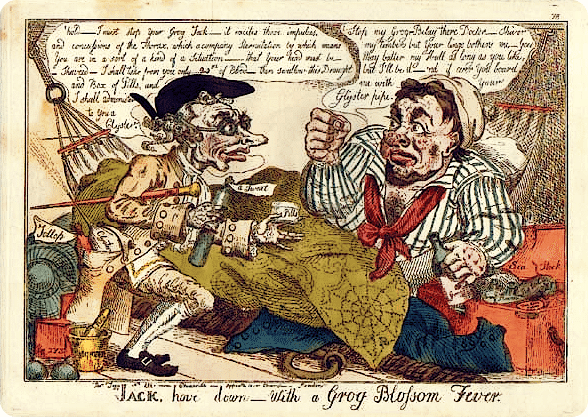
Not only does A Classical Dictionary of the Vulgar Tongue (1785) present a vast number of raffish and often amusing words and phrases, but it also gives some idea of those who spoke them. Many of these were criminals who, as in earlier and later periods, found considerable use for linguistic obfuscation. Others were those who followed more or less respectable trades and occupations. Grose’s dictionary is crammed with the speech of thieves, beggars, prostitutes, soldiers, sailors, gamblers, cockfighters, horse traders and a range of other dodgy operators.

Grose also includes terms related to trades, professions and callings, including:

Draper, an ale-housekeeper;

Duck fucker man in charge of poultry aboard a war ship

Fart catcher – a valet

Finger post – parson

Knight of the rainbow – a footman, from the gaudery of his apparel

A maggot-boiler was a tallow merchant

Monks and friars, printers’ terms describing blotted or dark printed sheets and faint sheets, respectively

Nimgimmer a doctor, especially one able to treat venereal diseases

Pontius Pilate  a pawnbroker

The dictionary includes multitudinous names for different kinds of alcohol, especially gin and is also good on insults, including Captain queernabs, a shabby ill-dressed fellow; Dicked in the nob meaning silly, crazed; a dog booby is an awkward lout and Just-ass was a punning name for a justice [judge], an official who many of Grose’s speakers often encountered.

A few of the words and terms immortalised by Grose and Cocking are still in use today, including screw, to copulate; bum fodder for toilet paper and to kick the bucket, meaning to die, which Captain Francis Grose did in 1791. His legacy is a magnificent compendium of everyday talk that people used as they went about their business, whether that was respectable or otherwise.

Oh, and a cackling fart is an egg and tallywags are testicles.

Enjoy more online at https://publicdomainreview.org/collection/a-classical-dictionary-of-the-vulgar-tongue-1788

THE VITUPERATIVE TONGUE – Insults Through the Centuries

In the medieval period, it was an offence to take the Lord’s name in vain or to otherwise blaspheme. A first offence could mean a fine, but if you did it again there were a variety of nasty punishments up to and including burning at the stake. Since the nineteenth century swearing has more usually involved references to sexual activity or to bodily functions and usually attracts no more than disapproval unless one is unwise enough to direct your ire against an official of some kind or to insult someone in the hearing of another. Even then, using ‘bad language’ is still a minor infringement of civility.
The history of swearing cursing, invective and associated maledictions is possibly older than the development of widely communicable languages. Before speech communication was developed it is not hard to imagine our ancestors grunting and roaring unintelligible but definite expressions of pain, anger and frustration. The only thing that has changed since the first expletives were uttered or muttered is that they have become organised into a mutually comprehensible system. Not only do we know how to insult, we also know when we are being insulted. While this may not be a giant step in the progress of humankind, it has left the language with a rich and colourful body of profanity. Hurled from tongues and clenched teeth since time immemorial the oath, the curse and the sacrilegious insult smoulder their way through our linguistic history.
The Elizabethans had an outstanding armoury of abuse, some of which Shakespeare made good, or bad, use of in many of his plays. At that time, one might be called a barber-monger, one-trunk-inheriting, a worsted-stocking, a varlet, a caitiff, a churl or a coistril. If those insults were not bad enough, there were plenty more that might be thrown. You might be a lurdane, a recreant, a runagate, a pander or even a cocklorel!
 
As well as straightforward insults, to be expelled in whatever configuration the speaker felt to be appropriate to the situation and the target, the Elizabethans had many standardised curses and oaths. These were fairly carefully graded as to the situations in which they might or might not be spoken. Fie upon thee was at the mild end of the scale and oaths such as by my troth and so God mend me were generally acceptable in mixed company. Further up the ladder of offensiveness came curses such as a pox upon thee, Devil take thee and morraine (disease) sieze thee. Stronger oaths included coads-nigs, By’r Lady (the origin of the modern bloody) and pretty well anything that included ‘God’, as in God’s wounds, God’s precious blood, God’s blessed will, and the like. The humorous sounding codso, possibly a reference to a codpiece and so not unlike being called a ‘jockstrap’, was also at the duel-inviting end of the swearing scale.
 
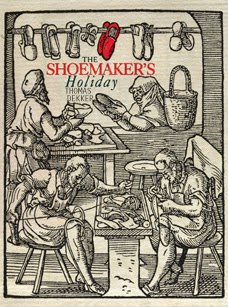
Thomas Dekker, collector of colloquial speech and author of Canting texts was also a playwright. He put his knowledge of the underworld and everyday language to especially good effect in his play The Shoemaker’s Holiday (1599), in which the character who becomes Lord Mayor of London, Simon Eyre, vents this reasonably representative spleen across the stage:
 
Where be these boys, these girls, these drabs, these scoundrels? They wallow in the fat brewis of my bounty, and lick up the crumbs of my table, yet will not rise to see my walks cleansed. Come out you powder-puff queans! What, Nan! What, Madge Mumble-Crust! Come out, you fat midriff swag-belly whores, and sweep me these kennels that the noisesome stench offend not the nose of my neighbours …
 
Good servants were apparently as hard to get in Dekker’s time as in any other.
 
So broad, colourful and various was the range of Elizabethan abuse that there are even available on the internet a number of Elizabethan curse and oath generators. These allow you to combine a number of these terms to automatically generate new and exciting insults. Some even generate such bile on a random basis. Try hurling these some time: you loggerhead base-court dewberry, you wenching fool-born rabbit-sucker, you fobbing hasty-witted hedge-pig or you currish lily-livered gudgeon. A personal favourite is thou puking spur-galled malignancy, and the scope for creative cursing in Elizabethan English is clearly considerable.
The tradition of foul language continued lustily into the industrial revolution, and beyond. In Peter Gaskell’s survey of The Manufacturing Population of England published in 1833, the coarse speech of the workers was directly linked to their brutalising way of life. According to Gaskell, young and old, spoke foul and low:
Coarse and obscene expressions are their household words; indecent allusions are often heard proceeding from the lips of brother to sister, and from sister to brother. The infant lisps words which, by common consent, are banished from general society. Epithets are bandied from mother to child, and from child to mother, and between child and child, containing the grossest terms of indecency. Husband and wife address each other in a form of speech which would be disgraceful to a brothel …
Gaskell thought what he considered from his height of middle-class respectability to be indecent language was due to ‘the promiscuous way in which families herd together’. The impoverished conditions of working class life at this time were the main cause of these conditions, as Gaskell and other reform-minded commentators observed. He calculated there were upwards of twenty thousand Irish living in the cellars of Manchester, tenement houses were dangerously under-sanitised, with ‘fifty, or more even than that number, having only a single convenience common to them all’ and this was, ‘in a very short time completely choked up with excrementious matter.’ The staple diet was potatoes wheat bread, tea and coffee, with milk hardly used. Smoking tobacco and drinking alcohol were endemic and Gaskell also described the horrors of lodging house accommodation as ‘deplorable in the extreme’, and ‘occupied indiscriminately by persons of both sexes, strangers perhaps to each other, except a few of the regular occupants. Young men and young women; men, wives, and their children – all lying in a noisesome atmosphere, swarming with vermin, and often intoxicated …’
Little wonder that they swore and that the almost affectionately inoffensive eighteenth-century term for a silly person – a Nigmenog – had long fallen into obsolescence
A study of cases of sexual slander and defamation in the Ecclesiastical Courts of England during the nineteenth century reveals some rare examples of foul language in sexual insults hurled at that time. In the court records are verbatim transcripts of what was said to whom, including such things as ‘I’ve bulled thy wife’, one man boasted to the cuckolded husband bringing the case. ‘Yes, damnthee, I’ve fucked her scores of times and she’s fetched me to fuck her when thy pillockwouldn’t stand.’ Other accusations included ‘You have been rode by all Cheltenham’ and ‘All the crofters at Dunstead have shag’d thee’. Men came in for their share of insults, being called thieves, rogues, robbers, buggers and rascals. Women, though, seemed to be getting the worst of it. As well as being simply called whores, one was described as burnt arsed, or diseased, while another of alleged easy virtue was said to have been married by parson prick.[1]
The wives of London’s Billingsgate fishmongers were notorious for the ability to hurl sharp-edged invective when provoked, something that was apparently easy to accomplish. Some recorded examples of fishwives’ insults include ‘a health to mine A—s and a fart for those that owe no money’ and ‘You white-livered son of a Fleet Street bum sitter, begot upon a chair at noonday’, which appears to mean that the accused is lazy.
An insult that has a chequered history, as they say, is the once-taboo son-of-a-bitch. This one has its possible origins in medieval French and was given a boost by none other than Shakespeare in King Lear where ‘son and heir of a mongrel bitch’ is hurled. As son-of-a-bitch it was well established by the middle of the eighteenth century, from which time it was widely employed in America, especially in the west. A certain Wells Fargo stagecoach robber known as Black Bart used the term effectively in a ditty he left at the scene of one of his robberies, one verse of which went:

I’ve laboured long and hard for bread,For honor and for riches,But on my corns too long you’ve tred,You long-haired sons of bitches.

The poetic villain signed himself ‘Black Bart, the PO8’.
Son-of-a-bitch was banned from Hollywood films for many years and remained in the limbo of euphemism (S.O.B, son of a gun, so-and-so, etc.) until around the 1980s. By that time even a President could use the term without being censured, as did the folksy Ronald Reagan in describing journalists.
The tradition of insult and invective continues strongly today. Often referred to as slams, slam sayings, put-downs or full-deckisms, these insults are designed to humiliate their targets in much the same way as their predecessors. A few random examples give the general tenor of these slurs:


Don’t feel bad, many people have no talent!

She’s like train tracks – she’s been laid across the country.

I hear you were born on April 2 – a day too late!

You wouldn’t be elected dogcatcher in a ward full of cats.


And if you really want to make a point, try:
I’ve come across decomposed bodies that are less offensive than you.
 
Phew!


[1] Waddams, S., Defamation in Nineteenth Century England: Sexual Scandal in the Ecclesiastical Courts, 1815-1855, University of Toronto Press, 2000.

BONA PARLARE – MR PUNCH SPEAKS


Punch is a hopera–a huproar, we calls it
Punchman, London 1840s
 
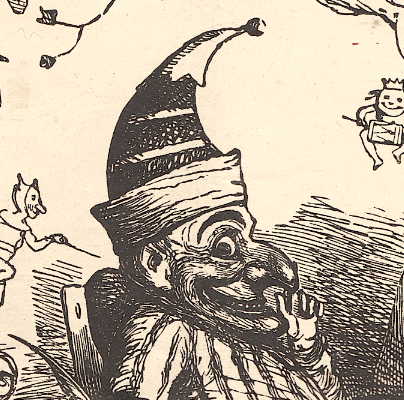
The puppets now known around the English-speaking world as ‘Punch and Judy’ arrived in England by way of Italy and France in the seventeenth century. Based on the Italian commedia del arte character of Pulcinella, or Punchinello, the play rapidly developed a distinctive English variation that included the introduction of the female figure eventually to be known as ‘Judy’. The Punchinello character was known to the slangery of the day as ‘Punch in hell’, a description that reportedly irritated the more respectable members of Mr Punch’s audience.
 
Samuel Pepys saw a Punch and Judy performance in London’s Covent Garden in 1662, though according to tradition, the first to publicly display the show in England was an Italian named Porsini who made a great deal of money, but eventually died destitute in a workhouse. According to a Punchman interviewed by the indefatigable Henry Mayhew in the 1840s ‘Every one in London knowed him: lords, dukes, squires, princes, and wagabones, all used to stop and laugh at his pleasing and merry interesting performance…’.
 
Mayhew described the Punchman as  “a short, dark, pleasant-looking man, dressed in a very greasy and very shiny green shooting jacket … Protruding from his bosom, a corner of the pandean pipes was just visible, and as he told me the story of his adventures, he kept playing with the band of his very limp and very rusty old beaver hat.” The ‘pandean pipes’ were accompanied by the swazzle, a device that the Punchman inserts at the back of his mouth to produce the raucous voice of Mr Punch, one of the trade secrets of the business.
 
The Punchman told Mayhew that Porsini passed on his skills and secrets to an apprentice and the show gradually grew and developed, though there were never large numbers of Punch and Judy acts in Britain as the skills involved, including puppetry, mimicry, music, speech and working the audience were not commonplace and also closely guarded once attained. Punch and Judy practitioners considered themselves to be well above the level of street hawkers, patterers and other busking entertainers. Inns were their preferred accommodation, rather than the cheaper lodging houses and padding kensfavoured by vagabonds and beggars.
 
There were sixteen frames, as they called the show and its portable structure, operating in England at this time, each worked by two men, eight in London and the other eight in various country locations. The Punchmen had a well organised and self-regulated network that mostly ensured no two frames were operating in the same region at the same time – ‘We all know one another, and can tell in what part of the country the others are. We have intelligence by letters from all parts.’, said Mayhew’s Punchman. However, ‘If two of us happens to meet at one town, we jine, and shift pardners, and share the money. One goes one way, and one another, and we meet at night, and reckon up over a sociable pint or a glass. We shift pardners so as each may know how much the other has taken…’.
 
The Punch and Judy show has long been associated with the seaside. Mayhew’s Punchman provides the original monetary rationale for this in a statement in which he substitutes ‘v’ for ‘w’ in some words, a common feature among low English speakers at the time, as immortalised by Dickens’ Fagin: ‘We in generally goes into the country in the summer time for two or three months. Watering places is werry good in July and August. Punch mostly goes down to the sea-side with the quality.’
 
The language of the Punchmen was a mixture of Italian, English, French and Cant, a patter known by them as Bona parlare, related to, though distinct from the Parlary of other travelling entertainers in fairs and circuses. Mayhew reproduces a likely conversation between two Punchmen, as given to him by his unnamed informant, who also provides translations of most of the words and phrases:
‘How are you getting on?’ I might say to another Punchman. ‘Ultra cateva,’ he‘d say. If I was doing a little, I‘d say, ‘Bonar.’ Let us have a ‘shant a bivare’–pot o’ beer. If we has a good pitch we never tell one another, for business is business. If they know we‘ve a ‘bonar’ pitch, they‘ll oppose, which makes it bad.

Co. and Co.’ is our term for partner, or ‘questa questa,’ as well. ‘Ultray cativa,’–no bona. ‘Slumareys’–figures, frame, scenes, properties. ‘Slum’–call, or unknown tongue. ‘Ultray cativa slum’–not a good call. ‘Tambora’–drum; that‘s Italian. ‘Pipares’— pipes. ‘Questra homa a vardring the slum, scapar it, Orderly’–there‘s someone a looking at the slum. Be off quickly. ‘Fielia’ is a child; ‘Homa’is a man; ‘Dona,’ a female; ‘Charfering-homa’–talking-man, policeman.

 
After describing the various uses of his clasp knife, the Punchman spoke of his other tools of trade, also allowing us to hear something of his distinctive patter, full of malapropisms, and breezy philosophy of life:
 

This here is the needle that completes our tools (takes out a needle from inside his waistcoat collar,) and is used to sew up our cativa stumps, that is, Punch‘s breeches and Judy‘s petticoats, and his master‘s old clothes when they‘re in holes. I likes to have everything tidy and respectable, not knowing where I‘m going to perform to, for every day is a new day that we never see afore and never shall see again; we do not know the produce of this world, being luxurant (that‘s moral), being humane, kind, and generous to all our society of life. We mends our cativa and slums when they gets teearey (if you was to show that to some of our line they‘d be horrified; they can‘t talk so affluent, you know, in all kinds of black slums). Under the hedgeares, and were no care varder us questa–‘questa’ is a shirt–pronunciation for questra homa

 
And in another passage we hear the probable evolution of the Shelta Johnny Scarpare into the modern English slang term, scarper. The Punchman is describing how the artist George Cruikshank sketched him, presumably as part of a book the artist worked on in the 1820s:
 
Once, too, when I was scarpering with my cullingin the monkey, I went to mendare the cativa slums in a churchyard, and sat down under the tombs to stitch ‘em up a bit, thinking no one would varderus there. But Mr. Crookshank took us off there as we was a sitting. I know I‘m the same party, ‘cos Joe seen the print you know and draw‘d quite nat‘ral, as now in print, with the slumares a laying about on all the tombstones round us.
 
The Punchman also described the nature of the Punch and Judy show performances:
 

Punch has two kind of performances– short shows and long ones, according to denare. Short shows are for cativa denare, and long pitches for the bona denare. At the short shows we gets the ha‘pence and steps it — scafare, as we say; and at the long pitches ve keeps it up for half an hour, or an hour, maybe–not particular, if the browns tumble in well–for we never leave off while there‘s a major solde (that‘s a halfpenny), or even a quartereen (that‘s a farden), to be made. The long pitches we fixes at the principal street-corners of London. We never turn away nothink.
‘Boys, look up your fardens,’ says the outside man; ‘it ain‘t half over yet, and we‘ll show it all through. The loquacious Punchman continued his lofty philosophical discourse for the benefit of Mayhew’s notebook, obviously enjoying the opportunity to word up such a gentleman:Punch is like the income-tax gatherer, takes all we can get, and never turns away nothink–that is our moral. Punch is like the rest of the world, he has got bad morals, but very few of them. The showman inside the frame says, while he‘s a working the figures, ‘Culley, how are you a getting on?’ ‘Very inferior indeed, I‘m sorry to say, master. The company, though very respectable, seems to have no pence among ‘em.’ ‘What quanta denarehave you chafered?’ I say. ‘Soldi major quartereen;’ that means, three halfpence three fardens; ‘that is all I have accumulated amongst this most respectable and numerous company.’ ‘Never mind, master, the showman will go on; try the generosity of the public once again.’ ‘Well, I think it‘s of very little utility to collect round again, for I‘ve met with that poor encouragement.’ ‘Never mind, master, show away. I‘ll go round again and chance my luck; the ladies and gentlemen have not seen sufficient, I think. Well, master, I‘ve got tres major’–that is, three halfpence–‘more, and now it‘s all over this time. Boys, go home and say your prayers,’ we says, and steps it.

 
The Punchman rounded off his verbatim account of a Punch and Judy show with a characteristic observation on the nature of the Punchmen’s lives:
 

Such scenes of life we see! No person would hardly credit what we go through. We travel often yeute munjare (no food), and oftentimes we‘re in fluence, according as luck runs.

 
When they were not in the country or at the seaside, the Punchmen would work in the city and suburbs. If they could find a pitch, that is a place to set up their frame and so attract a crowd of passers-by, they were sure of at least some income. Failing this, they resorted to wandering the streets of the better-off areas, calling out for business – dwelling on orders, as it was known:
 

We now principally dwells on orders at noblemen‘s houses. The sebubs of London pays us far better than the busy town of London. When we are dwelling on orders, we goes along the streets chirripping ‘Rootooerovey ooey-ooey-ooerovey;’ that means, Any more wanted? that‘s the pronounciation of the call in the old Italian style. Tooroveyto- roo-to-roo-toroo-torooey; that we does when we are dwelling for orders mostly at noblemen‘s houses. It brings the juvenials to the window, and causes the greatest of attractions to the children of noblemen‘s families, both rich and poor: lords, dukes, earls, and squires, and gentlefolks.

 
The Punchman was careful to emphasise the difference between walking the street and calling for work, or call-hunting, and the lower takings, but certainty of a crowd at a pitch, or relatively fixed street location for the performance: ‘Call-hunting,’–that‘s another term for dwelling on orders– pays better than pitching; but orders is wery casual, and pitching is a certainty’.
 
By 1742 at least, Punch had migrated to America where he continued to entertain all comers, eventually forming part of the various acts in travelling shows. Here, and in other English-speaking countries he is still a popular form of children’s entertainment, with a small but dedicated number of Punch and Judy professors keeping up the tradition.