THE ORGY THAT WASN’T

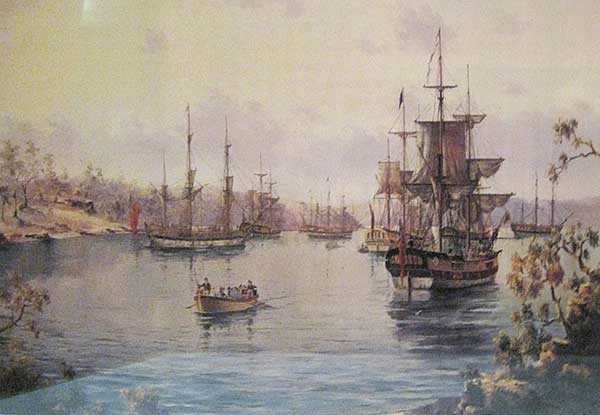
The women convicts of the First Fleet’s Lady Penrhyn went ashore at Sydney Cove on February 6, 1788. Most had seven or fourteen year terms and there were a few ‘lifers’ among them. The surgeon aboard the former slave ship that had brought them to the ends of the earth, Arthur Bowes Smyth, wrote ‘The Men Convicts got to them very soon after they landed, & it is beyond my abilities to give a just discription [sic] of the Scene of Debauchery & Riot that ensued during the night.’ According to subsequent writers, a wild orgy of rum, sex, storm and lightening followed, a fitting act for the foundation of a colony of convicts.

Popular as this story has become, in one version or another, historians have found little evidence of it ever happening. Bowes Smyth was nowhere near the scene of the alleged orgy, he was on the Lady Penrhyn quite a long way out in the harbour. None of the other keen diarists of the First Fleet, such as officers Watkin Tench or Ralph Clark seem to have noticed the orgy either. They certainly did not mention it in their accounts, an unlikely omission, especially for Ralph Clark who believed women convicts were all ‘damned whores.’

Why Bowes Smyth believed that ‘Debauchery & Riot’ occurred as soon as the women set foot in New South Wales is worth considering. He was certainly glad to see the women leave the ship: ‘we had the long wish’d for pleasure of seeing the last of them’, he wrote. The Lady Penrhyn’s voyage from England had been tedious and troubled with illness, lack of food and indiscipline. Many of the women were prostitutes and suffered from venereal disease. Although attempts were made to keep men and women separate, cohabitation quickly became commonplace. In April 1787, a month or so before they set sail for Botany Bay, five women were chained up for having relations with crewmen. There is no record of the sailors being punished.

During the voyage seventy year-old Elizabeth Beckford died of ‘dropsy’, or oedema, her bloated corpse buried at sea. She was not the last. Jane Parkinson died as they sailed from Cape Town to New Holland, as Australia was often known. Off Van Diemen’s Land the lumbering transport was lashed by a storm so fierce that the women fell to their knees praying for deliverance. Short of food once again, the Lady Penrhyn finally made Botany bay in late January 1788, only to discover that Arthur Phillip had decided the place was unsuitable for settlement. He had departed for Port Jackson.

By the time the Lady Penrhyn finally anchored in the great body of water that would become known as Sydney Harbour, the 101 women and more than 70 male crew and Marines had been cooped up on the thirty by eight metre vessel, in some cases for over a year. The women were flogged, chained, punished with thumb screws and had their heads shaved bare. Bowes Smyth wrote in his journal:

‘I believe I may venture to say there was never a more abandon’d set of wretches collected in one place…The greater part of them are so totally abandoned & callous’d to all sense of shame & even common decency that it frequently becomes indispensably necessary to inflict Corporal punishment upon them…’[i]

The doctor was clearly not well disposed towards his female charges. When he finally did ‘see the last of them’ he was predisposed to assume that they would behave in what he considered their typically debauched manner. Bowes Smyth was a product of his time and circumstances, as were all those who arrived on the First and subsequent fleets. 

The double standard that masqueraded as respectability and punished only women for acts that involved a male partner continued in the colony. Four of the convict women of the Lady Penrhyn became the de facto partners of officers and the Judge Advocate. Esther Abrahams and Lieutenant George Johnston began what would become a lifelong relationship during the voyage. They did not marry for another quarter of a century. 

Bowes Smyth also recorded an incident when one of the sailors was caught in the women’s tents. His hands were tied and he was publically drummed out of camp to the tune of ‘The Rogue’s March’, a ceremony used for dishonorable discharge from the army and usually followed by a flogging.

These more domestic relationships and official attempts to maintain propriety are not the stuff of myth. They lie forgotten in history while the more salacious story lives on. Historians have been trying to scotch the orgy myth ever since one of their own mistakenly set the yarn spinning in 1963. Manning Clark wrote of it though soon withdrew the assertion after a more careful look at the available evidence. But it was too late. The lewd rumour neatly captured popular views of early colonial society and the image of degraded convicts that had grown up over the generations. ‘The orgy that wasn’t’ gathered further currency from a procession of later writers and television shows repeating and embellishing the alleged scene.[ii] A yarn of ribald abandonment still resonates with a common view of the founding of Australia. No matter how often and convincingly historians demolish the myth, many still prefer to believe it.

From Great Convict Stories https://www.allenandunwin.com/browse/books/9781760527488


[i] Arthur Bowes Smyth (Smythe), ‘A Journal of a Voyage from Portsmouth to New South Wales and China. 22 March 1787–12 August 1789’. Mitchell Library.

[ii] See Grace Karskens, ‘The Myth of Sydney’s Foundational Orgy’, 2011, at the Dictionary of Sydneyhttp://dictionaryofsydney.org/entry/the_myth_of_sydneys_foundational_orgy, accessed August 2016.
THE FLYING DUTCHMAN DOWN UNDER

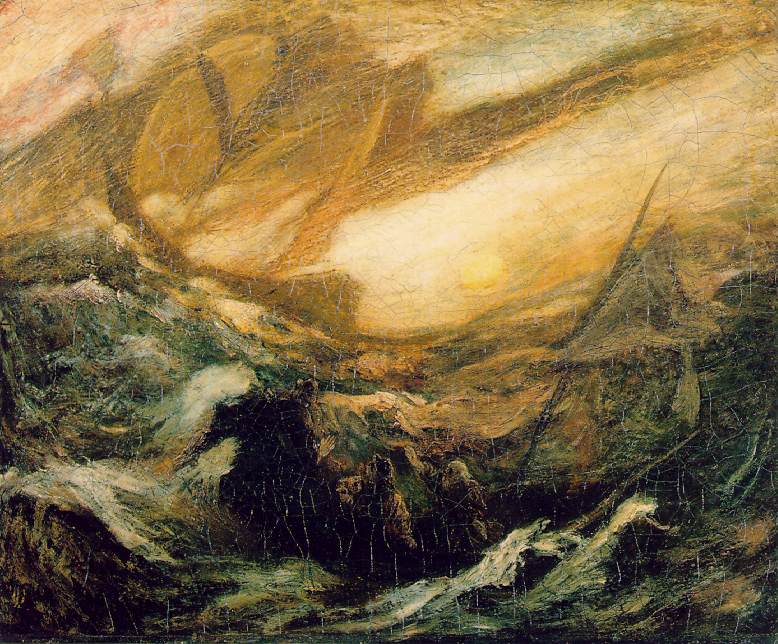
The Flying Dutchman by Albert Pinkham Ryder c. 1887 (Smithsonian American Art Museum)

The legend is first recorded in 1790, but it was already old in sailors’ lore. Undoubtedly the most famous nautical yarn of all, the enigmatic tale of the Flying Dutchman is known around the world. And the spectral sailing ship has been sighted in many oceans, including in Australian waters.

At first, the story was a short yarn about a distressed Dutch ship seeking safe harbour at the Cape of Good Hope during a raging storm. A pilot to guide the vessel to safety was not avail­able and the ship was lost with all her crew. Ever since then, the glowing apparition has been seen during stormy weather. Sighting the Flying Dutchman was considered to be an omen of doom.

The Cape of Good Hope was a regular port of call for ships on the Australian run from Europe and although the legend was initially a Dutch story and largely restricted to sailors, it flowed into the broader community in the late eighteenth century. One of the earliest accounts is that of the ‘Prince of Pickpockets’, George Barrington, on his way to serve a sentence in Australia in 1795. Barrington’s version of the story is a little more elaborate than the basic legend (though he was a notori­ous confidence trickster with a silver tongue): 

. . . it seems that some years since a Dutch man-of-war was lost off the Cape, and every soul on board perished; her consort weathered the gale, and arrived soon after at the Cape. Having refitted, and returning to Europe, they were assailed by a violent tempest nearly in the same latitude. In the night watch some of the people saw, or imagined they saw, a vessel standing for them under a press of sail, as though she would run them down: one in particular affirmed it was the ship that had foundered in the former gale, and that it must certainly be her, or the apparition of her; but on its clearing up, the object, a dark thick cloud, disappeared. Nothing could do away the idea of this phenomenon on the minds of the sailors; and, on their relating the circumstances when they arrived in port, the story spread like wild-fire, and the supposed phantom was called the Flying Dutchman. 

Barrington did not see the apparition, but he met a sailor who did. About 2 a.m. he was woken by the boatswain ‘with evident signs of terror and dismay in his countenance’ and begging for a drink of spirits. The man claimed to be ‘damnably scarified’ because he had just seen: 

the Flying Dutchman coming right down upon us, with everything set—I know ’twas she—I cou’d see all her lower-deck ports up, and the lights fore and aft, as if cleared for action. Now as how, d’ye see, I am sure no mortal ship could bear her low-deck ports up and not founder in this here weather. Why, the sea runs mountains high. It must certainly be the ghost of that there Dutchman, that foun­dered in this latitude, and which, I have heard say, always appears in this here quarter, in hard gales of wind.

After a few deep draughts, the boatswain ‘grew a little composed’, admitting that he was prone to seeing ghosts. Barrington went on deck with him to see for himself but ‘it had cleared up, the moon shining very bright, and not a cloud to be seen; though, by what I could learn from the rest of the people who were on deck, it had been very cloudy about half an hour before, of course I easily divined what kind of phantom had so alarmed my messmate’.

A more respectable figure who did see the Flying Dutchman in Australian waters was no less a personage than Prince George of Wales, destined to be King George V. Sometime before dawn on 11 July 1881, while travelling through Bass Strait, the prince (or his brother travelling with him) recorded:

At 4 a.m. the Flying Dutchman crossed our bows. A strange red light as of a phantom ship all aglow, in the midst of which light the masts, spars and sails of a brig 200 yards distant stood out in strong relief as she came up on the port bow. The look-out man on the forecastle reported her as close as on the port bow, where also the officer of the watch from the bridge clearly saw her, as did also the quarterdeck midshipman, who was sent forward at once to the forecastle; but on arriving there was no vestige nor any sign whatever of any material ship was to be seen either near or right away to the horizon, the night being clear and the sea calm. Thirteen persons altogether saw her . . .

Just over six hours later, the sailor who had first reported seeing the Flying Dutchman fell to his death from the foretopmast and ‘was smashed to atoms’.

Another Australian connection with the Flying Dutchman comes from John Boyle O’Reilly, the famous Irish rebel. While being transported with his fellow Fenians to Western Australia in 1867, O’Reilly wrote a poem for the ship’s newspaper. The poem uses the Flying Dutchman tale to give expression to  O’Reilly’s forebodings at what was going to be a long exile from his homeland: 

They’ll never reach their destined port 

They’ll see their homes no more, 

They who see the Flying Dutchman 

Never, never reach the shore. 

Since then the legend has grown, gathering more detail and depth through endless accounts, books, films and artworks that feed from it. The Flying Dutchman soon fused with another piece of world folklore known as the ‘Wandering Jew’. This is said to be a man who refused to help Christ bear the burden of the cross as he struggled towards his crucifixion. In a bit of Old Testament revenge, the man was condemned to wander the Earth forever in eternal life. In the Flying Dutchman version, the captain of a Dutch merchantman attempting to enter Table Bay was frustrated by a change in the wind. The captain swore to be eternally damned if he did not enter the bay and that he would sail these waters until Judgement Day. He did not and he does. 

In another version it is said that the crew of the Dutch ship committed some atrocious crime and are condemned to never enter a port and must voyage onwards until their penance is done. This echoes a theme of Coleridge’s famous poem, The Rime of the Ancient Mariner (1797–98). A few years later the arch-romancer Walter Scott made the Flying Dutchman a pirate ship, in which guise the tale may be most familiar to modern audiences in the Pirates of the Caribbean movies.[i]It’s not surprising that such a compelling legend is told again and again and that the cursed ship has been seen even in Australian waters.


[i] George Barrington, A Voyage to Botany Bay, with a description of the country, manners, customs, religion, &c. of the natives, sold by H.D. Symonds: London, 1795. 

Prince Albert Victor and Prince George of Wales, The Cruise of Her Majesty’s Ship ‘Bacchante’ 1879–1882. Compiled from the private journals, letters, and note-books of Prince Albert Victor and Prince George of Wales, with additions by J. D. Dalton, Vol. 1, Macmillan and Company: London, 1886, p. 551. 

Buy me a coffee!

A$5.00

Mything in Action – The Thylacine Files

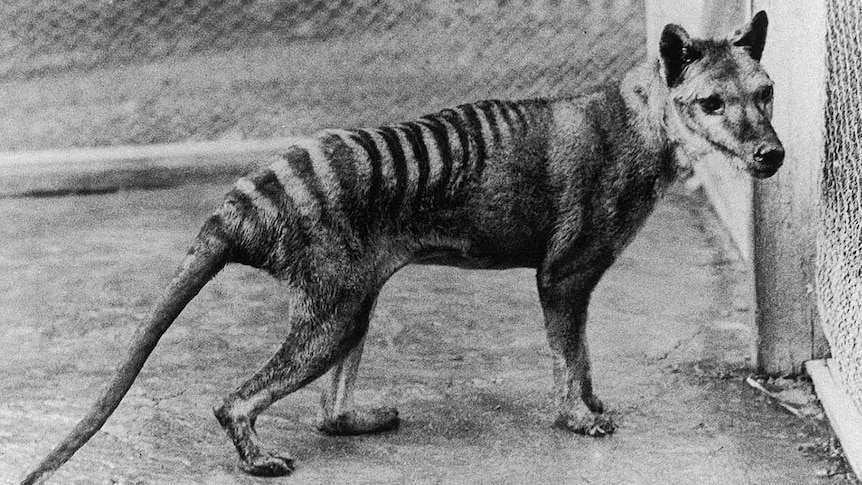
Recent research has turned up more fascinating facts and exposed a hoary myth about the last Thylacine, or ‘Tasmanian Tiger’. What the researchers had to say about their discovery of the skin of the last of these mythic beasts and the ‘bullsh..t’ that the animal was a male named ‘Benjamin’ is related at the link below. A small case study of how misinformation and myth arises and persists.

https://www.abc.net.au/news/2022-12-06/benjamin-thylacine-tasmanian-tiger-naming-myth-persists/101734442

FINDING KING SOLOMON’S MINES

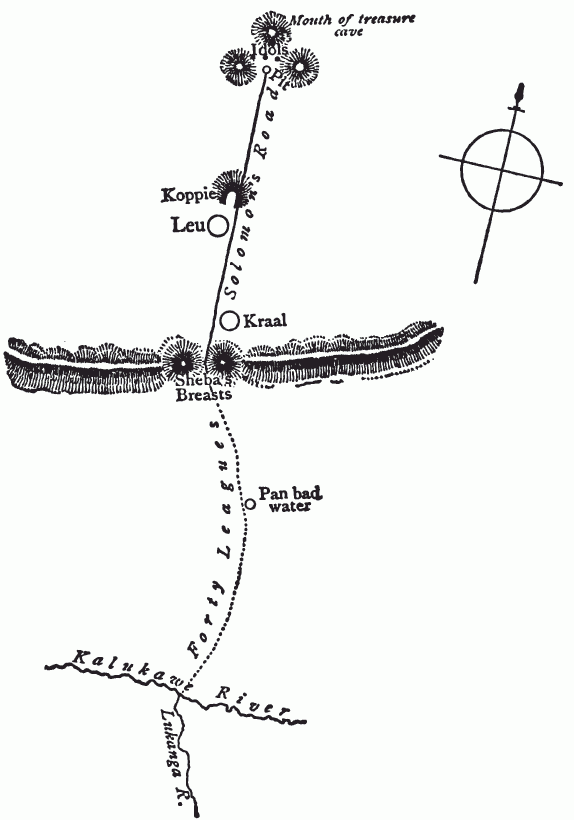
The Way to Kukuanaland, from King Solomon’s Mines by H. Rider Haggard. Eça de Queiroz

A sturdy figure clothed in leather stumbles through the mostly unknown wilderness of southern Africa’s Transvaal in 1865.A revolver, compass, sextant, hunting knife and tin bowl dangle from the man’s belt. He cradles a double-barrelled rifle in his hands and a blanket slung over his shoulder – poorly equipment for his dangerous quest. 

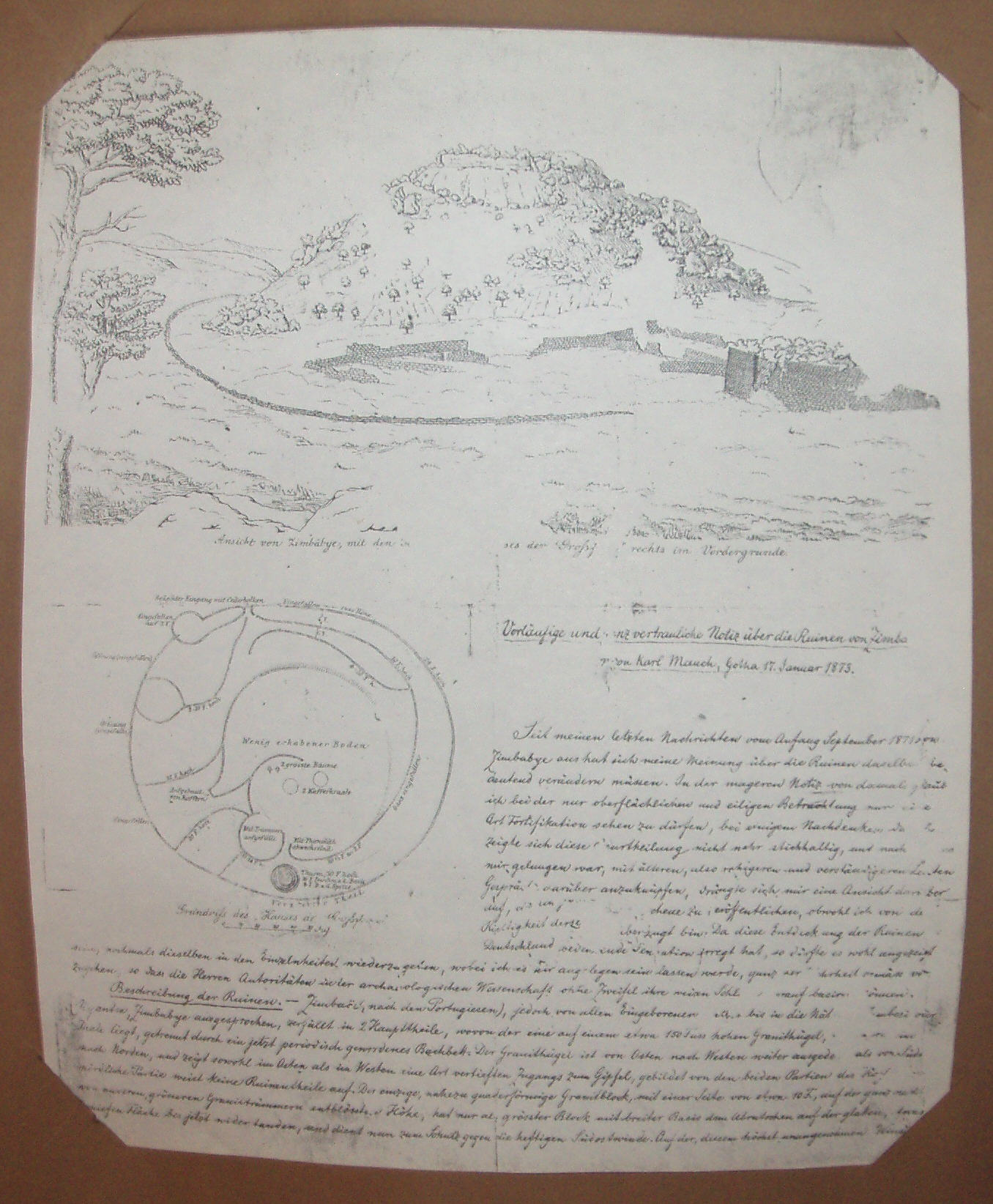
Since boyhood, Karl Mauch had been fascinated with faraway places and lost kingdoms. He spent his youth studying and acquiring the skills needed to pursue a life of adventurous archaeology – languages, mapping, minerology, history. While still young, Mauch decided he was ready to find the lost city of Ophir.

He arrives by ship in South Africa in 1865. Supporting himself as best he can he explores and maps the Transvaal. In 1866, accompanied by the English elephant hunter ,Henry Hartley, Mauch visits and maps the region between the Limpopo and Zambezi Rivers. He also hears many tales from Hartley about ancient gold mines and lost cities. The following year, now travelling alone, the German explorer discovers a number of old gold smelting works and fields in Mashonaland. He also discovers rich gold deposits near the Botswana-Zimbabwe border.

In 1868, still following his dreams, Mauch is kidnapped by the Matabele and is lucky to survive.  He makes a brief trip in early 1869 and finds indications of gold along a tributary of the Zambezi. He has no further funds until 1870 when he travels in a leaky boat along the Vaal River in another epic journey of hardship and survival. Again, the following year he sets out to find an ancient city he believes lies beyond the Limpopo River. He is robbed by natives and left with nothing. Starving and on the verge of suicide he is rescued by another group of Africans and comes into contact with the enigmatic German American hunter, Adam Render(s).

After an adventurous life in the bush and as a soldier, Renders had deserted his family a few years earlier and was living with the Shona people. He takes Mauch in and guides him to some ruins he stumbled across in 1867. After examining the broken stones and talking with the local population, Mauch concludes that he has found the mysterious golden city of Ophir and so, King Solomon’s mines.

The city or region of Ophir is mentioned in the Bible and other early religious texts as a source of great wealth. According to the story, Ophir (various spellings) was the foundation of King Solomon’s riches. He was surrounded by an excess of gold and dispensed justice and wisdom to his people. Every three years Solomon received a shipment of silver, ivory, sandalwood, jewels and gold from Ophir, along with apes and peacocks. All these things were greatly prized in the ancient world and are the origins of what would become the legend of King Solomon’s mines.

Of course, no one knew where the mines were located. Until the early sixteenth century when a member of Vasco de Gama’s 1502 voyage to India, Tome Lopes, claimed to have found them. Lopes saw the astonishing ruins of Great Zimbabwe and decided that this must have been the region called Ophir. He wrote a report of his adventures and ideas that circulated widely in Portugal and elsewhere, popularising the idea that Ophir and therefore its wealthy mines must be in southern Africa rather than the middle east. 

The rush was on. Expeditions of hopeful treasure hunters flocked to the unknown continent. Maps appeared showing the alleged location of the treasure trove. The legend grew. By the time Karl Mauch was seduced by the golden mystery Ophir and King Solomon’s mines were perhaps the world’s best-known lost treasure legend. 

After his hard-won find, Mauch returned to Germany expecting, with some justification, to be hailed as a great adventurer, mapmaker and archaeologist. He was not. Without formal qualifications he was unable to gain an academic or museum post. He briefly took part in an expedition to Central America in 1874 but was only able to find work back in Germany as a foreman in a cement factory. His health failed and just before his thirty-eighth birthday he somehow managed to fall from his first-floor window while sleeping. He died a few days later.[i] The legend claimed yet another hopeful soul.[ii]

Karl Mauch had not found the fabled city of Solomon and the Queen of Sheba, nor the King’s gold. But he had found a much greater treasure. The city of Great Zimbabwe was erected  during the 11th century and grew to be an important trading hub in the 13th century. By the time the Portuguese arrived 300 years later, the city had been abandoned. No one knows why. Another enduring mystery in its own right.

Solomon’s mines and Ophir remained in the mists of myth but the existence of Great Zimbabwe’s ancient architecture, together with the real riches being extracted from southern Africa, fuelled belief in the mines. The legend received its greatest boost with the publication of ‘the most amazing book ever written’ in 1885. H  Rider Haggard’s boys’ own adventure titled, of course, King Solomon’s Mines.

Haggard was an old Africa hand. He was familiar with the local traditions of lost treasures and Mauch’s quest, as well as the Biblical story of Ophir. Perhaps the greatest best seller of the nineteenth century, and still in print, Haggard’s romance and its many spinoffs in popular literature and movies have kept the notion of King Solomon’s mines in the public consciousness ever since. The fabled mines are regularly ‘found’ though the claims are just as regularly debunked.[iii]

But, of course, the quest continues. 

Mauch’s drawing of Great Zimbabwe

[i] C Plug, ‘Mauch, Mr Karl’ in S2A3 Biographical Database of Southern African Science, http://www.s2a3.org.za/bio/Biograph_final.php?serial=1867, accessed March 2016.

[ii] ‘Karl Mauch’ in National Geographic Deutschlandhttp://www.nationalgeographic.de/reportagen/entdecker/karl-mauch, accessed March 2016; F O Bernhard (ed and trans), Karl Mauch: African Explorer, C Struik, Capetown, 1971.

[iii] James D Muhly ‘Solomon the Copper King: A Twentieth Century Myth’ in Expedition, vol 29, no 2, 1987, pp. 38-47.

THE ROBIN HOOD FACTOR


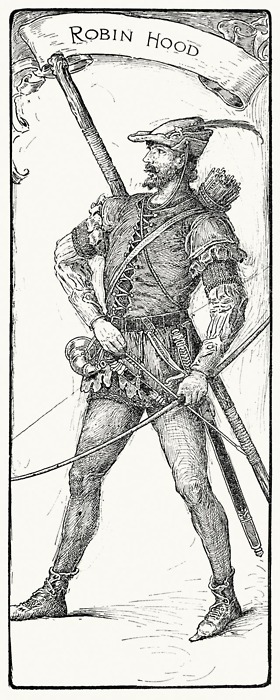
Known to generations of English-speaking peoples, and beyond, as the forest archer in Lincoln green, Robin Hood is the undisputed model of the outlaw hero. His image has undergone many transformations since his first brief mention in medieval manuscripts and has come to embody all the essential elements of the noble robber. Whether we see Robin Hood as a shadowy guerrilla fighter, a cast-out noble or as a wisecracking and nimble-limbed Errol Flynn, he is the righter of wrongs, friend of the poor and foe of the corruptly powerful. In one version or another he has been, and continues to be, celebrated in literature, art, folklore, film and television, board games, placenames and tourist ventures. His progress from a few passing references to international symbol of resistance and justice has been achieved through more than six centuries of defying authority, eluding capture and escaping death. His most important activity is to rob the rich and to redistribute their wealth to the poor.
This record is especially impressive for a man who never was, or at least, who has never been found. Robin Hood’s appropriately elusive existence has been researched by many over the centuries, with nothing more to show than a few theories, suppositions and intriguing references to someone who might have been the real Robin Hood. The truth, of course, is that the ‘real’ Robin Hood is not in history but in our heads, hearts and hopes. He is a myth. Even if someone can prove that he lived and carried out just a few of the things with which he is credited, it would make no difference to the way we understand Robin Hood today. He is so engraved into the well-worn cultural grooves that sustain his image, and those of others in the same mould, that he seems likely to remain with us for a very long time.
Ever since Robehood’ or ‘Robinhood’ is first mentioned in early thirteenth century legal records the outlaw has existed in a shadow world between history and fantasy. The first passing literary mention of a hero by that name is in Langland’s 1377 poem, Piers Ploughman.  Further references appear in various chronicles and Robin Hood gradually emerges as a fully-fledged defier of authority. A 1439 petition to Parliament concerned one Piers Venables of Derbyshire, a fugitive who had gathered a band around him which “beyng of his clothinge, and in manere of insurrection went into the wodes in that county like it hadde be Robyn Hode and his meynee”.  In Southacre, Norfolk, during 1441 labourers and yeomen threatened to kill a Sir John Harsyk. They blocked the road and chanted ‘We are Robynhodesmen. War, war, war’.
By the mid-1550s Robin Hood had become a troublesome enough character to require official suppression. The Scots Parliament of 1555 banned the presence of figures representing the outlaw and his gang in public festivities such as May Day games. Those who persisted were threatened with banishment. This was a disproportionately strong punishment for the brawling, drinking and nuisance-making that purported to be the reason for banning the outlaw from a major form of revelry.
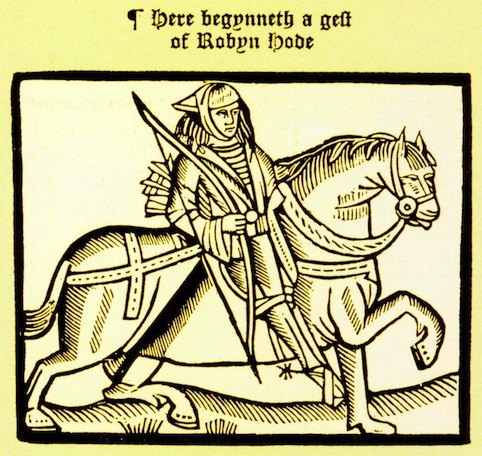
Although the notion of robbing the rich and giving the proceeds to the poor is a later refinement, the portrayal of Robin Hood as the friend of the poor is an early element of his image. In the various versions of the fifteenth century romance, A Geste of Robyn Hode, Robin is a heroic figure and ‘a good outlaw’ who ‘dyde pore men moch god’. By the early seventeenth century Robin Hood has become not just a friend of the poor but also a man who deliberately targets the rich on behalf of the poor.  In a 1622 poem by Thames waterman John Taylor, the poet writes:
…Robin Hood with little John agreed
To rob the rich men, and the poore to feed.
In ‘The True Tale of Robin Hood’ (1632) Robin is a morally upright friend of the poor – ‘all poore men pray for him,/And wish he well might spede.’ He helps distressed travellers on the road, assists widows and orphans, protects women, generally operates against the established power and corruption of the church and robs the rich, particularly those who ‘did the poore oppresse’. He does not harm the humble workers nor harm any man ‘That him invaded not’.  The outlaw is finally betrayed to death by ‘A faithlesse fryer’.
Robin Hood’s status as a commoner, one of ‘us’ is also powerful, despite the seventeenth and eighteenth-century resurrection of the medieval version of the outlaw as a wronged aristocrat. In the ballad ‘Robin Hood and the Potter’, the potter bests the outlaw, after which Robin symbolically exchanges clothes with him and in this trickster disguise goes off to Nottingham for further encounters with the Sheriff and, as it turns out, his wife. This is similar in some ways to the later ‘Robin Hood and the Pedlar’ in which a pedlar defeats Robin in a fight and is symbolically incorporated into the ‘band of merry men’, an incident echoed in the ballad of the eighteenth century English outlaw hero, Dick Turpin.
Robin Hood passed from street literature and ballads into the more respectable form of the novel from 1819 when Walter Scott’s Ivanhoe was first published. Ever since he has been the subject of countless treatments. He has featured in operas and musicals since the mid- nineteenth century, in film and television since 1908 when a silent film was produced and has a strong presence in the video gaming industry and in comic books.
Robin Hood has continued to be connected with political discontent and action. The Poll Tax rioters of 1990 who invaded Nottingham Council Chambers disguised themselves in hoods of Lincoln green and dissident French electricity workers borrowed the mantle in 2004, specifically identifying with the English outlaw. The Robin Hood mantle has been claimed by many anti-capitalist organisations and initiatives since.

The county of Nottinghamshire vigorously promotes the mythology for tourism and there is even an American charity named the Robin Hood Foundation, as well as a hedge fund named for the outlaw. There is no end to the presence of Robin Hood in modern culture.

The combined effect of this weight of history, myth, romance and commercial and media exploitation has produced a global icon. The man who never was is everywhere. He belongs to everyone and his name is known around the world. But the image of the ‘good robber’ is not his alone. Thousands of brigands, bandits and outlaws in many different times and different places have also been celebrated as friends of the poor and definers of the strong. Some recent examples include ‘the Greek Robin Hood’, Vassilis Palaiokostas, currently on the run, ‘the Barefoot Bandit’, Colton Moore and even the chainsaw charmer drug lord, Pablo Escobar. He was killed in 1993 but lives on in his legend as a friend of the poor in his home country of Colombia.

NOTE: For a more detailed look at the enduring mythology of the green archer, see ‘The Robin Hood Principle’.


KEYWORDS: Robin Hood, outlaw hero