JOINTS AND JOKES 2 – BURLY Q

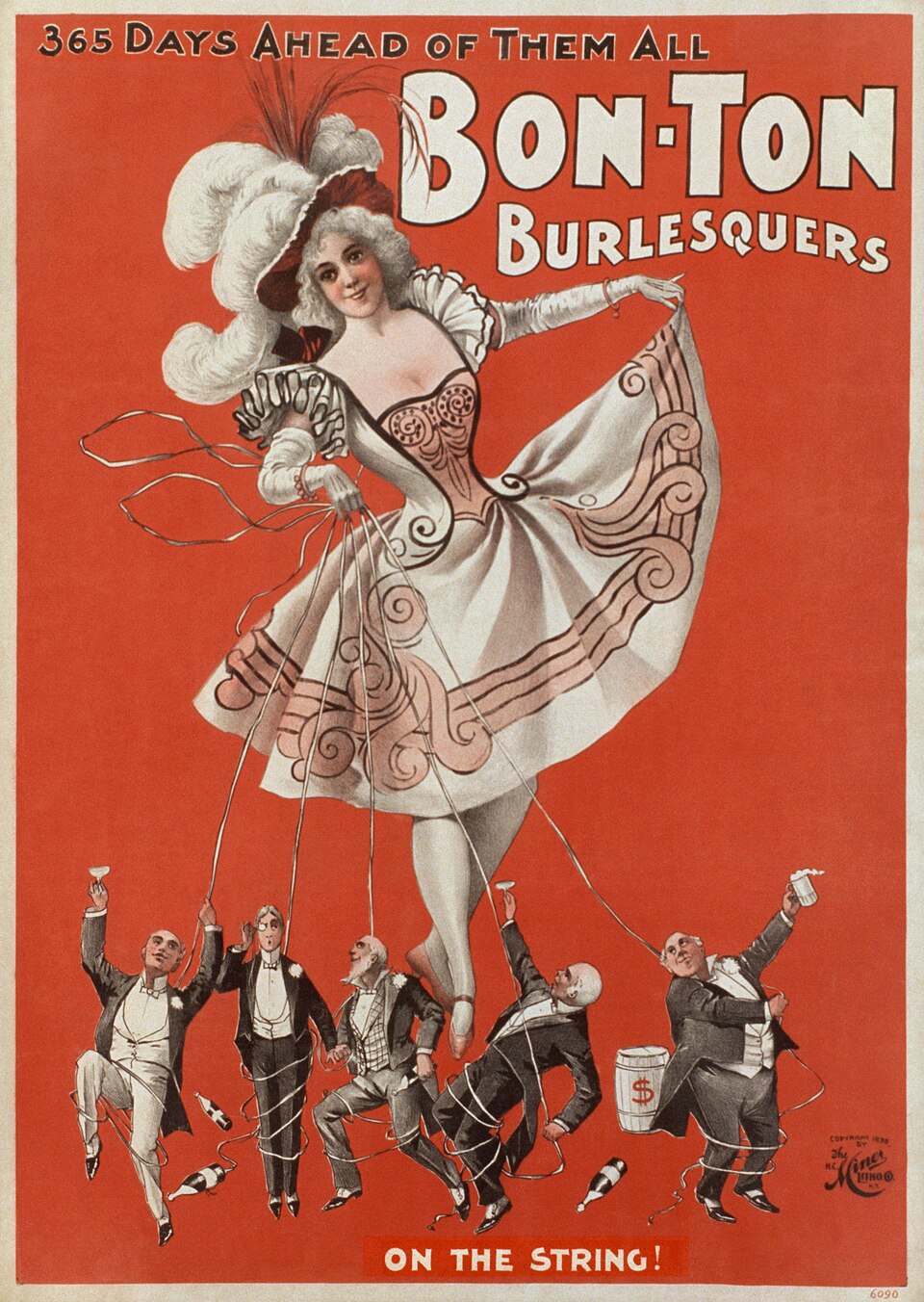
H.C. Miner Litho. Co. – Library of Congress[1]Bon Ton Burlesquers – 365 days ahead of them all.” Poster of U.S. burlesque show, 1898, showing a woman in outfit with low neckline and short skirts holding a number of upper-class men “On the string”. Color lithograph.

Burlesque comes from the Italian burla, for a joke or to mock – was characterised by the appearance of young women in relatively little clothing and what there was of that was designed to show their bodily form to best advantage. As well as this primary attraction for its mostly male audiences, Burlesque also had a strong element of social satire from its origins as lower class spoofs of high society diversions such as opera and ballet.

While Burlesque is usually associated with America it received its greatest boost in the 1860s when the famed showman P T Barnum imported a British Burlesque troupe led by Lydia Thompson. Lydia and her blonde ladies rapidly became superstars, although there was soon a strong moral backlash against this form of entertainment. As usual, this only increased the popularity of Burlesque and by the early twentieth century it operated through an extensive circuit of theatres, known as a wheel, with large troupes travelling the same show for up to forty weeks of the year. By then, the typical Burlesque show included many of the same style of acts found in Vaudeville, although the scantily clad ladies remained the primary attraction.

In burly-q speech the main player in a comic act was known as the top banana, a phrase that has entered the broader slang repertoire. Those supporting him or, less frequently her, were second banana, third banana and so on. These terms are said to derive from the comic’s last resort of slipping on an imaginary banana skin in order to get a laugh. In this form of slapstick (a term derived from pantomime rather than burlesque, though this very basic form of humour was common to both forms), the lower a performer ranked in the bunch the more likely he or she was to receive the pies in the face and the host of other undignified bits, or skits, that made up most comedy acts. Other terms related to the business of being funny were skull – to pull a funny face and the talking woman – one who delivers lines for the comic to joke about, equivalent to the straight man of a stage comedy act.

An oft-performed bit from the later Burlesque poked fun at business names. It doesn’t take much to see and hear a couple of the Marx Brothers banging this one out:

Man at Desk: (picks up phone) Hello, Cohen, Cohen, Cohen and Cohen.
Caller: Let me speak to Mr. Cohen.
Man at Desk: He’s dead these six years. We keep his name on the door out of respect.
Caller: Then let me speak to Mr. Cohen.
Man: He’s on vacation.
Caller: (Exasperated) Well then, let me speak to Mr. Cohen.
Man: He’s out to lunch.
Caller: (Yells) Then let me speak to Mr. Cohen!
Man: Speaking.

The occupational jargon of burly-q included colourful phrases like the asbestos is down – a reference to the fireproof stage curtain being down, making the audience unable to hear the jokes – which purportedly explained why they were not laughing. A mountaineer was a comic from the Catskill Mountains resort circuit and the Boston version referred to a sanitised rendition of an act with the blue elements removed or toned down. The term cover, meaning to take over another performer’s role, as in ‘Will you cover for Mac?’, has passed into the wider vernacular of the English-speaking world, its Burlesque origins known by few.

Despite the similarities between Burlesque and Vaudeville, there was a barrier between the forms, with Vaudevillians considering themselves superior to Burlesque. But the continual operating mode of the Burlesque circuit meant that it provided fairly reliable work and many Vaudeville acts also worked the Burlesque circuits under different names. As a result, there is a considerable overlap between Vaudeville and Burlesque lingoes. The olio was used in both forms to describe a mixture of short acts performed rapidly at the front of the stage with the main curtain, often an oilcloth, a technique probably borrowed from the earlier blackface minstrel shows. Other common terms included yock and milking an audience, the latter of which became a standard showbiz term and has moved beyond that into everyday slang.

Like Vaudeville, burly-q declined with the rise of the cinema. By the 1920s it had become largely a bump and grind strip show, with the comic acts little more than a hangover of the past. The striptease developed its own language as well. Strippers used pasties to cover their nipples. A G-string was a gadget, while a trailer was the provocative walk leading up to the strip itself. The breasts of a stripper were blisters to be quivered and her buttocks were cheeks to be shimmied for the titillation of the audiences, known in the business as jerks.

JOINTS AND JOKES 1 – TALKING VAUDEVILLE

By Strobridge Lithographing Co., Cincinnati & New York – This image is available from the United States Library of Congress’s Prints and Photographs divisionunder the digital ID cph.3g12307. See Commons:Licensing., Public Domain, https://commons.wikimedia.org/w/index.php?curid=11158985

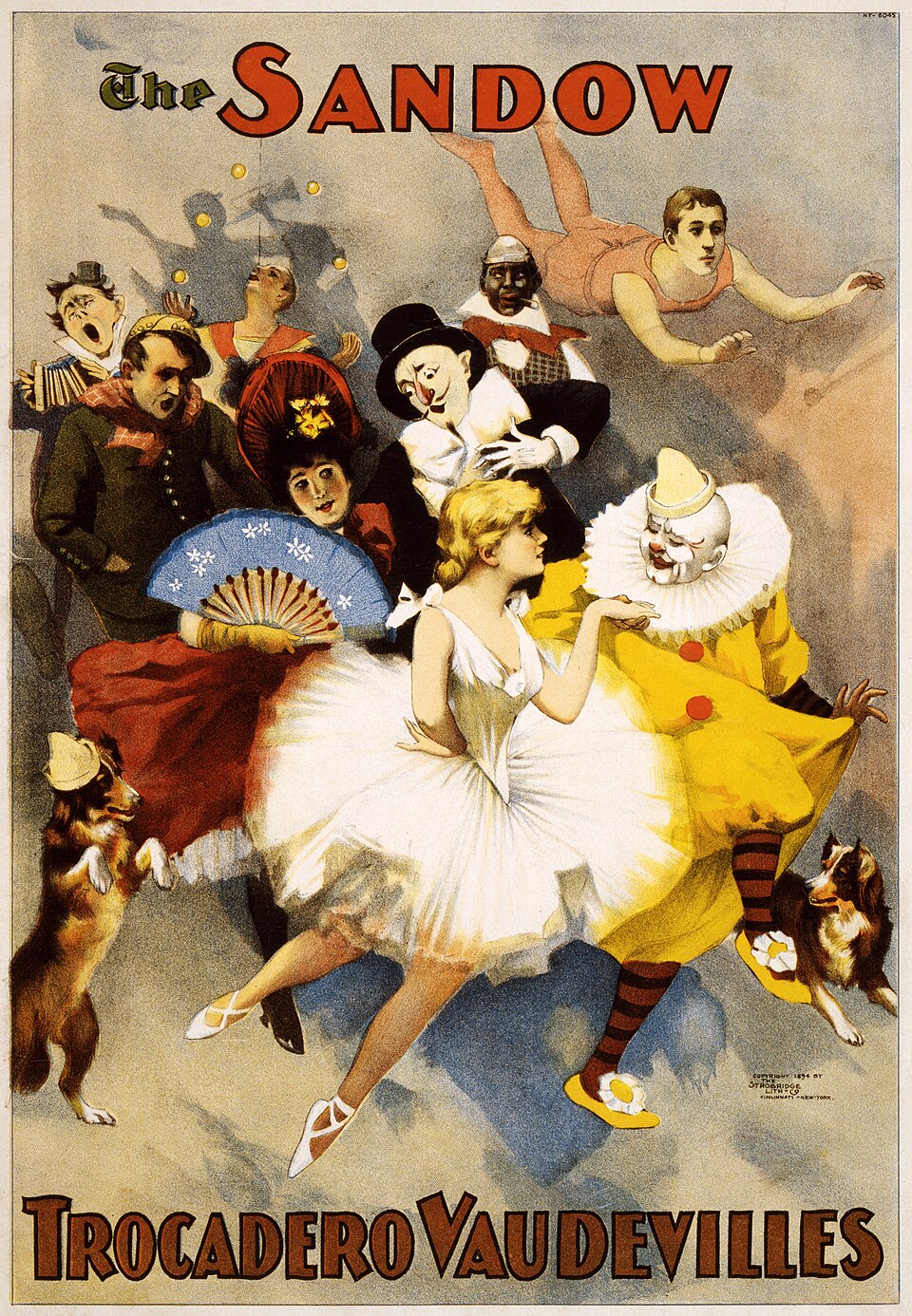
Always looking for a yock, a really big laugh from the audience, or a show stopper of any kind, the Vaudeville performer’s heyday was from the late nineteenth century until the 1920s. Originating in a variety of occasional performances in bars, theatres and wherever else a show could go on, its first appearance under that name is usually said to have been at a Boston saloon in 1840.

Vaudeville was essentially a travelling collection of comedy routines, musical acts, jugglers, acrobats, animal acts, ropers, (cowboy acts) and pretty well anything else that would play – and possibly pay. It became very popular throughout America and Canada, with around two thousand theatres by the start of the twentieth century. By the mid-1920s Vaudeville was destined for oblivion when the movies turned into the talkies. As Vaudeville was increasingly threatened, so many of the houses became blue, incorporating risqué items in an attempt to lure audiences away from the enticements of the silver screen. The overlapping entertainment form that came to be known as Burlesque suffered the same fate, its once glittering shows descending into little more than strip joints.

The name Vaudeville is said to derive from a French slang term for songs of the town – voix de ville, but there are a number of other stories, all of which have a French connection. There is a tradition in the carnival that a circus clown began Vaudeville, but this more likely reflects the close relationship between the two forms of entertainment, a relationship also reflected in the sharing of some lingo. Wherever the term came from, it was firmly established in the 1880s when a circuit of glittering Vaudeville theatres flourished in the northeastern states of America, providing non-stop daily performances for audiences keen to pay for the comedy and out-of-the-ordinary acts available.

Unlike more settled entertainments, such as revues, Vaudeville generally changed its acts each week or so. The acts were known by in-group names. An acrobatic or similarly physical act was called an alley-oop, allegedly from the fact that many of these acts were European in origin and spoke French. They would use a combined form of the French for everyone – ‘allez’ and the English ‘up’ as a command to begin their performance. A slapstick act was known as a baggypants comic. A blackout was a short comedy routine followed immediately by the houselights being turned off. The deuce spot was the least popular second act on a bill, straight after the opener which was usually the worst, but just before the best feature act, which meant that your number two performance was forgotten almost before it was over. Worse still, the audience might simply sit on their hands and decline to show their appreciation at all. The last act was called playing to the haircuts, meaning the performer was playing to the back of the departing crowd.

The vernacular of Vaudeville is full of terms for playing to an unappreciative house or bombing in front of an audience, a reflection of the difficulties of the business. A Brodie was a disaster, said to be named after a performer who survived a fall off the Brooklyn Bridge. As in other forms of showbiz, to flop or die was a common term for failure and an unappreciative house could be called a morgue. A poor act might be called a fish (because it stank). There was always a chance that the act could wow the stubholders, as the audiences were known, or if they were only applauding politely, milk them of more by reappearing onstage, or refusing to leave it until the bitter end.

Acts were often made up of shorter sections,called business. Soemetimes these wereso highlyexaggerated or overdone that they were described as Schtik, a term that moved beyond its original showbiz location and is now used to mean any kind of overly cloying presentation or approach.

Many Vaudeville terms were shared with the closely related entertainment known as Burlesque, or burly-q to its practitioners and aficionados, as expressed in my next post.

SPLENDID HELLS AND SKINNING HOUSES – The Lingo of American Gamblers

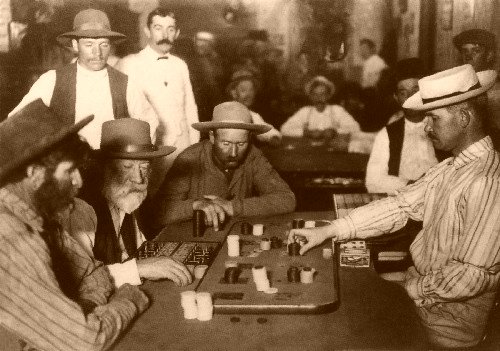
Playing Faro, Arizona 1895 (Wikipedia)

A nineteenth gambler named Mike Macdonald is credited with the phrase ‘There is a sucker born every minute’ and gambling of all kinds was big business in the expansion of America. The first major surge was from around 1800 to the mid-1830s. Games such as faro, craps, monte and, later, klondike became established with the sharpers, or professional gamblers, preying on the suckers with all manner of rigged games, stacked decks and a host of other tricks and traps. So prevalent and frequently ruinous was the urge to gamble that a strong moral and social backlash saw gaming shut down in many places, sending the sharpers and their tricks out across the roads of a rapidly expanding nation.

The Californian gold rushes provided another opportunity for gamblers to ply their trades. It seems that the card and dice game of banco was introduced from Europe at this time (although the founder of the Pinkerton Detective Agency did not come across it until 1869 in New Orleans). It grew rapidly in popularity, developed many variations, mostly crooked and become widely known as bunco, often played in bunco parlours or bunco skins.  The game used accomplices similar to those used in the shell game and later confidence tricks to bring the mark to the fleecing. This person was known as a bunco steerer. Bunco became a byword for swindling of all kinds and the term bunco artist or bunco man became synonymous with fraud and deception of all kinds. Many police departments even referred to their fraud and gaming officers as bunco squads from the period of Prohibition when the game made a return to the criminal pursuits of gangsters, particularly in Chicago, though the numbers rackets, refinements of yet earlier refinements of ancient swindles, seem to have become the main forms of graft by this time. The once popular and powerful expostulation buncombe! is also related to bunco, though which word came first has been the subject of controversy among linguists.

A second major wave of gambling began after the Civil War and lasted to the early twentieth century. During these periods, between them, and after them, gambling ebbed and flowed depending on local politics and economics. Sometimes betting of all kinds, whether square or crooked, was banned, sometimes it was wide open, sometimes it was legal but regulated. Through all these ups and downs though, the card sharps and their victims played on, using an always evolving and extensive language of luck, cheating and skill.

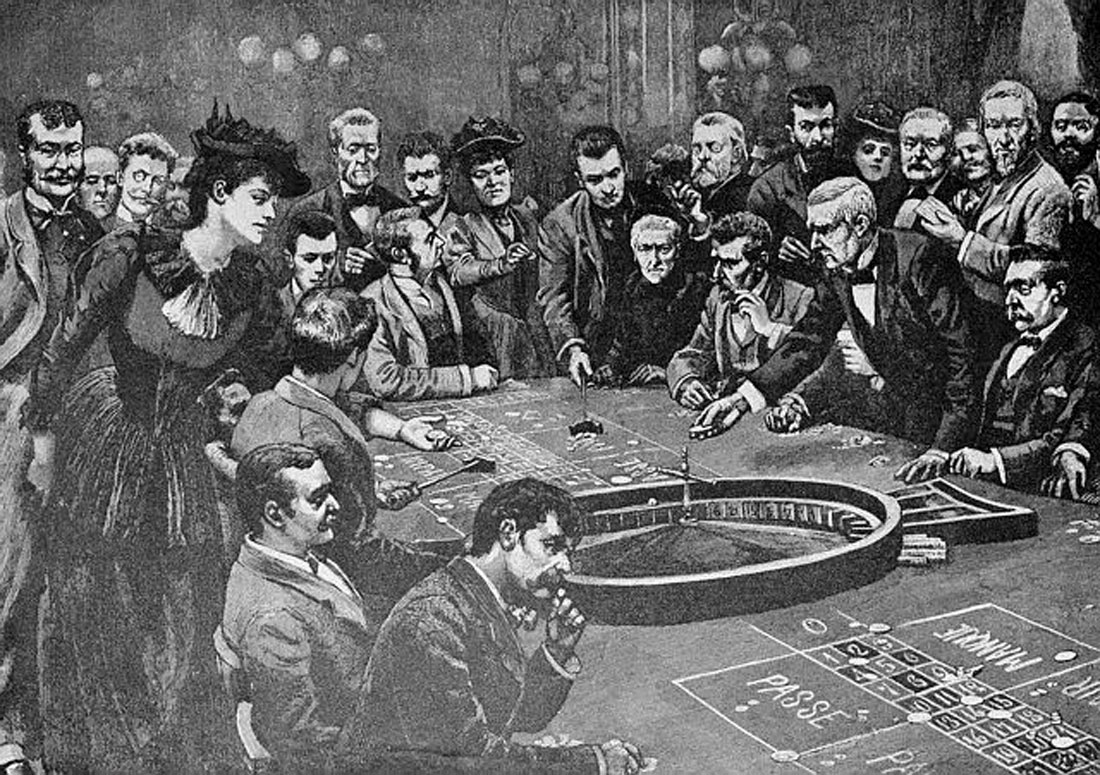
The places in which these games were played and usually lost, ranged from anywhere flat space where dice could be thrown or cards laid, all the way through to elaborate resorts and casinos. The best of these palaces of pleasure and financial pain were known as splendid hells, hell being an old description for gambling dens. Those cheap premises where players set up their own games were known as wolf traps, skinning houses or deadfalls. They were also known as ten percent halls from the size of the cut that the individual gambling entrepreneur gave to the house for the privilege of playing there. If a player got a square deal – the origin of the current phrase – at any of these places it was an oversight.

One of the means devised to make sure that suckers did not prosper was the mechanical dealing box. The first of these seems to have surfaced in the early 1820s. It was a brass box, slightly larger than a standard deck of cards and with thumbhole on the top through which the dealer slid each card out of a slit in the side. A spring pushed the remaining cards to the top as each one was dealt. The potential for chicanery – already developed to a high art in hand dealing – now increased exponentially. Dealing boxes were rigged with a bewildering variety of fiendishly cunning devices for cheating with names like the tongue-tell and the sand-tell, the needle squeeze or the end-squeeze. One was called the gaff, a new variation on an old and widely used word having a long association with the arts of deception. These devices were all legal and could be purchased from specialised suppliers, along with marked and otherwise rigged decks of cards, dice, roulette wheels and hold-outs for secreting cards on the body or beneath the poker table. When all these devices and techniques failed or were unavailable, the gambler could always fall back on the folk wisdom in the traditional rhyme:

Cut ‘em thin, sure to win,

Cut ‘em deep, sure to weep.

The jargon of the many forms of gambling that have evolved in modern times is large and long. Sucker has extended to a sucker bet and there are a variety of words for unskilled or unwary players, including degenerate, meaning a compulsive gambler, a mush (possibly from Romany) is a player who always has bad luck, while a pigeon is a naive gambler. A whale bets extremely large amounts each round, and a square is an inexperienced gambler. Sharp, sharper or shark is still used to denote a professional gambler. One could be skinned, rooked, taken down, fleeced, bilked, milked, bled dry or gypped, among many other expensive consequences. Even the eminent writer and wit, Oscar Wilde, was not safe from the wiles of the notorious bunco man, ‘Hungry’ Joe Louis. He took Wilde for the enormous sum of $5000 during the celebrity’s tour of the United States in 1882. Fortunately, Oscar rapidly stopped payment on the cheque he had wisely given Hungry Joe rather than the cash that these accomplished con men preferred. If the great man responded to this experience with one of his famously well-turned quips, it is not recorded.

In his account of the New York underworld, Low Life (1991), Luc Sante notes how many terms from the card game faro have passed into popular parlance. Faro was a development of an ancient game that had many variations in Europe and Britain, arriving in America at the end of the eighteenth century, spreading across the country during the nineteenth century. It was a complex game in which many betting possibilities could be wagered by the player against the house, represented by a dealer and an assistant. Faro involved twenty-five draws or turns, with the final turn being the one on which most could be won – or lost. The assistant’s job was to replicate a smaller version of the game in a special box, or case-keeper, allowing the dealer to predict how the last turn would go. Although faro was so blatantly rigged it was apparently considered to be a fairer form of gambling than any other, one reason for its great and enduring popularity. This had faded by the turn of the twentieth century, but words and terms such as parlay, keeping tabs on someone or something, piking, to break even, to string along, to be a pigeon and to be in hock are all identified by Sante as having their origins in the hazardous diversion of faro.

Inevitably, gambling lingo has more than its fair share of terms for losing money. These brokisms include being down to the felt, tapped out and dropping money. A player on a losing streak may be cold and scared money is cash that you cannot afford to lose. A bad beat in poker occurs when a player expects to win the pot but loses, while drawing dead is to have an inevitably losing hand, as revealed by subsequent events in the game. According to poker legend, the ultimate losing combination of a dead man’s hand stems from the fact that Wild Bill Hickock was shot dead in 1877 while holding a hand of a pair of aces and a pair of eights, usually said to have been in black coloured suites.

Now, as then, the great and the obscure still flock to lose their earnings and sometimes more in a variety of bedazzling new as well as tried and true old ways. Bunco even made a return to the gambling precincts of New York in the 1980s and online gambling through the World Wide Web is a massive industry. The language of gambling reflects this ongoing tradition. Some of the older gambling terms, or new terms with similar meanings, are in current use. A carpet joint is a luxurious casino, while a sawdust joint is a very basic gambling club. Shills are employed in similar roles to those working for the fleecer in the shell game. They will play at tables on behalf of the house to fill up empty seats until real players arrive. A mechanic is still a dealer who cheats players, as he or she has been for well over a century and grease means a bribe. The commission taken by a casino is known as juice, vigorish or vig. A term associated with circus and carnival speech is also used in modern gambling lingo. The nut can refer either to the overheads incurred in running a gambling house or to the amount a gambler plans to win. It is also used in circus and carny speech. To crack the nut is to win enough to pay for all costs together with a profit margin, also termed white meat.

19th century casino, At the House of the Bronze Door, New York

*

THE SECRET LANGUAGE OF GOBAN SAOR

(Image by Sheila 1988, Wikipedia Commons)

Irish stonemasons used a secret language known as bearlager na saor (also as Bearla lagair)., said to have come down from the great ancestor of masons, Goban Saor (variously spelt and pronounced gabawn seer). The mythic Goban Saor – Goban the builder – was, and is, the subject of a body of folktale traditions that present him as a clever and greatly skilled artisan who always outwits those who try to harm him or to refuse his rightful fee for work done. It was he who handed down the closely guarded skills of the stonemason, together with their confidential speech.

Towards the end of the nineteenth century, American word sleuths became aware of a curious language spoken by itinerant Irish workers, particularly stone masons. It was neither Old Irish, Gaelic or even Shelta, but seemed to have some similarities to all of these, as well as its own characteristics. One companion of itinerants, named A T Sinclair, inquired further into this among older Irish stone masons in Massachusetts and discovered that ‘On mentioning the subject to some old Irish masons here in Allston, I was surprised to find they could speak this language which they called “Bearla lagair na saor … a large number of other old Irishmen knew there was such a mason’s talk called ” Bearla lagair” ‘[1]

Sinclair’s informants told him this was a language known only to stonemasons and that no apprentice could claim his ‘indenture’, or trade qualification, without being able to speak it. Masons were forbidden to mention this speech to anyone who was not one of their guild, including their own families. The trade secrets also included special signs, skills and ways of using their tools, together with a variety of rules that must be followed and through which a mason could identify himself to another adept of the craft. Sinclair also collected stories about the Goban Saor, including this one which gives the origin of a famous stone mason’s mark:

Sometimes a love of adventure led the Goban Saor to wander incognito as a common workman. His renown as an architect and artistic sculptor was widespread. One simple story which amuses these workingmen is this. The Goban Saor once, in a foreign land, applied to the master- builder of a cathedral for work. ” What can you do? ” asked the master. “Try me and see,” was the laconic reply. Then the builder placed him in a work-shed alone by himself, and, pointing to a block of stone, said facetiously, “Carve from that a cat with two tails.” The shed was fastened at night, and the next morning Goban had disappeared. When the master unfastened the shed and looked in, he found that the block of stone had been most beautifully carved into a cat with two tails. With an exclamation of surprise, he ejaculated, “It was the Goban Saor himself! No other human being could do such superb work, or so quickly.”[2]

Sinclair gave a selection of Bearla lagair words, mostly those similar to the travellers’ language of Shelta, including:

Un twede dut na bini – do you speak Mason’s talk?

Minkur – low people

Shin – sing

Eolor –  mortar

Glom -yell

Miar – devil, bad luck

Shihukh – whisky, with Sinclair’s comment ‘a large number of other words also’

Skrugal – throat

(NB – diacriticals removed here and throughout)

Bearla lagair was still being spoken by older Irish stonemasons resident in London during the 1970s and was reported to have been widely spoken among Cork stonemasons.[3]

In short, no one really knows exactly where this cryptolect comes from. But we do know that it existed as a secret language among Irish stonemasons and, perhaps, still does. The Stonemason’s Guild of St Stephen and St George maintains a ‘cosmopolitan’ version of Bearla lagaire developed around London and said to be a more sophisticated speech than the ‘argot used by rural rough masons’. The Guild says that the language, which they call ‘bine’, was regularly used in the UK and Ireland until the 1980s and that there are still stonemasons ‘who still hold and use the language today.’ [4]


[1] Sinclair, A. T. ‘The Secret Language of Masons and Tinkers’, The Journal of American Folklore, vol. 22, no. 86, 1909, pp. 353–64. P. 354. JSTORhttps://doi.org/10.2307/534860. Accessed 8 Apr. 2024

[2] Sinclair, p. 356.

[3] Mudcat Café thread, ‘Goban Saor’, May and August 2002. See also Brian Cleeve, ‘The Secret Language’, StudiesAn Irish Quarterly Review, Vol. 72, No. 287 (Autumn, 1983), pp. 252-262, 363.

[4] https://www.guildsg.org/bearlish, accessed September 2019.

THIMBLERIGGING – HOW TO PLAY THE SHELL GAME

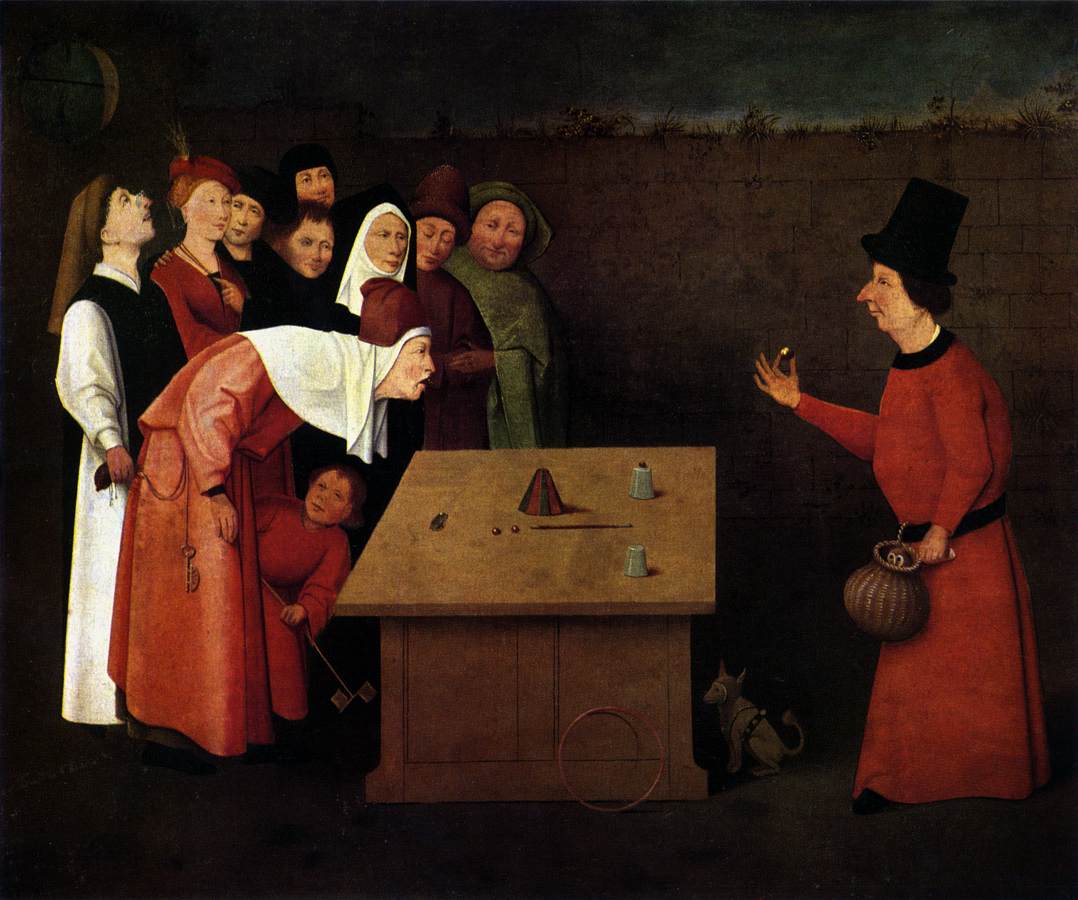
The Conjuror, by Hieronymus Bosch and workshop, between 1496 and 1516. Public domain, via Wikimedia Commons

One of the most basic, yet also the potentially most sophisticated gambling games is generally known as the shell game. The game was played in Europe from at least the fifteenth century and has been in England from at least the last half of the seventeenth century. By the eighteenth century the game was known as thimblerigging, under which name it was exported to America in the late eighteenth century. It was subsequently adapted by American grifters and provided the basic structure of large-scale cons like those featured in films such as The Sting and the more recent Oceans 11 and Oceans 12 movies.

thimble was eighteenth century Cant for a watch, a watchmaker’s shop being a thimble-crib. Those who stole watches were known as thimble-getters or thimble-twisters. The latter word was also used to describe a thimble player, one who played the three shell game known as the thimble rig. At this time the game was usually played with thimbles and buttons, with peas and walnut shells coming into use a little later. 

Whatever the exact implements involved, the shell game had the same basic features. Usually three thimbles were displayed on a board or table, together with a pea that was regularly covered and uncovered by one of the thimbles as the operator moved them around. The location of pea was, at first, easy to follow, inducing the player to bet. When a bet was laid, instead of leaving the pea beneath the thimble, the operator secreted the pea in his fingers and won the bet. There were many variations of surprising sophistication on this basic theme, but the shell game was basically a simple gambling diversion that, with some practice and nimble-fingers could be easily rigged. As it was generally illegal, the basic equipment was conveniently easy to hide or discard should any authorities take an undue interest in the proceedings.

By the mid-nineteenth century, thimblerigging was commonplace. In an 1862 publication, Henry Mayhew and John Binny[1] described people who lived by deceitful games of chance as being amongst the criminal classes of those ‘who live by getting what they want given to them’. These flatcatchers and charley pitchers ‘live by low gaming – as thimblerig-men.’ Flatcatchers were those who swindled flats, or ordinary people, a term that would continue to be used to describe the general public in American Carny talk. Charley pitchers were thimbleriggers who deceived country folk, or charleys, in the terminology of the time, also called, as they still are, yokels

Mayhew and Binney also noted something of the deceptive character and magician-like skills of these coarse but effective swindlers. These swindlers were known as magsmenMagging was a term generally used to cover the diversity of small-scale but effective cons perpetrated on yokels and other gullibles at fairs, shows, race-tracks, markets and wherever else people gathered to trade, gawp or enjoy themselves. The games, or swindles, included thimble-rigging, but also pitch and tossskittlesthe three card trick, the E.O. stand and the cogged dice used by charley pitchers. Victims were steered or lured into the carefully contrived web of the maggers, lulled into a false sense of security and good cheer, then ruthlessly rooked (since the sixteenth century) for all they were worth.

Well over half a century before then, if not earlier, the shell game migrated to America where it operated much as it had in England and Europe. Wherever crowds gathered, especially at festive or entertainment events, such as fairs, horseracing tracks and travelling shows, the thimbleriggers gulled the unwary into parting with their money. By the nineteenth century these operators became a common feature of road shows, usually being separate from the performers and other show workers but travelling with the troupe under a variety of nefarious income-splitting arrangements with the management. They became known as grifters in the early twentieth century and had an extensive language, or argot, of their own which reflected and supported the elaborate con that the shell game had by then become.

The main form of the game, as described by Maurer[2] from his fieldwork from the 1930s, involved the inside man or dink spieler who operated the shells, an outside man who encouraged the mark, or victim, and a number of ropers who found other likely marks in the crowd and steered them towards the game. The other essential member of the mob was a stick handler whose job was to hire a few usually young naïve men from the town where the show was playing. These gullible accomplices, or sticks, were used to keep the game warm while the thimbleriggers waited for genuine new players to be attracted or shepherded into the game. Also known as shills or boosters, the sticks, would, at the clandestine command of the stick-handler, excite the crowd, or tip, into the possibility of winning a lot of money very easily.

Also known as spreading the store, or framing the gaff, the three-shell board was now set up for the rooking routine. Relying on a well-rehearsed patter called spieling the nuts, some sleight-of-hand and surreptitious signals to his various accomplices, the inside man began the first of three, or possibly four, well-defined stages of the scam. This phase of the routine, known as the convincer, involved marking in the prat, placing him directly in front of the board to show him how the game worked. One of the shills then made a bet and won, strongly suggesting that the game was easy to win.

The runaround stage that follows is similar, except that the shill now bets and loses. This is done in such a way as to make the mark think that he can see how the pea is manipulated beneath the shells. On signals, or offices, and communications in argot or cross fire, from the inside man to the stick-handler, the shills are slipped money to place bets rapidly and warm up the crowd. At this point the outside man, making sure he is standing next to the mark, suggests to him that it looks pretty easy once you can see how it is done, so why not make a bet? The mark does – and loses. Meanwhile the sticks boost the betting action along. At this point the outside man reassures the mark that he needs only to keep a closer eye on the pea in order to win and pulls a large amount of money out of his pocket. The mark has another go and this time wins.

Now the countdown begins. The outside man bets a small note and loses, putting away his money and asking to see the shells being moved again. Claiming that he can now see which shell the pea is under, the outside man prepares to bet again, being sure to ask the mark to hold down the shell while he gets his money out again. This time the inside man says that if he thinks he is sure where the pea is, would he be prepared to bet all his cash? Confidently, the outside man throws all his money down and the inside man covers his bet with a matching amount. The mark is still holding down the shell and is now asked to turn it over. 

Of course, the pea is there and the outside man has won a very large amount of money. He asks to try once again and offers to hold the shell for the mark if he wants to make another bet. At this point the stick handler distracts the inside man long enough for the outside man to quickly lift the shell far enough to show the mark where the pea is located. No chance of losing. The inside man immediately says to the mark that he will match his bet for all the cash he has. The mark bets his long dough, the shell is turned over but the pea is not there – the outside man has copped it while showing the mark the location of the pea, or giving him a flash peek. The mark is then considered whipped and leaves poorer but no wiser. There are a number of variations and additions for over-cautious marks, but the pea will never be where the mark thinks it should be whenever he or she bets their roll.

This scam was capable of fleecing hundreds and even thousands of dollars a day from the gullible and greedy. At the end of the day the shell mob retired to the privilege car, a special vehicle kept by the show’s management for grifters, often supplying alcohol and gambling opportunities. Here the takings were divided up. The management took 60%, from which they paid 10% to the patch, one employed by the show to fix the necessary arrangements with the local authorities. The inside and outside men got 20% apiece and the stick handler received wages. As one old shell game artist told Maurer, ‘They never pay out jack to a booster, just fill them full of lemonade and popcorn and sometimes promise them a lay with one of the showgirls, but that never happens …’.


[1] Mayhew, Henry & Binny, John, The Criminal Prisons of London and Scenes of London Life (The Great World of London), London, 1862. 

[2] Maurer, David W, Language of the Underworld, collected and edited by A Futrell and C Wordell, University Press of Kentucky, Lexington, 1981.

CACKLING FARTS, TALLYWAGS AND OTHER GROSE WORDS


1920px-Captain_Francisa_Grose,_FSA

Captain Francis Grose, antiquarian, some-time soldier and all-round roisterer used his knowledge of lowlife to compile a dictionary of eighteenth-century slang. Assisted by Tom Cocking, Grose frequented and enjoyed the fleshpots of London, eating, drinking and taking notes of what was said and by whom. The fruits of this devoted study appeared only three decades after Dr Johnson’s famous dictionary but, unlike that great work, documented the unofficial, earthy and bawdy language spoken by the workers of the era.

Grose was so fat – a gundiguts, according to his own dictionary – that his assistant, Tom, had to strap him into bed each night to make sure he didn’t roll out. But he was an apparently amiable man who was able to move easily in different social circles, putting his inquiring mind to good use wherever he went and with whoever he met. His encounters included one with the Scots poet Robert Burns, who contributed prose and poetry to one of Grose’s many antiquarian works on castles and other ancient buildings.

Not only does A Classical Dictionary of the Vulgar Tongue (1785) present a vast number of raffish and often amusing words and phrases, but it also gives some idea of those who spoke them. Many of these were criminals who, as in earlier and later periods, found considerable use for linguistic obfuscation. Others were those who followed more or less respectable trades and occupations. Grose’s dictionary is crammed with the speech of thieves, beggars, prostitutes, soldiers, sailors, gamblers, cockfighters, horse traders and a range of other dodgy operators.

Grose also includes terms related to trades, professions and callings, including:

Draper, an ale-housekeeper;

Duck fucker man in charge of poultry aboard a war ship

Fart catcher – a valet

Finger post – parson

Knight of the rainbow – a footman, from the gaudery of his apparel

A maggot-boiler was a tallow merchant

Monks and friars, printers’ terms describing blotted or dark printed sheets and faint sheets, respectively

Nimgimmer a doctor, especially one able to treat venereal diseases

Pontius Pilate  a pawnbroker

The dictionary includes multitudinous names for different kinds of alcohol, especially gin and is also good on insults, including Captain queernabs, a shabby ill-dressed fellow; Dicked in the nob meaning silly, crazed; a dog booby is an awkward lout and Just-ass was a punning name for a justice [judge], an official who many of Grose’s speakers often encountered.

A few of the words and terms immortalised by Grose and Cocking are still in use today, including screw, to copulate; bum fodder for toilet paper and to kick the bucket, meaning to die, which Captain Francis Grose did in 1791. His legacy is a magnificent compendium of everyday talk that people used as they went about their business, whether that was respectable or otherwise.

Oh, and a cackling fart is an egg and tallywags are testicles.

Enjoy more online at https://publicdomainreview.org/collection/a-classical-dictionary-of-the-vulgar-tongue-1788

FOGLE-HUNTERS, WIRE-TOOLERS AND BUZZERS


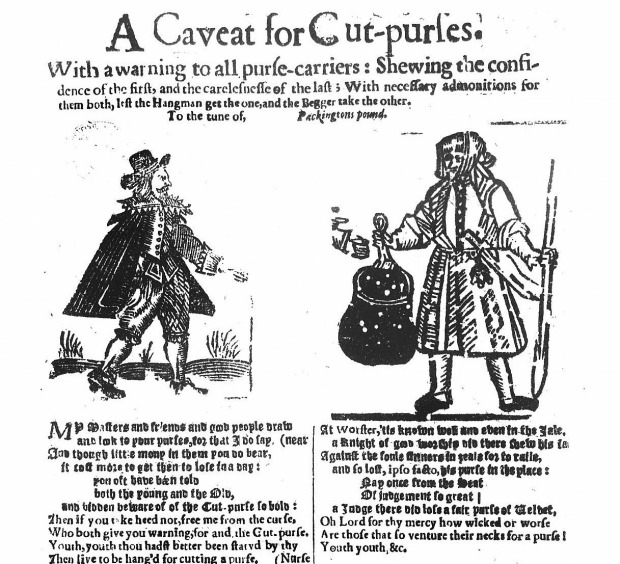
caveat

Picking pockets is an ancient and still-prevalent form of robbery, a criminal craft complete with its own cryptolect, or secret language. Read on to develop your lexicon of wicked words used by, and about, pickpockets through the ages.

In the sixteenth century and later, the term fig was used to denote the picking of pockets, and the one who did the deed was a figger. There were various classes of figger, depending on skill. The most basic was a nip or cutpurse who simply used a knife to separate money from victim. The more skilled practitioner was a foist. Greene observed in his The Second Part of Conny-catching (1592), that ‘The foist is so nimble-handed, that he exceeds the jugler for agilitie, and hath his legiar de maine as perfectly.’

Leger de maine, or sleight of hand, would still be in use to describe skilled criminality in colonial Australia during the 1840s. By this time, a favoured pickpocket target was a fogle – the elaborate and expensive pocket-handkerchiefs favoured by gentlemen and those who wished to appear as such – and the craft had become known as fogle-hunting or fogle-getting. Fogle lived on in criminal Cant until about 1930 in Britain and perhaps 1940 in the United States, by which time the value of handkerchiefs to the pickpocket had greatly declined. By the early twentieth century pickpockets in Britain, America and Australia were known as whizzers.

Ancient or modern, pickpockets by whatever monikers they used (they were often known as files in the seventeenth century) have always been highly organised with an extensive trade argot to conceal their crimes. In 1552 Gilbert Walker’s underworld exposé, Diceplay, mentioned the figging law, or pick-purse craft, and almost forty years later Robert Greene’s A Notable Discovery of Coosnage provided a helpful list of the craft terms related to ‘the figging law’:

The Cutpurse, a Nip

He that is halfe with him, the Snap

The knife, the Cuttle boung

The pick pocket, a Foin

He that faceth the man (i.e. the victim), the Stale

Taking the purse, Drawing

Spying of him, Smoaking

The purse, the Boung

The monie, the Shels

The Act doing, Striking

By the late seventeenth century the figging law had become the figging lay, but pickpockets were just as active and organised. As early as 1608 Dekker’s The Belmen of London observed of figgers that they parcelled out territories among themselves and their supposedly Biblical secret language was an effective form of communication and identification:

The language which they speak is none of those that came in at the confusion of the Tongues, for neither infidell nor Christian (that is honest) understands it, but the Dialect is such and so crabbed, that seven yeeres study is little enough to reach to the bottom of it, and to make it run off glib from the tongue: by means of this Gibrish, they knowe their owne nation when they meet, albeit they never sawe one another before …

Oliver

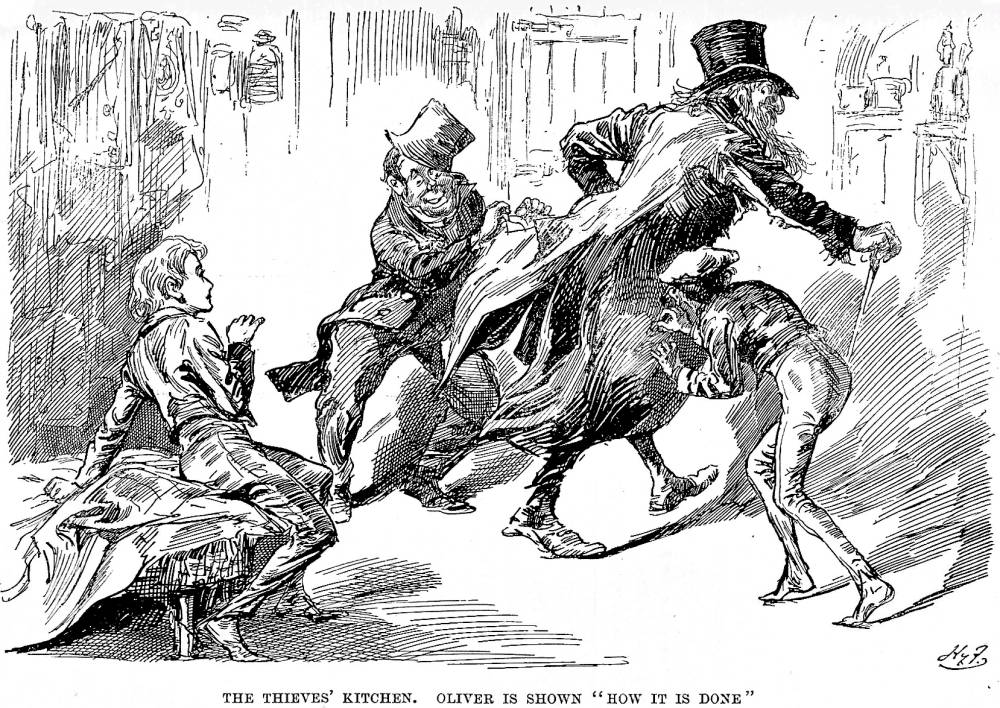
In the early Victorian era pick pocketing was perhaps the most common form of urban crime. So profitable had the game become that the best wire toolers and fine toolers became known as the swell mob and sported the trappings of wealth, and lived lives to match, further enhancing the possibility for ill-gotten gain. Dippers attended race meetings, fairs, shows and hangings in droves, running the old tricks along with a few new variations developed for the growth of public transport, such as the railway carriage and the omnibus. Maltoolers, often female, deprived middle class women travellers of their purses a pogue, slipped the booty to their stickman who rapidly exited the vehicle, leaving the maltooler with no incriminating evidence should the victim discover her loss before journey’s end.

At this time, men still used large and valuable handkerchiefs as an accompaniment to the fashionable habit of taking snuff. Known as kingsmen, these decorated and colourful squares of cloth were greatly prized on the black market and easily pulled by even child smatter haulers. As with much other Cant speech, there was a complex hierarchy of butterfly-like descriptions for different kinds of handkerchiefs. A watersman was made of blue silk, a randlesman was white and green, while a white and yellow handkerchief was a fancy yellow. From the middle of the nineteenth century it became fashionable to use black handkerchiefs during mourning, a central Victorian obsession, and these items, known as black fogles, became the most valuable for lifting.

So great were the labour demands of this illicit occupation that children were trained in groups by kidsmen to become buzzers from an early age. The celebrated depiction of such an academy in Oliver Twist is very close to reality. The real-life models for the fictionalised characters of Fagin and the Artful Dodger were commonplace in Victorian England where children were made to practice dipping skills on tailor’s dummies to which small bells were sewn, tinkling at the slightest insensitivity of a small hand. Despite this training, many were caught and sometimes transported.

‘You’ve got to pick a pocket or two’, as the famous song went. Maybe not.


WAYS AND LAYS – THE SPEECH OF BEGGARS


Begging Woodcut_Giving_Alms_to_a_Beggar - wiki

Beggars were a large and troublesome presence throughout Europe during and after the middle ages. The tolerance, even encouragement, of the church for mendicancy as an expression of piety ensured that roads were thronged with men, women and children bent on extracting money from better-off passers-by. Henry VIII’s seizing of the monasteries and the increasing enclosure of previously public lands inflamed the problem, as did the arrival of large numbers of impoverished Irish. By the reign of Elizabeth 1 begging might be punished by maiming and even death. As the problem was basically a consequence of economic forces, these harsh measures were ineffective, as were the Poor Laws and the parish relief system that were subsequently introduced.

The beggar remained a familiar, ever-inventive type often execrated in the cautionary writings of sixteenth and seventeenth-century authors like Dekker, Harman and other observers of the swarming ‘canting crews’. Such was the diversity of begging ploys that many felt it necessary to categorise and describe them for the benefit and protection of their fellow respectable citizens. In the earliest of what would become a number of beggar books, Fraternity of Vagabonds (1561) by John Awdeley, nineteen different types of vagabonds are named. These include a jackman, one who forges documents, or gibes with false seals known as jarks. In 1566 Thomas Harman described dommerars who:

‘… wyl never speake, unless they have extreme punishment, but wyll gape, and with a marvellous force wyll hold downe their toungs doubled, groning for your charyty, and holding up their handes full pitiously, so that with their deepe dissimulation they get very much.’

A later variation was for the dommerar to produce a piece of paper on which was written a note to the effect that his tongue had been cut out during a period of Turkish slavery because he had refused to convert to Islam.

Names of different kinds of beggars and beggaries across the centuries may vary, though their dodges were much the same. The early seventeenth century mason’s maund referred to a false injury above the elbow that made the arm appear broken as if by a fall from a builder’s scaffolding. Cadging was an eighteenth-century term for begging, also used to describe the lowest form of thief. It had numerous extensions, such as cadging ken, a public house frequented by cadgers. A cadger’s cove was a lodging house for beggars and the cadging-line, was the begging business. Durrynacking or durykin was to beg by telling fortunes in the early nineteenth century, usually practiced by women.

Beggars were also celebrated in songs that at once romanticised their lifestyle, revealed their tricks and some of their secret language. One very popular song of this type has its origins in Richard Broome’s play The Jovial Crew, originally produced in 1641. Although this song was probably added to it in the 1680s revival version, it preserves the use of pelf, meaning booty, which dates from at least the last part of the previous century. Among other things, the song highlights the apprenticeship system through which generations of beggars learned the trade, still operating in the nineteenth century in Britain and also among American hoboes until at least the early twentieth century:

There was a jovial beggar,

He had a wooden leg,

Lame from his cradle,

And forced for to beg.

And a begging we will go, we’ll go, we’ll go;

And a begging we will go!


A bag for his oatmeal,

Another for his salt;

And a pair of crutches,

To show that he can halt (limp).

And a begging, &c..


A bag for his wheat,

Another for his rye;

A little bottle by his side,

To drink when he’s a-dry.

And a begging, &c.


Seven years I begged

For my old Master Wild,

He taught me to beg

When I was but a child.

And a begging, &c.


I begged for my master,

And got him store of pelf;

But now, Jove be praised!

I’m begging for myself.

And a begging, &c.


In a hollow tree

I live, and pay no rent;

Providence provides for me,

And I am well content.

And a begging, &c.


Of all the occupations,

A beggar’s life’s the best;

For whene’er he’s weary,

He’ll lay him down and rest.

And a begging, &c.


I fear no plots against me,

I live in open cell;

Then who would be a king

When beggars live so well?

And a begging we will go, we’ll go, we’ll go;

And a begging we will go!

There were many other street ballads and stage songs on the theme of beggary, including ‘The Blind Beggar’s Daughter of Bethnal Green’, ‘Mad Tom of Bedlam’ and a Scots song from the late nineteenth century written by a hawker named Besom Jimmy. Scotland was particularly plagued by beggars and this song celebrates the open road and lifestyle of the tramp:

I’m happy in the summer time beneath the bright blue sky,
Nae thinkin’ in the mornin’ at nicht whaur I’ve tae lie,
Barns or buyres or anywhere or oot among the hay,
And if the weather does permit I’m happy every day.

Things were not much better by the time Henry Mayhew and others began investigating the lives of the London poor. Many tricks of the gegor’s trade had changed little over the centuries, though there were a few new dodges, such as smearing a limb with soap and adding vinegar to produce a realistic suppurating sore in the hope of eliciting the sympathies and the cash of the unwary.

One popular technique was the wounded war veteran, a variation on the merchant lay or the Royal Navy lay in which beggars impersonated ex-naval men, known generally as turnpike sailors. The wounded veteran described by Mayhew was:

a perfect impostor, who being endowed, either by accident or art, with a broken limb or damaged feature, puts on an old military coat, as he would assume the dress of a frozen-out gardener, distressed dock-yard labourer, burnt-out tradesman, or scalded mechanic. He is imitative, and in his time plays many parts. He “gets up” his costume with the same attention to detail as the turnpike sailor. In crowded busy streets he “stands pad,” that is, with a written statement of his hard case slung round his neck, like a label round a decanter. His bearing is most military; he keeps his neck straight, his chin in, and his thumbs to the outside seams of his trousers; he is stiff as an embalmed preparation, for which, but for the motion of his eyes, you might mistake him. In quiet streets and in the country he discards his “pad” and begs “on the blob,” that is, he “patters” to the passers-by, and invites their sympathy by word of mouth. He is an ingenious and fertile liar, and seizes occasions such as the late war in the Crimea and the mutiny in India as good distant grounds on which to build his fictions.

This beggar was unmasked as a fraud and asked to tell his story, recorded with the slang of the period and the calling intact:

I have been a beggar all my life, and begged in all-sorts o’ ways and all sorts o’ lays. I don‘t mean to say that if I see anything laying about handy that I don‘t mouch it (ie.steal it). Once a gentleman took me into his house as his servant. He was a very kind man; I had a good place, swell clothes, and beef and beer as much as I liked; but I couldn‘t stand the life, and I run away.

The loss o’ my arm, sir, was the best thing as ever happen‘d to me: it‘s been a living to me; I turn out with it on all sorts o’ lays, and it‘s as good as a pension. I lost it poaching; my mate‘s gun went off by accident, and the shot went into my arm, I neglected it, and at last was obliged to go to a orspital and have it off. The surgeon as amputated it said that a little longer and it would ha’ mortified.

The Crimea’s been a good dodge to a many, but it‘s getting stale; all dodges are getting stale; square coves (i e.honest folks) are so wide awake.

The unmasker of the beggar then asks him: ‘Don‘t you think you would have found it more profitable, had you taken to labour or some honester calling than your present one?’ The beggar replied: ‘Well, sir, p‘raps I might, but going on the square is so dreadfully confining’.

A powerful reason for this man’s preference for a life of beggary rather than employment was that beggars made a great deal more money than they might earn in gainful employment and enjoyed a much more lavish and roistering lifestyle. In 1816 it was reported that two houses in the notorious area of St Giles’s were home to between 200 and 300 beggars who averaged three to five shillings takings each day. It was said that ‘They had grand suppers at midnight, and drank and sang songs until day-break.’ A little earlier, a Negro beggar was reputed to have retired back to the West Indies with a substantial fortune of 1500 pounds earned from acting out roles in the street.

And how many there were. Mayhew describes dozens of different ways to separate the gullible and better-off from their pennies, perhaps even their pounds. There were sophisticated schemes involving begging letters of commendation, apparently endorsed or even written by nobles or other highly-placed and well-known persons of influence. In reality they were provided for a fee by screevers, usually comedown hacksand educated but dissolute wastrels not fussy how they earned a crust. Some lays were perpetrated mostly by women, involving children provided at a fee by establishments operating for just this purpose. And there were the maimed, the almost undressed who practiced the scaldrum dodge, the starving, the addled, the infirm and the displaced among many other forms of deception designed to wring hearts and purses. Broken-down tradesmen, scalded mechanics, decayed gentlemen, distressed scholars and clean families apparently down on their luck. It was an underworld industry on a grand scale that provided thousands, even tens of thousands with a living, if not a profit. Many of the poor worked their way through and up from beggary to something better, perhaps becoming a coster, as did at least one boy tracked over a ten-year period from street urchin to barrow boy.

In America a major form of beggary was associated with the down and out and the skid rows or skid roads of many cities and towns. While hoboes and many tramps may have prided themselves on their ability to support themselves by odd jobs and casual labour, other itinerants depended on the hand-out and various forms of mooching or being on the bum, almost as varied and elaborate as those practiced in England. There was an elaborate language evolved to describe the art of panhandling, also known as throwing your feet. To connect, or make a touch was the object of all panhandling, increasing the likelihood of the mark coming across. An eye doctor was someone skilled at this technique. A ghost story was a yarn told by a panhandler to gain sympathy and a handout, sometimes called a slob sister or a tear baby.

REFERENCES:

Awdeley, John, Fraternity of Vacabondes, 1575.

Beier, A.L, ‘Vagrants and the Social Order in Elizabethan England,’ Past and PresentLXIV (Aug. 1974).

Chesney, K., The Victorian Underworld, Temple Smith, London, 1970.

Dekker, Thomas, Lanthorne and Candle-light, London, 1609.

Hancock, I., ‘The Cryptolectal Speech of the American Roads: Traveller Cant and American Angloromani’, American Speech  61 (3), 1986, 206-220.

Harman, Thomas, Caveat or Warning, for Common Cursetors Vulgarly Called Vagabondes, or Notable Discovery of Coosenage,  London, 1566, 1591.

Matsell, G., Vocabulum, or, The Rogue’s Lexicon, compiled from the most authentic sources, New York, 1859.

Maurer, David W, Language of the Underworld, collected and edited by A Futrell and C Wordell, University Press of Kentucky, Lexington, 1981.

Mayhew, Henry & Binny, John The Criminal Prisons of London and Scenes of London Life (The Great World of London), London, 1862.

Mayhew, Henry, London Labour and the London Poor, 4 vols, London, 1851.

Sorenson, J., ‘Vulgar Tongues: Canting Dictionaries and the Language of the People in Eighteenth Century Britain’, Eighteenth Century Studies37.3, 2004.
 

THE SECRET SPEECH FROM THE DEVIL’S ARSE


Mollcutpurse

Moll Cutpurse (BL)

What were the King of the Gypsies and Cock Lorel doing in the Devil’s Arse?

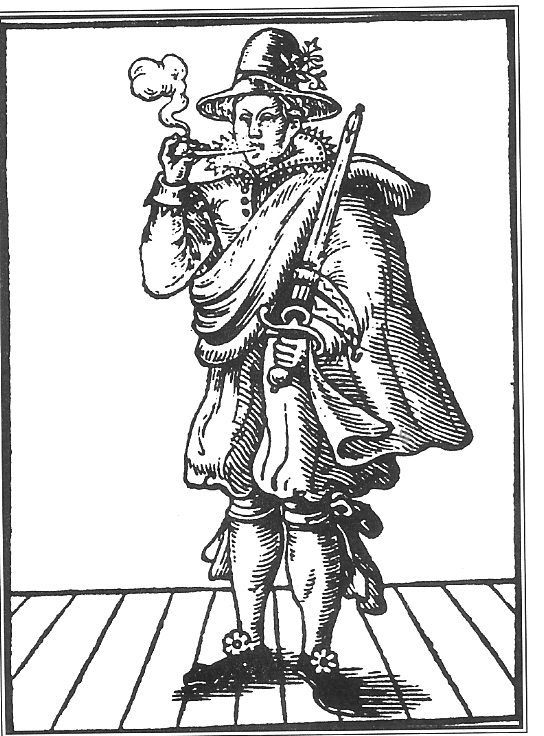
They were meeting in the Derbyshire cave with the memorable name to concoct a new language, the tongue of crime and criminals. The Gypsy King of the 1520s and 30s was Giles Hatherley and Cock Lorel was the mythical head (cock) of the rogues (lorels). Mostly referred to as ‘Cant’, the secret speech they allegedly created would last for centuries and some of its words are still spoken today.

Cant was a fluid amalgam of criminal codewords and street slang of the past and present, enriched with Romani and Parlary. Robert Copland’s Highway to the Spittal-House, published around 1536 contains the first record of this tongue. It included bousy cove, meaning a man under the influence of alcohol, a meaning still preserved in some slang. Another cant term that survived the centuries was patrynge (pattering) cove, meaning one who lived by some line of verbal deceit or other dubious activity. Others did not last so well, including dell for a virgin, pek for eat and jere for shit.

A dictionary of cant by ‘B.E. Gent.’ was published in the late 1690s under the exhaustive title A New Dictionary of the Terms Ancient and Modern of theCanting Crew, in its Several Tribes, of Gypsies, Beggars, Thieves, Cheats, &c. with an Addition of Some Proverbs, Phrases, Figurative Speeches, &c. Useful for all sorts of People, (especially foreigners) to secure their Money, and preserve their Lives; besides being very Diverting and Entertaining, being wholly new. This early example of multi-marketing by whoever the gentlemanly ‘B E’ might have beenechoed the speech of a vast underworld of vagabondage, thievery and deception. A New Dictionary, and the many publications like it, were mostly written to pander to the insecurities and curiosities of the literate classes and so often exaggerated aspects of the lives and language of conny-catchers and sturdy beggars.

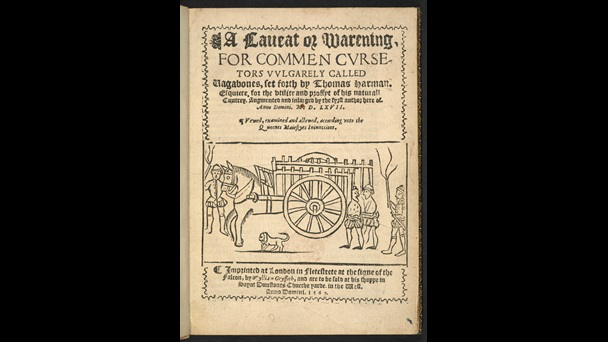
Another early example of this publishing fad was The Third and Last Part of Conny-Catching. With the new devised knavish art of Foole-taking by ‘R G’, Robert Greene, which tells a number of cautionary tales of those who have fallen victim to the wiles of ‘this hellish crew’ who ‘cheate, cosen, prig, lift, nippe and such like tricks now used in their Conie-catching Trade’. The book ends with the warning ‘let each take heed of dealing with anie such kind of people’. There were no police forces at this time, so the honest citizen was generally responsible for his or her own safety and security. Similar works such as Thomas Harman’s A Caveat or Warening for Common Cursetors (1566), The Defence of Begging by ‘Cuthbert Cunny-catcher’ (1592) and Thomas Dekker’s The Belman of London (1608), among many other similar titles allow us to hear this tongue and know something of the lives and crimes of those who spoke it.


image

The Tudor period experienced increasing numbers of masterless men and other vagrants wandering the roads. By the time of Elizabeth’s reign, vagrancy and crime had become major issues for society and government. The poor – which meant the vast majority of the population – were seen as a possible source of disaffection and political violence. This was held to be especially so of those who would not or could not work, preferring instead a life of crime and, it seemed to the authorities and the respectable classes, of dissipation. In 1596 an Order by the Privy Council to the Justices of the Peace of Middlesex described the activities of such people:

a great number of dissolute, loose and insolent people harboured and maintained in such and like noysom and disorderly howses, as namely poor cottages and habitacions of beggars and people without trade, stables, ins, alehowses, tavernes, garden howses converted to dwellings, ordinaries, dicying howses, bowling allies and brothell howses. The most part of which pestering those parts of the citty with disorder and uncleannes are either apt to breed contagion and sicknes, or otherwize serve for the resort and refuge of masterless men and other idle and evill dispozed persons, and are the cause of cozenages, thefts, and other dishonest conversacion and may also be used to cover dangerous practizes.

Almost twenty years earlier the author of a polemical pamphlet had made similar complaints aimed at “Dauncers, Fydlers and Minstrels, Diceplayers, Maskers, Fencers, Bearewardes, Theeves, Common Players in Enterludes, Cutpurses, Cosiners, Maisterlesse servauntes, Jugglers, Roges, sturdye Beggers, &c.”

These light-fingered (from at least the 1570s) Canting Crews involved themselves in a bewildering variety of criminal specialisms and sub-specialisms. Cozenage was an Elizabethan version of the con trick, from the name that such people gave to their prospective victims, cousins or cozens. To prig was to steal, also used as a term for the stealer. To liftwas to steal goods from a shop, as in shoplifter, or to practice a form of robbery in which the lifter assumed the identity of a servant to gain access to luggage or other belongings. The nippe was a form of cutpurse thief who stole purses by slicing them from their owners clothing with a knife. A more refined nippe was the foyst, who used pickpocket skills to achieve the same ends.

From the sixteenth century Conie-catching also referred to deceptive practices, conie (conny, connie) being a term for a rabbit or, as we might say today, a bunny, who is caught by a con man. These swindles involved the catchers making the acquaintance of their intended conie, winning his trust then cheating him of his money or other possessions. In one variant or another the word has had a continuing presence in criminal tongues. In the nineteenth century a coney, coney dealeror coniacker was one who dealt in counterfeit money and the term eventually produced con man in all its English-speaking variations during the late nineteenth century and on into the twentieth and the twenty-first. These include con artist,con game, con girl, con woman, con head, con mob, con job, con racket and simply a con.

A slice of Cant from what is usually said to be its first record in print was written by Copland around 1536. While this is a contrived piece of verse conversation, it well suggests the difficulty of comprehending such talk for anyone not schooled in its complexities. The speaker is a porter of whom Copland has asked whether pedlars ‘with broken hose and breche’ pass this way:

Ynow, ynow; with bousy cove maund nace,

Teare the patryng cove in the darkeman cace

Docked the dell for a coper meke;

His watch shall feng a prounce’s nob-chete,

Cyarum, by Salmon, and thou shall pek my jere

In thy gan, for my watch it is nace gere

For the bene bouse my watch hath a coyn …

Copland admits that even he has difficulty understanding this ‘babble’, or ‘pedlyng frenche’.

A-New-Canting-Dictionary-626_b_35_tp

The canting crews (BL)


1808 mermaid tattoo


PARLARI – THE SPEECH OF FAIRGROUND FOLK

barth-fair

St Bartholomew’s Fair, George Cruikshank


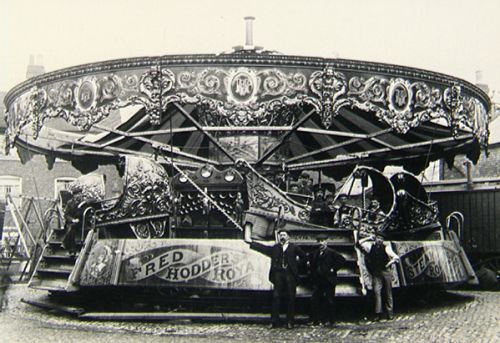
The collection of sideshows, amusements and diversions that appear on parks, commons and other open areas from time to time are usually known as fairsin Britain and as carnivalsin America. Fairground folk in Britain have their own language, known as parlari(parleyaree, polari), probably spoken since the earliest formation of travelling fairs.

Strolling players, mountebanks, mummers and other such entertainers, often referred to disapprovingly as knaves,were on the roads of Britain in medieval times. Sometimes difficult to distinguish from sundry beggars and other itinerants, these acrobats, jugglers, fire-eaters, rope walkers, actors and the like performed wherever and wherever they were likely to earn a crust, preferably before the local authorities moved them on. These venues might be in properly built or makeshift theatres, at fairs and festivals or just on a street corner.

The nefarious reputation of fairs continued over time. A report from eighteenth century Essex tells of performers being jailed for ‘dancing, conversation pieces, tumbling, and fiddling and, by means of a pretended lottery and other subtle craft, deceiving and imposing on many unwary subjects of his Majesty…’.

The most famous of the many fairs was Bartholomew’s Fair, held several times a year in London until 1855. Southwark Fair was another London favourite, especially popular with sailors. In the seventeenth century it featured monkeys, then very exotic animals, an ass that walked a suspended rope and an Italian dancing girl.

In 1800 a continental visitor described one Bartholomew’s Fair, claiming it was unique in Europe. The booths were many, all featuring a noisemaking crew referred to as a ‘band’. Strolling musicians from the streets added their skills to the din, which was further amplified by the shouting of those who pretended no musical abilities at all. There were menageries, roundabouts, open air shows and theatres, many of them converted local houses, where unusual plays were performed. The Punchy and Judy shows were there, of course, along with crowds of prostitutes. Bartholomew, and other fairs, were also frequented by men and women of the respectable classes looking for a little lowlife titillation. By most accounts, they usually found it. Many fairs of this kind were gradually shut down, or carefully regulated, by concerned local authorities and respectable citizens during the Victorian era.

But travelling fairs have a rich and continuing history in Britain, despite regular predictions of their demise. Writing on the history of fairs in 1874, Thomas Frost claimed that: ‘The Nation has outgrown them and the last showman will soon be as great a curiosity as the dodo’.

Frost did not take into account the ability of show people to adapt to change, a talent that saw them rapidly adopt moving pictures after their introduction in 1896, as well as other good ideas from abroad. The popular fair attraction known as the ‘Wall of Death’, in which motorbikes are ridden in perpendicular fashion around circular walls, derives from the United States where it seems to have originated early in the twentieth century. The close-knit character of the fairground community was expressed in their special language.

Sea-On-Land

In Britain, fairground language is often called parlari and has been spoken by show people for as long as anyone knows. In some versions it includes more than a smattering of Romany, Shelta and words borrowed from a variety of western European languages. The fairground itself is known as a gaff, cheap shows being known as penny gaffs. A gaffmay also be a game that is designed to cheat its players, a usage also found in American carny. The gafferis the boss of a fairground, a term that has passed into general English slang and used with the same meaning in American circus talk. A gaff ladis a male staff member resident at the fair and a skippyis a female staff member.

Erecting a tent is a buildup, accomplished with kingpoles, while the top or roof of a tent is a tilt. A paper houseis a performance where most of the audience have been given free entrance to fill otherwise empty seats. A spotis a particular performance or act. A Dobbyor Dobby Setis a merry-go-round with fixed seats, or a galloperif all theseats move up-and-down. Dukkeringis fortune-telling. The word slangmay be used as a verb meaning to perform, or as a noun, meaning a sideshow or circus tent. To spielis to introduce an act or to announce information to the audience. This word also turns up in American carnyspeak and in Australian show lingo.

The close connection between the rumbustious entertainment of the fair and various forms of chicanery was one continued until almost to the present day. Crowds attracted pickpockets, thimbleriggers and other tricksters anxious to separate dull yokels up from the country or unwary townsfolk from their possessions.


For more on the rich history and culture of fairs go to the National Fairground and Circus Archive.