WRAITH OF THE COPENHAGEN

Copenhagen, 1921


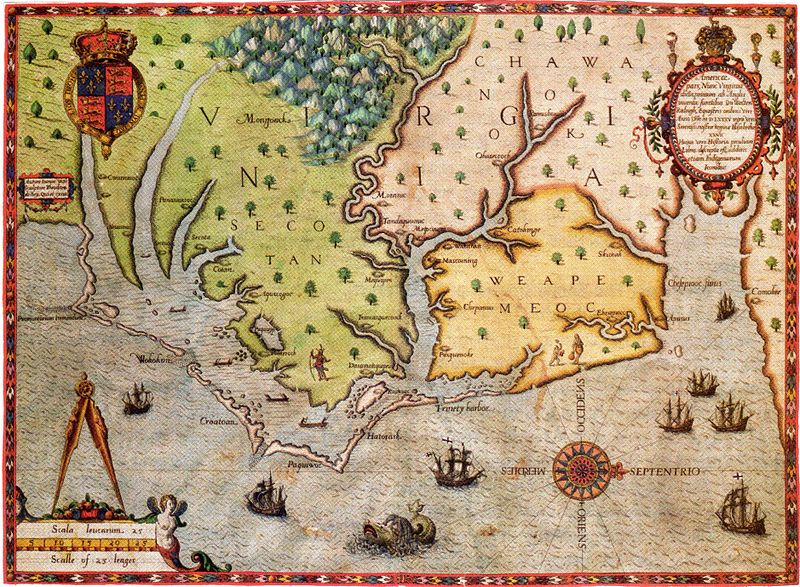
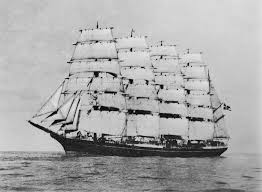
She was the largest sailing ship in the world. When the Copenhagen (Kobenhavn) was launched in 1921 she was immediately dubbed ‘The Great Dane’, her 131 metre hull supporting five masts towering nearly twenty stories into the winds that would bear the barque twice round the world before her still inexplicable disappearance en route for Melbourne, Australia.
The Copenhagen carried some cargo but was primarily a training vessel for young sailors between fifteen and twenty years of age seeking an officer’s ticket. Her voyages provided an opportunity for seasoned mariners to teach young men the many skills they would need to make a career in sail, still a serious option in Scandinavian countries at that time. 
On her tenth voyage, the Copenhagen sailed from Northern Jutland bound for Buenos Aires with a cargo of cement and chalk. Aboard was the experienced Captain Hans Anderson together with 26 crew and 45 cadets from many of Denmark’s leading families. Unloading at Buenos Aires, the ship was unable to find another cargo for Australia and so Anderson decided to set sail without one. Now with a crew of only fifteen, they set a course to Adelaide (then Melbourne) eleven days before Christmas, a trip expected to take just under seven weeks. On December 22 the Copenhagensignalled ‘all is well’ to a passing Norwegian steamer around 1500 kilometers from the island of Tristan da Cunha. 
Captain Anderson was known not to make much use of radio and often went for long periods without signalling. In those days, marine radios had a very limited range. The Danish East Asiatic Company who owned the ship were not unduly concerned when they had no word. But as the weeks slipped by and there was no sound from their magnificent vessel, nor any sight of her, they became increasingly alarmed. The Australian press echoed Danish fears for sons, brothers, fathers and uncles. ‘Where is the Kobenhaven’, asked the Adelaide Advertiser in mid-March, initiating a lengthy chronicle of newspaper articles in the Australian press and around the world.
A search vessel was sent to Tristan da Cunha. A large sailing ship with a broken foremast had been sighted in late January. With her sails only partly set and low in the water, the drifting vessel showed no signs of life. Locals were unable to reach her because of bad weather but had found no wreckage and thought she must have passed by the island. With the assistance of a small Australian intestate steamer, the Junee,  the search continued for some months, but without result. At one point it was surmised that wreckage might drift to the Western Australian coast. A plane was chartered to fly from Fremantle to Northwest Cape, but again nothing was found. The Danish government declared theCopenhagen, her captain, crew and cadets lost. Another mighty ship joined the untold others foundered in the world’s ocean deeps.
But then the sightings began. Over the next few years Chilean fishermen reported a five-masted ship in their waters. Sailors aboard an Argentinian freighter saw a what they called a ‘phantom ship’ fitting the Copenhagen’s description as they fought a gale. Other sightings came from Easter Island and the coast of Peru. It was also reported that a ship’s stern section with the name København had washed up on a West Australian beach.
And then they found the bottle. In 1934, the son of Argentina’s President visited the United States telling a strange story. Men from a whaler working off Bouvet Island in the South Atlantic had found a sealed bottle containing a ‘log’ or diary of a surviving cadet of the Copenhagen. The log told a grim story. The Copenhagen struck an iceberg. There was no option for those aboard but to take to the lifeboats. In the distance they saw their fine ship crushed between two icebergs. The diary ended with ‘It is snowing and a gale blows. I realize our fate. This sea has taken us beyond the limits of this world.’
Whatever the authenticity of this now-missing document, the story fitted the predominant theory about the disappearance of the Copenhagen, like the Titanic, victim to a drifting iceberg. The following year another grim find appeared to provide further support for this explanation. It was reported that the remains of a ship’s boat with seven skeletons had been found on the southwest coast of Africa, over 600 kilometers north of the city of Swakopmund in Namibia. Nautical experts ridiculed the suggestion that this might be a boat from the Copenhagen. “It is a far- fetched theory, absolutely without justification, said Captain Davis, Victorian Director of Navigation.
Other speculations abounded. The Copenhagen might have encountered a tidal wave. As her holds were empty and she sailed only in ballast she might have capsized in bad weather. Rumours, theories and searches for the lost barque have continued ever since. In 2012 divers found a wreck on Tristan da Cunha that some believe might be the missing ship. The Danish government and the Danish East Asiatic Company were reportedly taking the suggestion seriously enough to establish the truth of this possibility. But nothing has since been reported and today, the fate of the Copenhagen and her crew is regarded as one of the world’s greatest unsolved maritime mysteries.


THE LOST COLONY OF ROANOKE


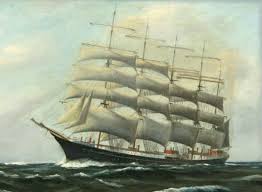
“The Carte of All the Coast of Virginia,” engraved by Theodor de Bry based on John White’s own map, published in Thomas Hariot’s A Briefe and True Report of the New Found Land of Virginia, 1588.


In 1584 Sir Walter Raleigh sent an expedition to the east coast of North America. The expedition landed on Roanoke Island in what is now the state of North Carolina. Good relations were established with the indigenous inhabitants, the Croatans, two of whom accompanied the expedition back to England to meet Raleigh and to describe their country and its ways. Next year a fleet of ships under the command of Sir Richard Grenville established a settlement on the island. 
 
Despite the positive start made with intercultural relations through the initial expedition, the colonists and local people soon fell into violence, much as they would in the Southland.  Grenville left for England, leaving a 108 men to establish the colony, promising to come back with reinforcements and desperately needed food by the following April. He did not return and the colonists were forced to defend themselves from indigenous attack. Fortunately, Sir Francis Drake called in at the colony on his return journey from plundering the Spanish in the Caribbean. He took them back to England. Grenville’s relief party finally arrived at Roanoke soon after, only to find an abandoned settlement. He left a small group on the island and sailed back to England.
 
When the next group of colonists sent by Raleigh arrived at Roanoke they found only a single skeleton. It was one of the men Grenville left there the previous year. Under the command of John White, the new colonists decided to return to England but the master of their ship refused to take them home. White’s group now had to try to re-establish the colony and to mend relations with the local inhabitants. These attempts were a failure. Late in the year of 1857, White sailed to England for help, leaving around 115 men, women and children to await rescue.
 
White tried to get back to Roanoke but was prevented by the difficulty of obtaining vessels as all sizeable craft had been commandeered to fight the Spanish Armada. When he did manage to find and supply two small boats, the Spanish stole their cargoes and he was forced to return to England. White was not able to get back to Roanoke until August 1590. The colony was deserted. The buildings had been dismantled and there was no evidence of fighting or violence. They found the word ‘Croatoan’ carved into a post and ‘Cro’ cut into a tree. There was no sign of the prearranged signal of distress, a Maltese Cross. White concluded that the colonists had simply moved to a neighbouring island, then known as ‘Croatoan Island.’ A storm prevented him visiting the island immediately. The tempest finally blew itself out but unaccountably, White did not visit the island and instead sailed away. Ever since, the fate of the Roanoke colonists has mystified and intrigued generations of researchers. The many speculations about Roanoke have echoes in the legends of the Southland.
 
One of the most persistent and likely theories is that at least some of the Roanoke colonists made alliances of convenience with one or more of the local Native American groups. As well as repelling newcomers, many of these groups were in a state of more or less continual warfare. There is evidence of cohabitation including sightings of Europeans living with Native American groups. The most compelling of these stories is that of four English men, two boys and a young woman living and working for a local chief. The story was that the colony had been attacked but they had escaped into the wilderness, eventually to become virtual slaves.
 
There are also well-documented accounts of Native Americans with English ancestry. As early as 1709, the Croatoans were acknowledging English ancestry:
 
A farther Confirmation of this we have from the Hatteras Indians, who either then lived on Roanoke-Island, or much frequented it. These tell us, that several of their Ancestors were white People, and could talk in a Book, as we do; the Truth of which is confirmed by gray Eyes being found frequently amongst these Indians, and no others. They value themselves extremely for their Affinity to the English, and are ready to do them all friendly Offices.
 
There are many other colonial accounts of grey-eyed or blue-eyed Native Americans with fair hair as well as related legendary traditions and linguistic evidence of the integration of Roanoke colonists with Native Americans. But just how this happened continues to excite a variety of theories. One is that the colonists did indeed move from Roanoke but were subsequently massacred. Another is that they escaped on a small ship that White had left behind but were all drowned at sea.
 
Archaeological surveys of the area have uncovered the usual miscellany of enigmatic artefacts. A map of the colony made by John White in 1585 and known as the ‘Virginia Pars Map’ has revealed some new evidence. Researchers have recently re-examined it and found obscured beneath a paper patch repair, the site of what could be another fort built by the colonists. Investigations into this possibility are proceeding, along with a project to confirm if the Roanoke colonists did merge into the local Native American groups.
 
This is an early example of the genesis and spread of an ‘urban’ or contemporary legend. The initial concept of a lost white tribe is well established in European culture. The unknown nature of the great south land and events related to it provided the ideal seed bed for the genesis of the fiction that Maslen, or someone else, kicked off in 1834. Subsequent ostensibly accurate details were added as the story moved through the nineteenth century press and from mouth to mouth along the channels of hearsay and speculation. By the time the story reaches modern times, it has also gained apparent credibility simply by being ‘old.’ 
 
Researchers interested in the lost white colony have assiduously garnered apparently supporting evidence from various places and the well-spun narrative we now have starts to look almost convincing at first glance. But, as with urban legends, despite the insistence of their tellers on their veracity, investigation rarely turns up credible evidence for their existence. The persistence of such stories – despite the evidence against them – tells us a good deal about the human need for a good yarn, one that appears to explain and sometimes vindicate mysteries, fill information voids or perhaps even provide some cultural vindication for colonisation.
 
SOURCES:
 
John Lawson, A New Voyage to Carolina, London, 1709.
Giles Milton Big Chief Elizabeth: The Adventures and Fate of the First English Colonists in America, Hodder & Stoughton, London, 2000.
The Lost Colony Centre for Science and Research for connections to the extensive popular and academic research interest in Roanoke.

‘The towne of Pomeiock’ by John White (British Museum).